

From writing the alphabet to tying shoelaces, many essential childhood tasks depend on a skill we often overlook: visual motor integration. This is the ability to coordinate visual information with body movement. When a child struggles to copy shapes, has messy handwriting, or finds puzzles frustrating, they may need support in this area. The right visual motor integration activities can build this crucial connection between what the eyes see and what the hands do. This guide offers five practical, step-by-step approaches that therapists, teachers, and parents can use to strengthen these skills in a structured and engaging way.
Step 1: Understand the Foundation of Visual Motor Integration
Before implementing activities, it is important to understand what visual motor integration truly is. It is a complex process where the brain takes in visual information, interprets it, and then directs the muscles to perform a coordinated action. This skill is not one single ability but a combination of several underlying components working together. These include visual perception (making sense of what is seen), motor control (directing muscle movement), and proprioception (awareness of the body’s position in space).
Think about a simple task like catching a ball. The eyes see the ball coming, judging its speed and trajectory. The brain processes this information instantly. It then sends signals to the arms, hands, and legs to move to the correct position and close the hands at the right moment to make the catch. The same process applies to handwriting. A child sees the letter ‘A’ on the board, their brain processes its shape and size, and it directs the hand and fingers to replicate the lines and angles on paper. When these systems work well together, tasks become fluid and automatic. When they do not, a child may appear clumsy, slow, or avoidant of tasks requiring eye-hand coordination.
Step 2: Implement Drawing, Tracing, and Copying Tasks
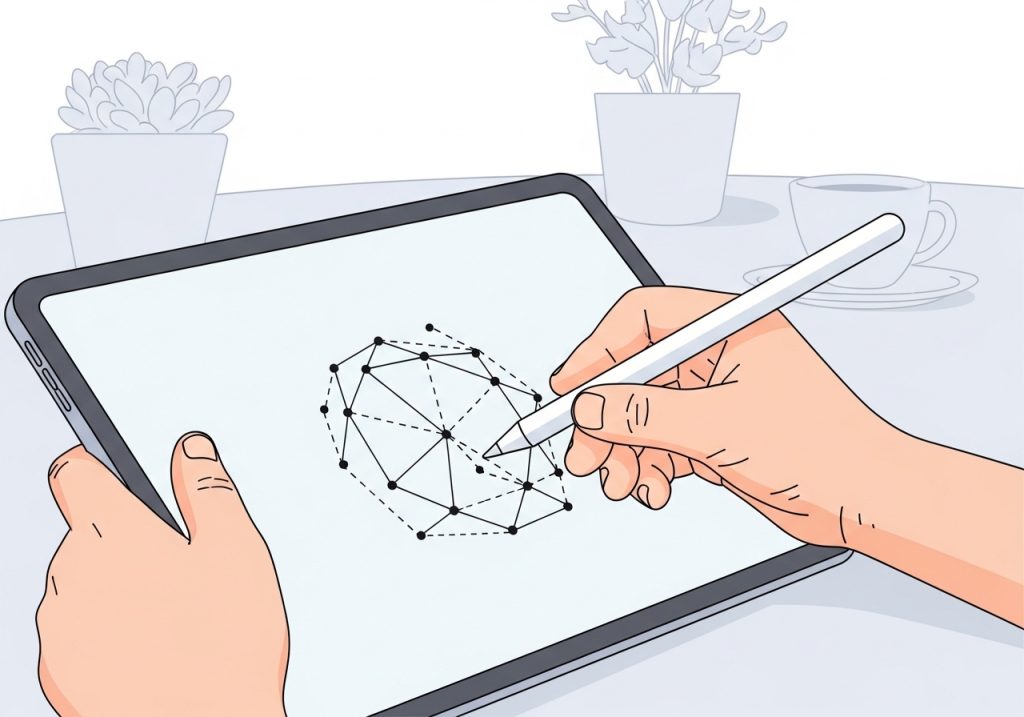
Drawing, tracing, and copying activities are foundational for building visual motor skills because they directly train the eye-hand connection on a two-dimensional surface. These tasks help learners practice matching their motor output to a visual guide. They are also easily adaptable to match any skill level.
To get started, you can use these progressive exercises:
- Tracing: Begin with simple, bold lines (straight, curved, zig-zag). As the learner gains confidence, introduce tracing basic shapes, letters, numbers, and eventually more intricate pictures. Worksheets where the learner helps a cartoon animal find its way through a path are excellent for this.
- Connect-the-Dots: These activities require visual scanning to find the next number in a sequence and motor planning to draw a line to it. This helps build sequencing skills alongside motor control.
- Copying Designs: Start with simple shapes like a cross, square, or triangle. Present a model and have the learner replicate it. Gradually increase the complexity by combining shapes or introducing intersecting lines. This challenges visual memory and the ability to reproduce what is seen without a guide to trace. It’s an important part of how fine motor skills develop through practice.
Step 3: Use Building and Construction for 3D Skills
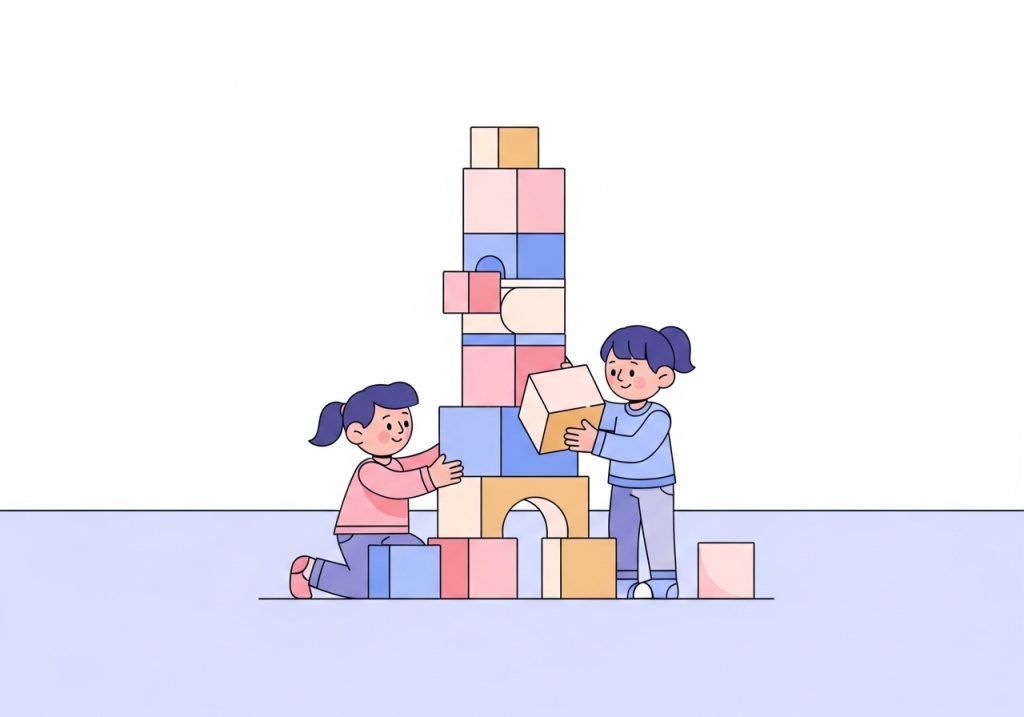
While paper-and-pencil tasks are essential, visual motor integration also extends into three-dimensional space. Building and construction activities require learners to perceive spatial relationships and manipulate objects with their hands. This helps develop spatial awareness, problem-solving, and motor planning in a tangible, hands-on way.
Here are some effective construction-based activities:
- Block Building: Ask the child to copy a simple structure you have built. For example, build a three-block tower or a simple bridge and have them replicate it. This forces them to analyze the spatial relationship between the blocks and plan their movements to recreate the design.
- Puzzles: Jigsaw puzzles are a classic visual motor activity. The learner must visually scan for matching shapes and colors and then physically orient the pieces to fit together. Start with puzzles that have large pieces and clear images, gradually moving to more complex ones.
- Construction Toys: Toys like LEGOs, magnetic tiles, or Tinker Toys are excellent for following visual instructions. Using a picture guide, the child must identify the correct pieces and assemble them in the right sequence, which is a powerful way to integrate visual and motor skills. This is a fundamental part of a child’s overall skill development.
Step 4: Refine Control with Cutting and Lacing Activities
Activities that require precision and the coordinated use of both hands are excellent for refining visual motor control. Cutting with scissors and lacing cards demand sustained visual attention and careful motor adjustments. These tasks help build hand strength, dexterity, and bilateral coordination, which is the ability to use both sides of the body together in a controlled manner.
Consider these precision-focused activities:
- Cutting Practice: Begin with simple snipping tasks, where the child just makes small cuts into the edge of a piece of paper. Progress to cutting along thick, straight lines. As their control improves, introduce curved lines, zig-zags, and eventually simple shapes. This progression allows them to build skills systematically.
- Lacing Cards: Threading a shoelace or piece of yarn through holes on a lacing card requires precise eye-hand coordination. The child must visually target the hole and use controlled hand movements to guide the lace through. You can use pre-made cards or create your own by punching holes around the perimeter of a shape drawn on cardstock.
- Paper Folding: Simple origami or paper-folding tasks require the learner to follow visual cues and make precise folds. Activities like making a paper airplane or a simple animal encourage them to align edges and make sharp creases, refining their fine motor precision.
Step 5: Incorporate Movement with Gross Motor Play
Visual motor integration is not limited to the hands and fingers. It involves the entire body. Gross motor activities, which use the large muscles of the arms, legs, and torso, are critical for building a strong foundation for all motor skills. These larger body movements help develop body awareness, balance, and coordination on a larger scale, which in turn supports more refined control for tabletop tasks.
Here are some gross motor activities that support visual motor development:
- Ball Skills: Tossing, catching, and kicking a ball are classic visual motor tasks. Catching requires tracking a moving object and timing body movements to intercept it. Start with a large, soft ball to build confidence. Tossing a beanbag into a bucket or basket also helps develop aim and distance judgment.
- Balance and Coordination: Walking on a line on the floor, a low balance beam, or navigating an obstacle course requires the body to respond to visual information to maintain balance and avoid objects.
- Target Games: Activities like bowling, ring toss, or hopscotch all involve visually identifying a target and coordinating body movements to interact with it. For example, in hopscotch, a child must visually locate the correct square and plan their jump to land in it. Understanding the difference between these whole-body actions and smaller hand movements is key to appreciating how gross motor skills and fine motor skills work together.
Visual motor integration is a skill that develops with consistent and varied practice. By incorporating these five types of activities into therapy sessions, classroom centers, or daily routines at home, you can provide learners with the opportunities they need to build a stronger connection between their vision and their movements. Starting with foundational understanding and moving through drawing, building, cutting, and whole-body play creates a comprehensive approach that addresses all facets of this critical developmental skill. With patience and the right activities, you can help any learner build the confidence and coordination needed to succeed.
Ready to put these ideas into practice? Finding the right materials shouldn’t be another task on your to-do list. The Inspiring OT offers a wide range of practical, low-prep resources designed by a licensed occupational therapist to support skill development. From fine motor worksheets to visual-perceptual activities, these tools make it simple to implement effective strategies. Explore the shop to find engaging, evidence-informed printables that will help your learners build confidence and master new skills. Visit The Inspiring OT on Teachers Pay Teachers today to simplify your planning.
Leave a Reply