
The summer break offers a welcome change of pace, but it can also bring concerns about skill regression. For many learners, the long gap without structured practice can lead to a backslide in fine motor, visual motor, and academic abilities gained during the school year. Thoughtfully chosen summer worksheets can be a valuable tool for parents, therapists, and educators looking to bridge this gap. When used correctly, these activities provide targeted practice that maintains progress in a low-stress, engaging way.
The key is to approach summer learning with intention, not just to fill time. The goal is not to replicate a full school day but to offer short, focused bursts of practice that reinforce essential skills. This guide walks you through a five-step process for selecting and using summer worksheets to prevent skill loss and build a foundation for a successful return to school.
Step 1: Identify Key Skill Areas for Summer Focus
Before you begin searching for activities, the first step is to pinpoint which skills need the most attention. A generalized approach can be less effective than one that is tailored to the individual learner’s needs. Take some time to reflect on progress from the past school year, review any reports, or simply observe the child during daily activities to identify areas that could benefit from consistent practice.
Consider these common developmental areas:
- Fine Motor Skills: This includes pencil grasp, scissor skills, hand strength, and in-hand manipulation. Does the child struggle with buttoning shirts, using zippers, or holding a crayon correctly?
- Visual Motor Integration: This is the ability to coordinate visual information with motor movements. Look for challenges with handwriting (forming letters, spacing), drawing shapes, or completing mazes.
- Pre-writing and Handwriting Skills: Focus on letter formation, sizing, line placement, and legibility. Maintaining these skills prevents a difficult start when school resumes.
- Sensory Processing: While not always addressed with worksheets, think about how sensory activities can be paired with tabletop tasks. Does the child need movement breaks or specific seating to focus?
- Academic Skills: This could involve basic math concepts, letter and number recognition, or early reading skills that need reinforcement.
Creating a simple list of two or three priority areas will make your search for materials much more efficient. If you need a structured way to evaluate abilities, you can use a developmental milestones checklist to guide your observations and pinpoint specific areas for support.
Step 2: Choose Purposeful Summer Worksheets
With your focus areas defined, you can now search for high-quality summer worksheets that align with your goals. The internet has countless free resources, but not all are created with therapeutic or educational best practices in mind. Look for materials designed by professionals like occupational therapists or educators, as these often target specific developmental skills more effectively.
When selecting worksheets, ask yourself these questions:
- Is it skill-appropriate? The activity should be challenging enough to maintain a skill but not so difficult that it causes frustration. It should meet the learner at their current level.
- Is it engaging? Summer-themed activities, fun graphics, and varied tasks can make practice feel more like play. A worksheet that looks boring is likely to be met with resistance.
- Is the design clear and uncluttered? Visually busy pages can be overwhelming for many learners. Look for clean layouts with clear instructions and adequate space to complete the task.
- Does it build multiple skills? Many activities can support more than one goal. For example, a “cut and paste” worksheet can build scissor skills, visual-motor skills, and sequencing. Similarly, some worksheets incorporate challenges that build problem solving abilities alongside motor practice.

Gather a small collection of purposeful worksheets rather than printing a large, overwhelming stack. Having a curated selection of five to ten quality activities is more valuable than having a hundred generic ones.
Step 3: Integrate Worksheets into a Balanced Routine
How you present the worksheets is just as important as the worksheets themselves. Summer is a time for rest and play, so skill practice should be integrated into the day in a way that feels natural and predictable, not demanding. Forcing a child to sit for long periods will likely lead to frustration for everyone involved.
Instead, aim for short, consistent practice sessions. A 10 to 15-minute session each morning after breakfast can be a great way to warm up the brain and hands for the day. This creates a routine that the child can expect without it interfering with more unstructured summer fun.
Here are a few tips for building a balanced routine:
- Be consistent: Try to schedule worksheet time around the same time each day. This helps set expectations and reduces battles over when the work gets done.
- Keep it short: Respect the child’s attention span. It is better to have a focused 10 minutes of quality work than a frustrating 30 minutes of struggle.
- Alternate with play: Frame worksheet time as a brief “table time” activity that comes before a preferred activity, like going outside or playing a game.
- Offer choices: Let the learner have some control. You might say, “It’s time for our handwriting practice. Would you like to do the maze worksheet or the tracing worksheet today?” This simple choice can increase buy-in.
Remember that summer learning is a marathon, not a sprint. The goal is steady maintenance, not rapid advancement. A gentle and consistent routine will yield better results than sporadic, high-intensity sessions.
Step 4: Make Practice Sessions Positive and Motivating
Keeping the mood light and encouraging is essential for successful summer practice. If a child associates worksheets with pressure or criticism, they will learn to avoid them. The focus should be on effort and participation, not perfection. Creating a positive environment helps build confidence and fosters a willingness to try new things.
Use simple strategies to make the sessions more enjoyable. Providing the right tools, like fun pencils, colorful markers, or adapted scissors, can make a significant difference. You can also incorporate sensory strategies, such as allowing the child to sit on a wiggle cushion or listen to quiet music if it helps them focus.
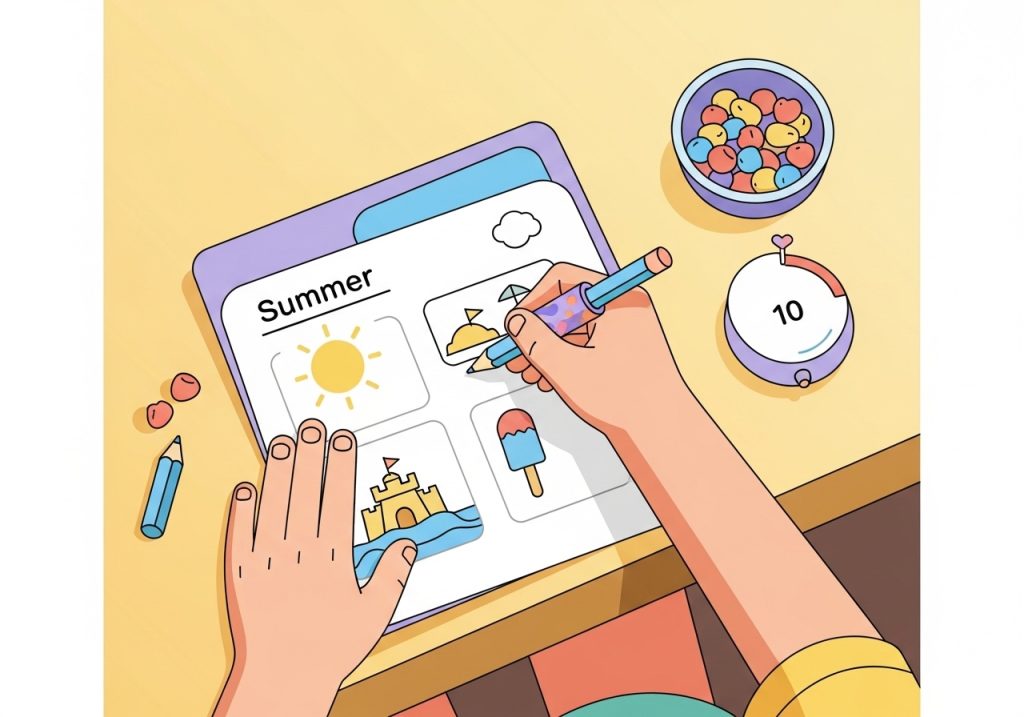
To boost motivation, consider these ideas:
- Use a visual timer: Knowing that the activity has a clear end point can relieve anxiety and help a child stay on task.
- Focus on effort, not outcome: Praise the child’s hard work. Say things like, “I can see you are concentrating so hard on coloring inside the lines,” instead of just, “Good job.” This approach supports the development of a growth mindset.
- Break down tasks: If a worksheet seems too long, cover part of it with a blank piece of paper or cut it in half. Completing smaller sections can feel more manageable.
- Turn it into a game: Use a spinner to choose which color crayon to use or roll a die to see how many letters to trace. Simple changes can transform a task into something more playful.
Step 5: Monitor Progress and Celebrate Small Wins
The final step is to pay attention to how things are going and adjust as needed. You do not need to conduct formal assessments. Simply observing the child’s work over time will give you valuable information. Are their lines becoming steadier? Is it easier for them to cut along a curved line? Are they completing tasks with less prompting?
Keep a small folder of completed work. Looking back at worksheets from the beginning of the summer can be a powerful way to show a child how much they have accomplished. This visual evidence of progress is a fantastic confidence booster.
When you notice improvement, offer specific, positive feedback. Celebrating small victories reinforces the child’s effort and shows them that their hard work is paying off. This positive reinforcement cycle encourages them to keep trying and helps solidify their new skills. If you notice a particular activity is consistently too difficult or causing frustration, do not be afraid to set it aside and try something different. The plan should be flexible and responsive to the learner’s needs.
By following these steps, you can use summer worksheets as a constructive tool to support a child’s development without sacrificing the fun and relaxation of summer break. The key is to be intentional, positive, and consistent. This approach helps prevent skill regression, builds confidence, and ensures learners are ready and able to tackle new challenges when they return to the classroom.
Ready to find engaging, skill-building activities for your learners? The Inspiring OT shop offers a wide range of printable resources designed by an experienced occupational therapist to make summer practice effective and fun. Browse our collection of low-prep worksheets and activities to support fine motor, visual motor, and handwriting skills all summer long.
Leave a Reply