
Summer break offers a welcome change of pace, but it can also bring concerns about skill regression, often called the “summer slide.” For children who are developing crucial fine motor, visual motor, and life skills, maintaining consistency is important. A practical and effective way to support this continued growth is through the structured use of summer worksheets. When chosen thoughtfully and integrated into a positive routine, these activities can prevent learning loss and reinforce progress made during the school year. This guide provides a step-by-step approach for therapists, teachers, and parents to use worksheets as powerful tools for skill maintenance over the summer months.
Step 1: Identify Key Skill Areas for Summer Practice
The first step in using summer activities effectively is to determine which skills need the most attention. Instead of choosing worksheets at random, take a moment to assess the learner’s specific needs. A targeted approach ensures that your efforts are focused and meaningful. Consider areas such as fine motor control, visual-motor integration, handwriting, sensory processing, and emotional regulation.
To identify these areas, you can review recent school reports, therapy progress notes, or notes from an Individualized Education Program (IEP). Direct observation is also an invaluable tool. Watch how the child interacts with toys, writing utensils, and daily tasks. Do they struggle with buttoning a shirt? Is their pencil grasp functional? Do they have difficulty cutting along a line? Answering these questions will help you create a shortlist of priority skills. For more complex needs, using a specialized tool can help. For example, you might use a detailed checklist to identify sensory processing patterns that could be supported with specific activities.
Step 2: Choose Developmentally Appropriate Summer Worksheets
Once you have identified your target skills, the next step is to find worksheets that match the child’s developmental level. The ideal activity presents a “just-right challenge.” This means it is difficult enough to promote skill development but not so hard that it causes frustration. An activity that is too easy can lead to boredom, while one that is too difficult can undermine a child’s confidence and motivation.
Look for worksheets with clear instructions, uncluttered designs, and engaging themes. Summer-related topics like beaches, camping, or animals can make practice feel more like play. For example, a tracing worksheet with ocean waves is often more appealing than one with simple lines. Pay attention to the specific skills each worksheet targets. A cutting practice sheet should have varied lines (straight, curved, zig-zag), and a handwriting page should use a font style consistent with what the child is learning. Variety is also important; a mix of coloring, cutting, tracing, and puzzle-like activities will help maintain interest throughout the summer.

Step 3: Create a Consistent, Low-Pressure Routine
Consistency is more important than intensity. Summer is a time for relaxation and fun, so skill practice should not feel like a chore. Integrating worksheets into a predictable, low-pressure routine can make them a natural part of the day. Short, frequent sessions are usually more effective than long, infrequent ones. A 15-20 minute session a few times a week is often enough to maintain skills.
Consider linking worksheet time to an existing part of your daily schedule. For example, you could do an activity after breakfast, during a quiet period after lunch, or while waiting for dinner. Create a comfortable and well-lit workspace free from distractions like television or tablets. By framing this time as a special one-on-one activity or a fun “brain game,” you can help build a positive association with learning. This approach is also excellent for fostering a growth mindset, where challenges are seen as opportunities to learn rather than as tests to be passed or failed.
Step 4: Adapt Activities for Sensory and Motor Needs
Worksheets are not limited to sitting at a table with a pencil. You can adapt activities to provide valuable sensory input and address broader motor development goals. Modifying how and where a worksheet is completed can increase engagement and enhance the therapeutic benefits of the task.
Here are a few simple adaptation ideas:
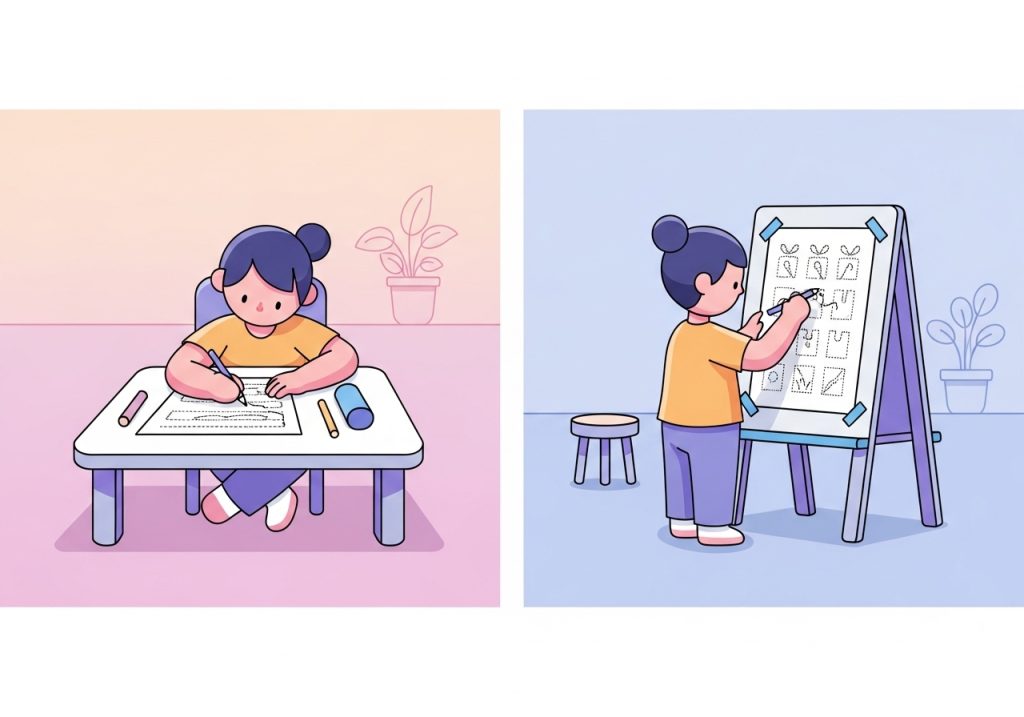
- Work on a Vertical Surface: Tape a worksheet to a wall, an easel, or the refrigerator. Working on a vertical surface encourages better posture, shoulder and elbow stability, and wrist extension, which are all important for handwriting.
- Change Positions: Have the child complete the worksheet while lying on their stomach (in a prone position). This helps build core strength, neck stability, and endurance for seated tasks.
- Use Different Tools: Swap pencils for crayons, markers, paint sticks, or even a Q-tip dipped in paint. You can also use small items like pom-poms or mini erasers to cover dots on a page, which works on pincer grasp.
- Add a Sensory Component: Place a worksheet on a textured surface, like a vibrating mat or a bumpy placemat. You could also have the child trace letters or shapes in a tray of sand or shaving cream before completing the paper version.
Step 5: Pair Worksheets with Hands-On Experiences
The ultimate goal of skill practice is to help children apply what they have learned to real-world situations. Worksheets are a tool to build foundational abilities, but pairing them with functional, hands-on activities helps with skill generalization. This connection shows learners the practical value of their efforts and makes the learning process more meaningful.
After completing a worksheet, think of a simple, related activity. For instance, after a scissor skills worksheet, the child could help cut up vegetables for a salad or make a simple paper craft. Following a handwriting page, they could write a postcard to a relative or help make a grocery list. When practicing money skills, you can follow up making change worksheets with a trip to a store to buy a small item. These connections bridge the gap between abstract practice and everyday life, reinforcing skills in a natural context.
Step 6: Review Progress and Offer Positive Feedback
Motivation is a key component of learning. Regularly reviewing a child’s work and providing specific, positive feedback can build confidence and encourage persistence. Instead of focusing on perfection, praise the effort, concentration, and improvement you see. General praise like “Good job!” is nice, but specific feedback is more powerful. Try saying, “I noticed how you took your time to make those circles round,” or “You did a great job holding the scissors correctly on that tricky corner.”
Keep completed worksheets in a folder or binder. At the end of each week or two, you can look through them together with the child. This creates a visual record of their progress and helps them see how much they have accomplished. If they get stuck or frustrated, remind them of past successes and frame mistakes as part of the learning process. This positive reinforcement makes skill practice an encouraging experience rather than a stressful one.
By following these steps, you can transform simple summer worksheets into a structured, engaging, and effective strategy for preventing skill loss. The goal is not to replicate a school day but to provide short, consistent opportunities for practice that reinforce skills in a positive and encouraging way. With a thoughtful approach, you can help learners maintain their hard-won progress and return to their learning environments in the fall feeling capable and confident.
Ready to make summer skill-building simple and effective? Explore The Inspiring OT’s shop for a wide range of practical, OT-designed printable activities and worksheets. Find the perfect low-prep resources to support fine motor, handwriting, and sensory skills for your learners today.
Leave a Reply