
Developing strong literacy skills is a complex process that goes far beyond recognizing letters and sounds. For many children, the journey to becoming a confident reader and writer begins with foundational motor and perceptual abilities. As occupational therapists, educators, and parents, we can support this journey by taking a systematic, whole-child approach. This guide breaks down the process into six practical steps, focusing on the essential pre-cursors to reading and writing that ensure learners build their skills on a solid base.
Step 1: Establish a Foundational Skills Baseline
Before beginning any targeted activities, it is crucial to understand a child’s current abilities. This first step involves careful observation to create a baseline of their readiness for literacy tasks. A clear picture of their starting point allows you to tailor interventions that are challenging but not frustrating. This ensures that you are meeting the child exactly where they are, setting them up for success from the very beginning.
During this observation phase, look at several key areas:
- Fine Motor Skills: How does the child hold a crayon or pencil? Is their grasp functional? Observe their ability to manipulate small objects, which indicates hand strength and dexterity needed for writing.
- Postural Control: Does the child sit upright at a table without slumping? Stable core muscles are necessary for freeing up the hands and arms for controlled fine motor tasks.
- Hand Dominance: Has the child started to show a preference for one hand over the other for skilled tasks like drawing or cutting? A consistent hand preference allows for refined motor control to develop.
- Visual Skills: Can the child track a moving object with their eyes? Do they look at what they are doing when coloring or cutting? Visual tracking and attention are critical for reading lines of text and copying information.
- Pre-Writing Strokes: Observe if they can imitate or copy basic shapes like a vertical line, horizontal line, or a circle. These strokes are the components of every letter in the alphabet.
You do not need formal assessments for this step. Simple, play-based observations during everyday activities can provide a wealth of information about a child’s strengths and areas that need support.
Step 2: Develop Essential Pre-Writing Competencies
Once you have a baseline, the next step is to focus on building the physical skills required for writing. Pre-writing competencies are the motor skills a child needs to master before they can form letters with ease and efficiency. Rushing to letter formation without this foundation can lead to poor handwriting habits and frustration. The goal is to develop hand strength, dexterity, and the ability to make controlled marks on paper.
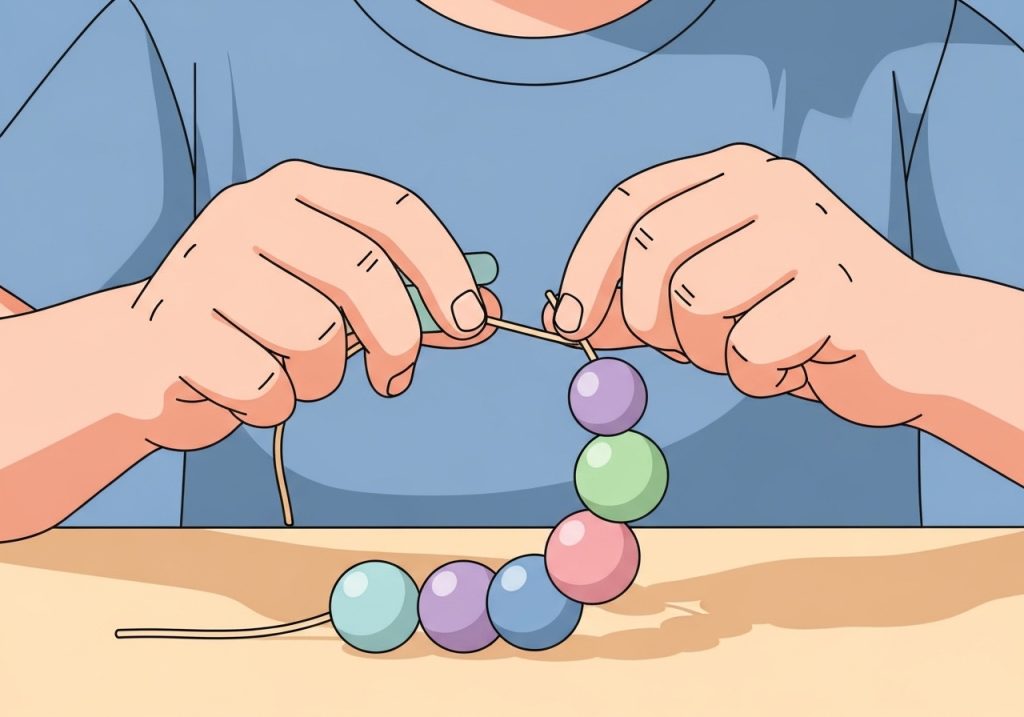
Activities to build these competencies include:
- Hand and Finger Strengthening: Use therapeutic putty, play-dough, or clay to have children pinch, squeeze, and roll. Squeezing water from sponges or using a spray bottle are also excellent ways to build hand strength.
- Pincer Grasp Development: Activities like picking up small items with tweezers, placing pegs in a pegboard, or threading beads encourage the use of the thumb and index finger, which is crucial for a mature pencil grasp.
- Practice with Pre-Writing Strokes: Introduce pre-writing strokes in a developmental sequence. Start with vertical and horizontal lines, then circles and crosses. Have children practice these strokes in various mediums, such as on a large whiteboard, with chalk on the sidewalk, or with their finger in sand before moving to paper and pencil.
Step 3: Integrate Visual Motor Activities
Visual motor integration is the ability to coordinate visual information with body movement. This skill is fundamental for both reading and writing. When reading, a child’s eyes must track smoothly across a page. When writing, their hands must accurately reproduce the shapes their eyes see. Strengthening this connection is a key part of building strong literacy skills.
Incorporate activities that require the eyes and hands to work together:
- Mazes and Dot-to-Dots: These classic activities encourage visual tracking and controlled pencil movements. Start with simple paths and gradually increase the complexity.
- Cutting Activities: Cutting with scissors is a fantastic visual motor task. Begin with snipping the edge of paper, then progress to cutting along straight lines, curved lines, and eventually simple shapes.
- Building and Copying Designs: Using blocks, LEGOs, or pattern blocks, have a child copy a design you have created. This task requires them to analyze a visual pattern and physically replicate it, strengthening spatial awareness. Many of these exercises are useful when you implement problem-solving activities that rely on visual cues.
- Tracing and Copying: Provide opportunities for tracing shapes, letters, and simple pictures. As skills improve, move to copying these forms from a model placed next to their paper.
Step 4: Use Multi-Sensory Teaching Methods
Children learn best when multiple senses are engaged. A multi-sensory approach makes abstract concepts like letter shapes and sounds more concrete and memorable. It helps create stronger neural pathways for learning and can be particularly effective for learners who struggle with traditional methods. By incorporating touch, movement, and sound, you can deepen a child’s understanding of literacy concepts.

Here are some multi-sensory strategies:
- Tactile Writing: Have children form letters using their fingers in a tray of sand, salt, or shaving cream. They can also trace letters cut from sandpaper or build them with pipe cleaners. The physical sensation reinforces the shape of the letter.
- Gross Motor Movement: Practice “air writing” where children use their whole arm to write large letters in the air. This helps them internalize the motor plan for each letter. You can also create letters with painter’s tape on the floor and have them walk or trace the shapes with their feet.
- Auditory Reinforcement: Consistently say the letter’s name and its most common sound while the child is forming it. This connects the visual shape, the motor movement, and the auditory sound, creating a strong learning link. Tailoring these activities becomes easier after observing a child’s sensory profile to see which inputs are most effective for them.
Step 5: Connect Practice to Functional Literacy Skills
For skills to become permanent, they must be meaningful. The final step in the teaching process is to move from isolated practice to functional application. When children see how writing and reading are used in everyday life, their motivation to learn increases. This step is about showing them that letters and words are powerful tools for communication and connection.
Find authentic reasons for children to write and read:
- Labeling and Lists: Ask them to help you write a grocery list. Have them label their artwork with their name or a title. Labeling containers for toys or art supplies also provides practical reading practice.
- Writing for a Purpose: Encourage them to write a thank you note to a grandparent, a birthday card for a friend, or a short story to go with a picture they drew. The purpose gives the task value.
- Incorporating Literacy into Play: Set up a “restaurant” where they can write down orders on a notepad. Create a “post office” where they can write and mail letters. Integrating literacy into play makes it enjoyable and organic. Making this a regular part of daily life is a great way to systematically teach life skills through practical application.
Step 6: Monitor Progress and Adapt Strategies
Building skills is an ongoing process that requires flexibility. The final step is to continually monitor a child’s progress and adjust your strategies as needed. What works one week may need to be modified the next as the child’s abilities grow. Regular check-ins allow you to celebrate small victories and identify any areas where the child might be getting stuck.
Keep the process dynamic by:
- Saving Work Samples: Keep a simple folder of writing and drawing samples over time. This creates a visual record of their progress and can be incredibly motivating for both you and the child to look back on.
- Observing and Taking Notes: Jot down quick notes about what you observe. Did they hold their pencil with a better grasp today? Did they successfully write their name without a model? These small observations help guide your next steps.
- Being Flexible: If a child is consistently struggling with a particular skill, it may be a sign to go back to a previous step and provide more support. For example, if letter reversals are common, more visual motor and body awareness activities may be helpful. The key is to respond to the child’s needs with patience and creativity. Adopting this flexible mindset is an important part of supporting a growth mindset in learners.
Building strong literacy skills is a developmental marathon, not a sprint. By following these steps, you can create a supportive and effective learning environment that honors the developmental process. Focusing on the foundational motor, visual, and sensory skills first provides children with the tools they need to become confident and capable readers and writers. This patient, structured approach ensures that every child can build the skills necessary for lifelong learning.
Ready to put these strategies into action? Finding the right activities to support skill development can be time-consuming. At The Inspiring OT, we create practical, OT-designed printable resources to make your job easier. From fine motor task cards to handwriting practice sheets, our tools are designed to be engaging, effective, and easy to implement. Explore our shop to find low-prep activities that will help your learners build a strong foundation for success.
Browse the full collection of OT resources on Teachers Pay Teachers.
Leave a Reply