
Developing analytical skills is essential for learners of all ages. The ability to look at two things and identify their similarities and differences is a foundational component of critical thinking, problem-solving, and comprehension. One effective tool that therapists, teachers, and parents can use to build this competency is a set of well-designed compare and contrast worksheets. These resources provide a structured way for students to organize their thoughts, process information visually, and articulate complex relationships between ideas or objects. When used thoughtfully, these activities go beyond simple matching, helping learners develop deeper cognitive and communication skills.
Step 1: Understand the Core Skills Behind Comparing and Contrasting
This foundational skill involves more than just observation. It requires learners to analyze information, identify relationships between objects or ideas, and organize their thoughts logically. Before a learner can effectively compare and contrast, they must engage several underlying cognitive processes. These include visual discrimination, which is the ability to detect differences in stimuli, and categorization, the ability to group items based on shared attributes. The act of comparing strengthens working memory as the learner holds multiple pieces of information in their mind simultaneously to evaluate them. It also supports executive functioning skills by requiring them to plan their approach, organize information systematically, and shift their attention between different features.
Step 2: Select Appropriate Compare and Contrast Worksheets
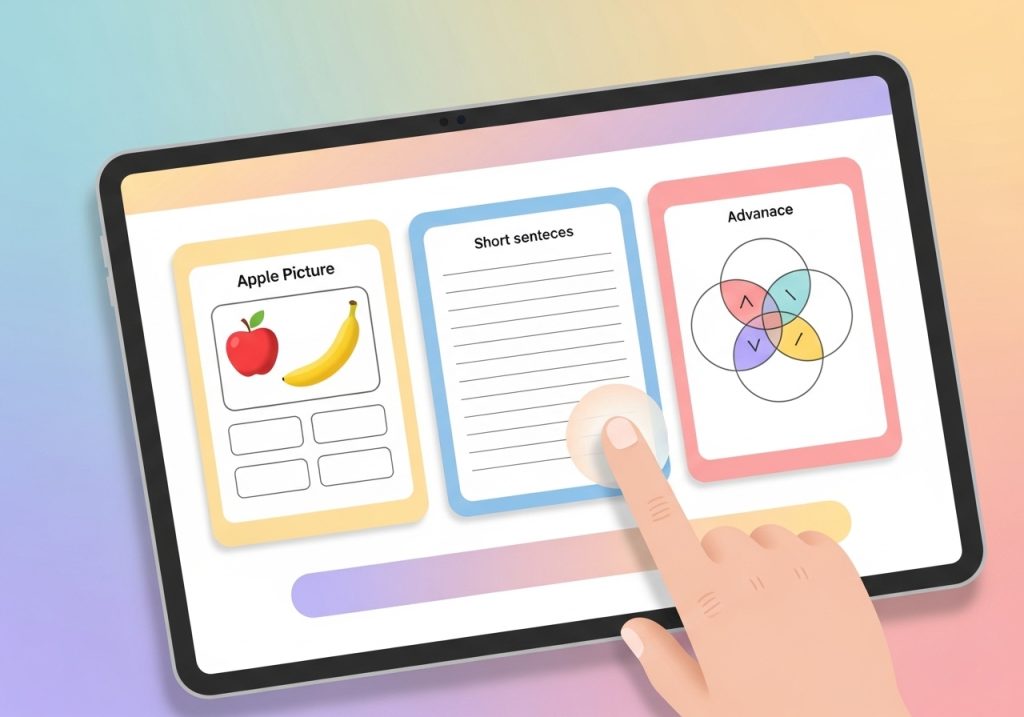
Choose worksheets that match the learner’s developmental level and specific goals. Options can range from simple picture-based activities for younger children to text-based comparisons for older students. For early learners or those working on foundational visual perception, start with worksheets that use clear, simple images of familiar objects, like comparing an apple to an orange. As skills progress, you can introduce more complex images or concepts. For students developing literacy, worksheets that involve comparing characters in a story, historical events, or scientific concepts are beneficial. The key is to ensure the task is challenging but achievable. This process is a key part of planning effective learning activities that meet learners where they are and scaffold their growth.
Step 3: Introduce the Concept and Vocabulary
Before beginning the worksheet, explicitly teach and model key vocabulary. Use words like ‘similar,’ ‘different,’ ‘both,’ and ‘while’ to provide a framework for their thinking. Start with a concrete example. Hold up two different colored pens and say, “How are these the same? They are both used for writing.” Then ask, “How are they different? This one is blue, and this one is black.” By modeling the language, you provide the verbal structure needed to complete the task. You can create a small anchor chart or word bank with key terms like “alike,” “different,” “in common,” and “on the other hand” for learners to reference during the activity.
Step 4: Facilitate the Comparison Process with a Graphic Organizer
Guide the learner as they fill out the worksheet, often using a Venn diagram or a T-chart. Prompt them to first identify similarities and then list the differences for each item. A Venn diagram is a particularly useful tool. Instruct the learner to list the unique characteristics of the first item in the left circle and the unique characteristics of the second item in the right circle. Then, in the overlapping section in the middle, they can list the characteristics that both items share. This visual organization makes the abstract concept of comparison concrete. Encourage them to think about various attributes, such as function, size, color, shape, and category, to promote thorough analysis.

Step 5: Bridge the Skill to Writing and Expression
Transition from the graphic organizer to constructing sentences. Help the learner use the information they gathered to write or say full sentences that accurately compare and contrast the subjects. This step is critical for transferring the skill from a visual-motor task to a functional communication skill. You can provide sentence starters like, “Both a cat and a dog have ______” or “A cat is different from a dog because ______.” This practice directly supports writing organization, paragraph construction, and overall comprehension. Connecting the visual organization of the worksheet to written output is an excellent way of strengthening foundational literacy skills by helping students structure their thoughts before writing.
Step 6: Adapt the Activity for Diverse Learners
Modify the task to meet individual needs. Use real-life objects, provide a word bank, or allow drawing instead of writing to ensure the activity is accessible and effective for everyone. For a learner who benefits from tactile input, provide two real objects (like a fork and a spoon) to hold and explore while discussing similarities and differences. For students who struggle with handwriting, allow them to dictate their answers or use pre-made word cards to place on the worksheet. If the worksheet’s content is too abstract, connect it to the learner’s personal interests, such as comparing two favorite video game characters or two types of dinosaurs. The goal is to isolate the skill of comparing and contrasting, so adapting the other demands of the task ensures the focus remains on building that specific cognitive ability.
By following these steps, you can transform a simple worksheet into a powerful learning experience. Using compare and contrast worksheets intentionally helps build a range of important skills, from visual perception and organization to written expression and abstract reasoning. The structured format provides clear support for learners, allowing them to practice analytical thinking in a way that is manageable and builds confidence. Integrating these activities into therapy sessions, classroom instruction, or at-home practice offers a practical way to develop the critical thinking skills necessary for academic and real-world success.
Ready to support your learners with practical, effective tools? The Inspiring OT offers a wide range of printable activities and resources designed by an experienced occupational therapist. Find engaging, low-prep worksheets and guides to help build essential skills in your classroom, therapy session, or home. Explore the shop today to discover resources that make skill-building meaningful and successful.
Leave a Reply