
As therapists, educators, and parents, we often encounter various learning strategies. One term that frequently comes up is rote learning. But what is the complete rote learning def, and what is its proper place in skill development? This method, centered on repetition and memorization, is sometimes viewed critically, yet it remains a fundamental part of how we learn certain types of information. Understanding its strengths and weaknesses is essential for effectively supporting our learners. This guide explores the definition of rote learning, its role in building foundational knowledge, and how to balance it with strategies that foster deeper comprehension.
Understanding the Core Rote Learning Def
The rote learning def, at its simplest, is a memorization technique based on repetition. The primary goal is to recall information exactly as it was learned. This method emphasizes storage and retrieval of facts without necessarily requiring a deep understanding of the concepts behind them. Think of it as creating a direct pathway in the brain to a specific piece of data. When a prompt is given, the memorized answer is retrieved automatically.
This process is different from meaningful learning, where a learner connects new information to existing knowledge, building a conceptual framework. While meaningful learning focuses on the “why,” rote learning is primarily concerned with the “what.” It’s the mechanism behind knowing that 2+2=4 or that “C-A-T” spells cat, often before a child understands the mathematical or phonetic principles involved. It is a tool for automaticity, allowing foundational information to be recalled instantly without conscious effort.
Common Examples of Rote Learning in Action
We use rote learning constantly, often without realizing it. It is particularly effective for information that is arbitrary or needs to be recalled quickly and accurately. Some of the most common applications in therapy and education include:
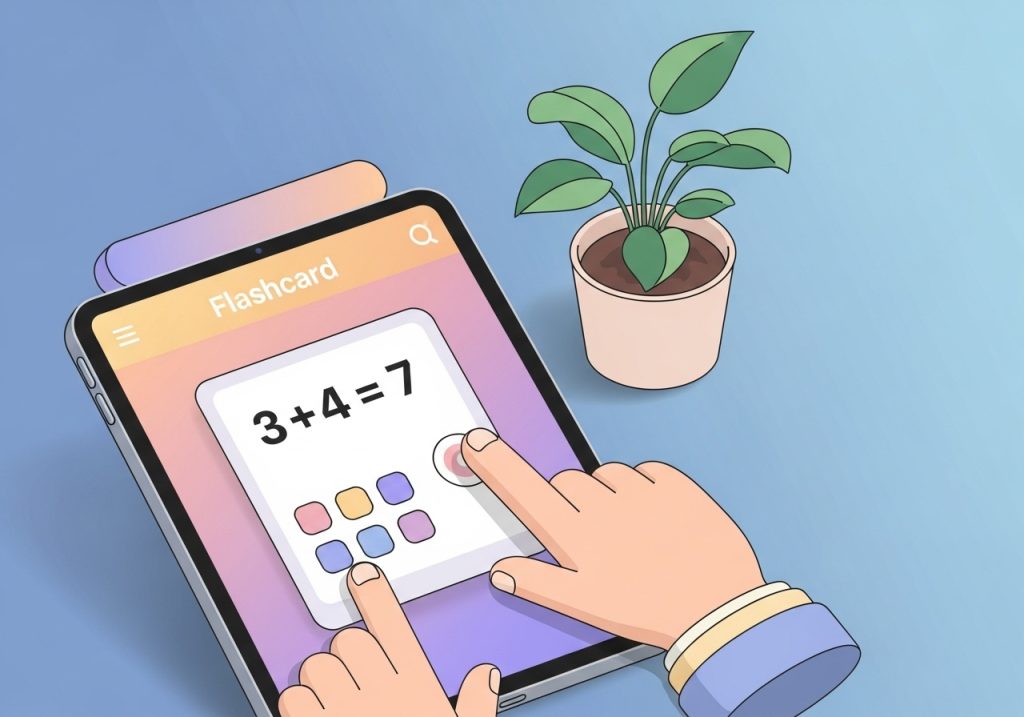
- Math Facts: Memorizing multiplication tables, addition, and subtraction facts allows learners to solve more complex problems efficiently. Without this automatic recall, a student’s working memory would be overloaded with basic calculations.
- Literacy Basics: Learning the alphabet, letter sounds, and sight words are classic examples. These elements of reading must become automatic for a child to achieve fluency and focus on comprehending the text. Consistent practice helps in building foundational literacy skills that support future academic success.
- Spelling Words: Weekly spelling lists rely on rote memorization to help students learn the specific letter sequences of words, especially those with irregular spelling patterns.
- Safety Information: Children are taught to memorize their full name, home address, and a parent’s phone number. In this context, speed and accuracy are critical, making rote learning the ideal method.
- Procedural Steps: Learning the sequence for tying shoes or washing hands often starts with memorizing a series of steps through repeated practice.
The Role of Rote Learning in Skill Acquisition
The main advantage of rote learning is its ability to build automaticity. When a learner can recall foundational information without thinking, it frees up cognitive resources to tackle more complex, higher-order tasks. For an occupational therapist, this might mean a child can automatically recall the steps to put on a jacket, allowing them to focus on the fine motor skill of managing the zipper.
For a teacher, a student who has memorized their math facts can dedicate their mental energy to understanding the logic of a multi-step word problem. This cognitive offloading is important for preventing frustration and building confidence. It provides a solid base of knowledge upon which more sophisticated understanding can be built. Without a memorized set of basic facts, learners may struggle to engage with more advanced concepts that depend on that foundational knowledge.
The Limitations: When Rote Learning Isn’t Enough
Despite its benefits, rote learning has significant limitations. Its greatest weakness is that it does not promote true comprehension or critical thinking. A learner might be able to recite a definition perfectly but be unable to apply the concept in a new or unfamiliar situation. This can lead to knowledge that is “brittle” and context-dependent, meaning it is difficult to generalize.
Over-reliance on memorization can discourage curiosity and problem-solving. If learners are only rewarded for correct recall, they may not develop the habit of asking “why” or exploring connections between ideas. This is why it is so important to pair rote methods with activities that encourage analysis and reasoning. For example, after memorizing historical dates, a student should engage in discussions about the cause and effect of those events. Pairing memorization with activities aimed at developing critical thinking skills ensures knowledge is both retained and understood.
How to Balance Rote and Meaningful Learning
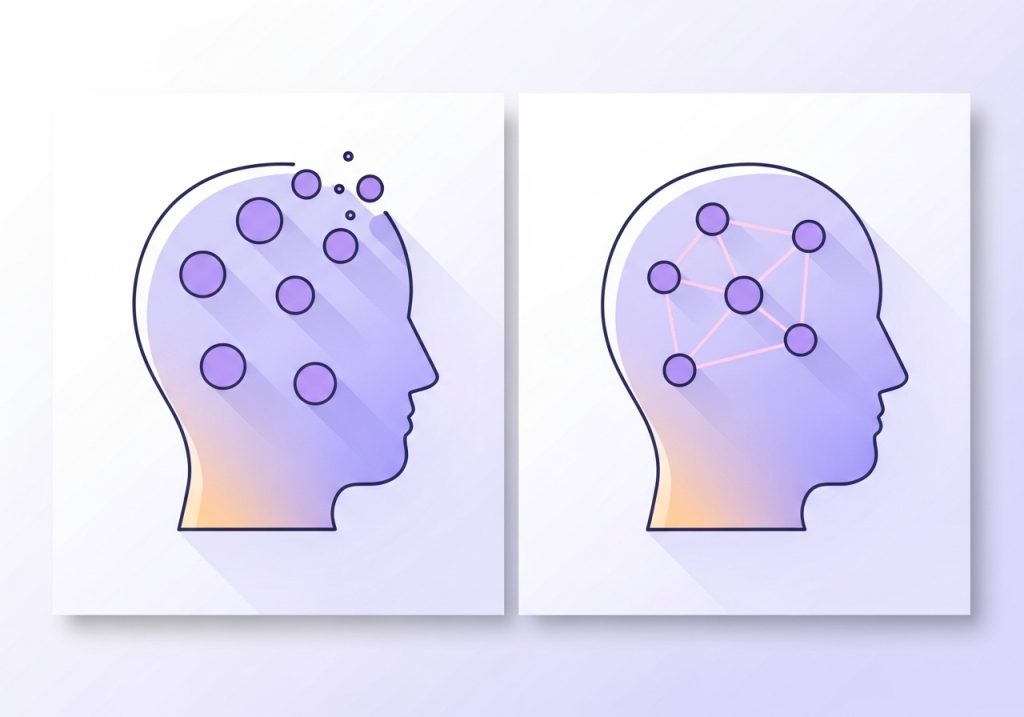
The most effective educational and therapeutic approaches do not treat rote and meaningful learning as opposing forces. Instead, they integrate them. Rote learning is best used to internalize the building blocks, while meaningful learning is used to assemble those blocks into a functional structure.
Consider the task of learning to write. A child first memorizes the shapes of letters (rote). They then learn the sounds associated with those letters (rote). Eventually, they use this automatic knowledge to construct words, form sentences, and express complex ideas (meaningful). One without the other is incomplete. Effective instruction involves identifying which elements of a new skill require automatic recall and which require deep conceptual understanding. This allows you to apply the right strategy at the right time, creating a comprehensive learning experience.
Practical Strategies for Effective Implementation
To make rote learning more engaging and effective, it’s helpful to move beyond simple drill-and-repeat. Here are some practical strategies for therapists, teachers, and parents:
- Use Multisensory Techniques: Engage multiple senses to reinforce memory. A learner can write a spelling word in sand, say the letters out loud, and trace them with their finger. This creates stronger neural pathways than using a single sense.
- Incorporate Rhythm and Music: Setting information to a catchy tune or rhythm, like the classic “Alphabet Song,” is a powerful mnemonic device that makes memorization feel less like work.
- Gamify the Practice: Turn memorization into a game. Use flashcard races, online quizzes, or board games to make repetition fun and motivating.
- Apply Spaced Repetition: Instead of cramming, review information at increasing intervals over time. This technique is proven to move information from short-term to long-term memory more effectively.
- Provide Context: Even when the goal is memorization, always explain the “why.” A child is more motivated to learn their address if they understand it helps them stay safe. Connecting facts to a meaningful purpose aids retention.
- Monitor Progress Clearly: Use simple tools to track progress on a list of skills being learned. Seeing improvement over time, such as mastering a new set of sight words or math facts, can be a powerful motivator for learners.
Rote learning is not an outdated method but a specialized tool. When we understand the rote learning def and its appropriate applications, we can use it strategically to build a foundation for automaticity. This frees up our learners’ minds to engage in the creative, critical, and analytical thinking needed for true mastery. By balancing memorization with activities that foster deep understanding, we can provide a well-rounded and effective path to skill development.
Ready to put these strategies into action? Finding the right tools can make all the difference in building foundational skills. At The Inspiring OT, you’ll find a wide range of practical, evidence-informed activities and worksheets designed by an experienced occupational therapist. Explore our collection of low-prep, engaging resources to support fine motor, visual motor, sensory processing, and life skills development.
Visit The Inspiring OT resource shop today to find the perfect materials to support your learners.
Leave a Reply