
Navigating the path to support a student who learns differently can feel complex, but it is also an opportunity to unlock their unique potential. When a learner struggles with reading, writing, or mathematics despite having the intelligence to succeed, they may have a specific learning disorder (SLD). Understanding this condition is the first step toward providing effective, targeted support. This guide offers practical, step-by-step strategies for occupational therapists, teachers, and parents to help students build skills, gain confidence, and thrive in their academic journey.
Step 1: Understand What a Specific Learning Disorder Is
A specific learning disorder is a neurodevelopmental condition that affects the brain’s ability to process and use information effectively. It creates persistent difficulties in key academic areas. This is not a reflection of a child’s intelligence or motivation. Instead, it points to a different way of learning that requires specialized strategies. The most common types of SLDs are categorized by the area of difficulty:
- Dyslexia (Impairment in Reading): This involves challenges with accurate word recognition, decoding, and spelling. A student with dyslexia may read slowly, guess at words, or struggle to comprehend what they have read.
- Dysgraphia (Impairment in Written Expression): This affects writing skills. Difficulties can appear in spelling, grammar, punctuation, and the clarity or organization of written ideas. The physical act of handwriting can also be challenging, involving poor letter formation and spacing.
- Dyscalculia (Impairment in Mathematics): This involves difficulties with number sense, memorization of arithmetic facts, and accurate calculation. A student may struggle to understand quantities, mathematical concepts, and problem-solving.
Recognizing that an SLD is a brain-based difference is essential. It allows us to shift the focus from a student’s perceived shortcomings to finding the right tools and methods to match their learning style.
Step 2: Identify Strengths and Challenges Through Observation
Before implementing any strategy, it is important to observe the whole child. While a formal diagnosis must be made by a qualified professional, informal observation by therapists, teachers, and parents can provide invaluable insight into a student’s profile. Pay attention to both their areas of difficulty and their strengths, as these strengths can be powerful tools in their learning.
When observing, consider these questions:
- Where does the breakdown occur? For a student struggling with writing, is the issue with generating ideas, organizing thoughts, spelling, or the physical act of forming letters?
- What are their coping mechanisms? Do they avoid certain tasks? Do they ask for help in specific ways? Do they use other skills, like verbal explanation, to compensate?
- In which contexts do they succeed? A child who struggles with written reports might be an excellent verbal storyteller or excel in hands-on projects. Identifying these areas of competence is key to building self-esteem.
- How is their emotional state? Note signs of frustration, anxiety, or withdrawal related to academic tasks. Supporting their emotional well-being is just as important as addressing the academic skill.
This careful observation helps create a personalized approach, ensuring that the strategies you choose address the student’s specific needs rather than applying a one-size-fits-all solution.
Step 3: Implement Multi-Sensory Teaching Strategies
One of the most effective approaches for supporting students with a specific learning disorder is multi-sensory instruction. This method engages more than one sense at a time (touch, sight, hearing, and movement) to reinforce learning. By creating multiple pathways for information to enter the brain, you improve the chances of retention and understanding.
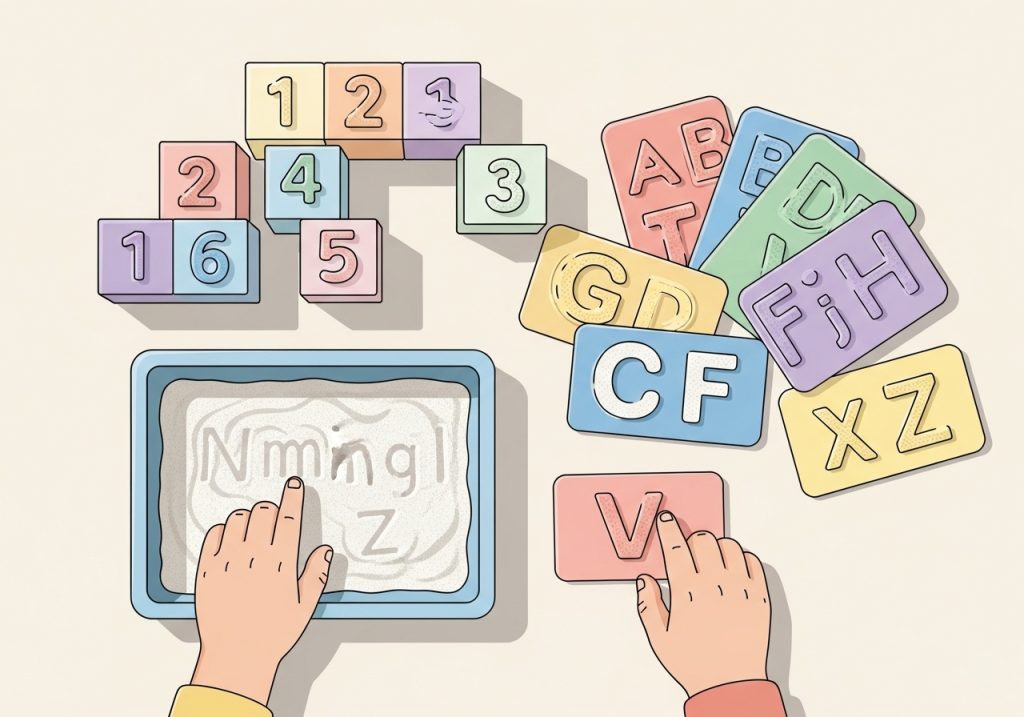
Here are some examples of multi-sensory techniques:
- For Reading and Spelling: Have students trace letters in a sand tray, on a textured surface, or with shaving cream. Use magnetic letters to build words. Incorporate tapping or clapping to segment sounds in words (phonological awareness).
- For Writing: Use graphic organizers with different shapes and colors to plan out ideas. Practice letter formation using raised-line paper to provide tactile feedback. Use tools like Wikki Stix or play dough to form letters.
- For Math: Use physical manipulatives like blocks, beads, or number lines to represent quantities and operations. Draw out math problems to visualize them. Use songs or rhymes to memorize math facts. While simple memorization has its limits, understanding the role of rote learning can help you decide when to apply memory-based techniques alongside deeper conceptual teaching.
Integrating these hands-on methods makes learning more engaging and accessible for students who struggle with traditional instruction.
Step 4: Introduce Practical Accommodations and Assistive Technology
Accommodations are adjustments that provide students with equal access to the curriculum without changing the learning expectations. They are tools that help level the playing field. Alongside accommodations, assistive technology (AT) can be incredibly helpful for students with SLDs.

Common accommodations include:
- Extended Time: Allowing more time on tests and assignments can reduce anxiety and give students the space to process information.
- Modified Assignments: This could mean reducing the number of math problems or providing a word bank for a writing assignment.
- Use of Graphic Organizers: Visual aids can help students organize their thoughts for writing or break down steps in a math problem.
- Preferential Seating: Placing a student near the teacher can help with focus and make it easier to ask for help.
Helpful assistive technology tools include:
- Text-to-Speech (TTS): Software that reads digital text aloud. This is a great tool for students with dyslexia, as it allows them to access grade-level content through listening.
- Speech-to-Text (Dictation): Software that converts spoken words into written text. This can help students with dysgraphia get their ideas down without being hindered by the physical act of writing or spelling.
- Digital Calculators and Math Apps: These can support students with dyscalculia by handling basic calculations, allowing them to focus on understanding higher-level concepts.
Step 5: Foster a Supportive and Growth-Oriented Environment
The emotional and psychological impact of a specific learning disorder can be significant. Students may feel frustrated, anxious, or have low self-esteem. Creating a positive and encouraging environment is fundamental to their success.
Focus on a growth mindset, where you praise effort, persistence, and the use of strategies rather than just the final correct answer. Help students understand that mistakes are a normal part of learning. Celebrate small victories and acknowledge their hard work. It is also beneficial to help them with developing essential soft skills like self-advocacy, which empowers them to ask for the help they need. By building their confidence, you give them the resilience to tackle challenges inside and outside the classroom.
Step 6: Collaborate Effectively with the Support Team
No one person can support a child alone. A strong, collaborative team of parents, teachers, occupational therapists, and other school specialists is the most effective way to ensure consistent support. Open communication and shared goals are critical.

Here are some tips for successful collaboration:
- Schedule Regular Check-ins: Brief, consistent meetings or email updates can keep everyone on the same page about what is working and what needs adjustment.
- Share Information: An OT might have insights into a student’s sensory or motor needs that can inform classroom strategies. A parent knows their child best and can share what works at home. Teachers see the student in the academic context. Pooling this knowledge creates a complete picture.
- Set Unified Goals: Work together to define clear, achievable goals for the student. When everyone is working toward the same outcome, the student receives a consistent message and support system.
By working as a team, you create a circle of support around the student, reinforcing the message that they are capable and that everyone is there to help them succeed.
Supporting a student with a specific learning disorder requires patience, creativity, and a deep understanding of their individual profile. By focusing on their strengths, using multi-sensory strategies, providing appropriate accommodations, and fostering a collaborative, positive environment, you can empower them to overcome obstacles. The goal is not to “fix” a problem, but to provide the right tools and supports that allow every learner to access their education and build a foundation for lifelong success. The key is to remain flexible, observant, and focused on the progress, no matter how small it may seem.
Ready to put these strategies into action? Finding the right resources shouldn’t be another challenge. The Inspiring OT offers a collection of practical, engaging, and low-prep printable activities designed by an experienced occupational therapist. Explore our shop for tools that support fine motor, visual motor, sensory processing, and handwriting skills to help your learners succeed.
Visit The Inspiring OT resource shop today and find the perfect activities to support your students.
Leave a Reply