
Morning meetings are a familiar part of the school day for many children, setting a positive tone and building a sense of classroom community. Beyond the warm greetings and shared news, these daily gatherings offer a structured opportunity to intentionally build essential skills. With the right approach, therapists and teachers can transform this routine into a powerhouse for development. Thoughtfully planned morning meeting activities can target everything from fine motor control and sensory regulation to social-emotional awareness, helping every learner start their day ready to engage and succeed.
Why Morning Meetings Matter for Skill Development
A consistent daily routine is foundational for learning. For many children, especially those with sensory processing differences or executive function challenges, predictability reduces anxiety and frees up cognitive resources for new tasks. The morning meeting provides this structure. It is a predictable sequence of events that signals the start of the learning day in a safe and supportive environment.
From an occupational therapy perspective, this routine is a perfect vehicle for co-regulation. The calm, organized nature of the meeting helps students feel grounded and ready to learn. It also creates a natural setting to practice the foundational skills required for classroom participation, such as sitting with a group, attending to a speaker, and transitioning between simple tasks. By integrating skill practice into this established routine, you can address developmental goals in a meaningful context that feels less like work and more like community connection.
The Core Components of an Effective Morning Meeting
A successful morning meeting typically includes four key components. Each part has a distinct purpose, yet they all work together to create a cohesive and supportive experience. Understanding these components allows you to be more intentional with your activity planning.
1. The Greeting
The greeting is the first step and sets a welcoming tone. Its purpose is to ensure every child is seen, heard, and acknowledged by name. This simple act builds a sense of belonging. The greeting can be a verbal “good morning,” a handshake, a high-five, or a shared song. This component targets social skills like making eye contact, using names, and initiating friendly interaction.
2. Sharing
During the sharing component, one or more students share something with the group. This is an excellent opportunity to practice communication skills, including expressive language, listening comprehension, and asking relevant questions. Sharing helps children learn to take turns, speak in front of a group, and show respect for their peers’ experiences.
3. Group Activity
The group activity is designed to build community and engagement through a shared, interactive experience. It can be a song, a short game, or a cooperative challenge. This is often the most dynamic part of the morning meeting and provides a great chance to work on motor skills, problem-solving, and following directions within a fun and motivating context.
4. Morning Message
The morning message is a brief written note from the teacher or therapist to the group. It is read together and often contains information about the day ahead. This component builds literacy skills like print awareness, phonics, and visual tracking. It also helps with planning and sequencing, as it gives students a preview of their schedule.
Targeted Morning Meeting Activities to Build Essential Skills
The real power of morning meetings lies in the specific activities you choose. By selecting activities that align with your students’ goals, you can embed therapeutic and educational practice directly into the daily routine. Here are some ideas organized by skill area.
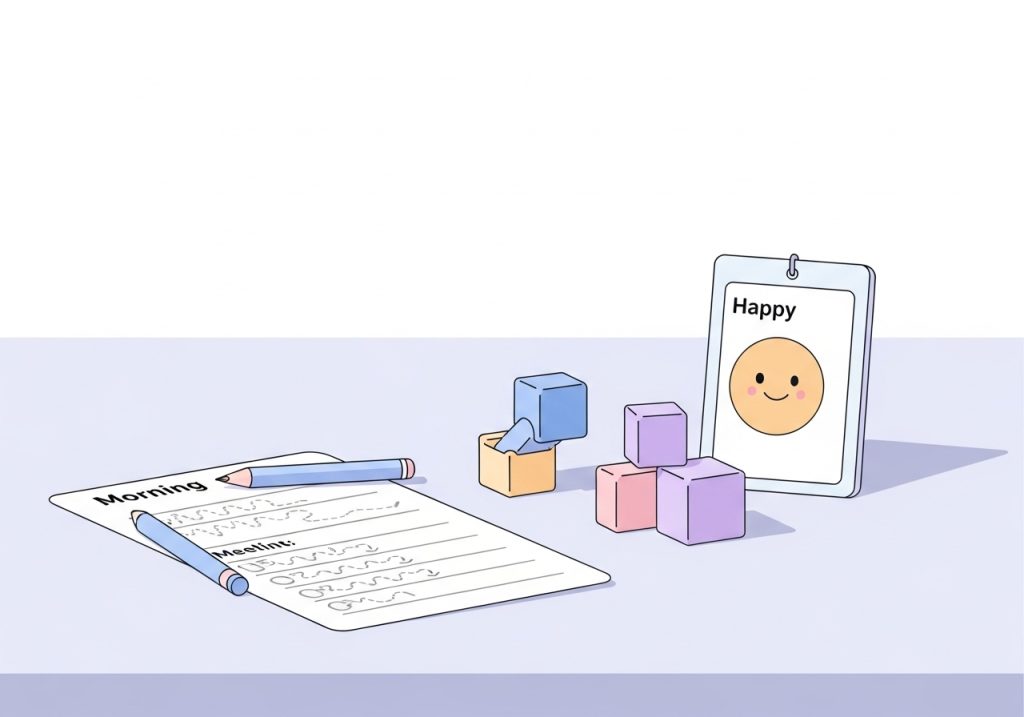
Fine and Visual Motor Skills
Many group activities can be adapted to strengthen hand muscles and improve hand-eye coordination. These skills are critical for tasks like writing and using classroom tools.
- Air Writing: During the morning message, have students use their “magic finger” to write a letter of the day in the air. This builds motor planning and letter formation habits.
- Clothespin Greetings: Pass a clothespin around the circle. Each child must squeeze the pin open to clip it onto the next person’s shirt or a shared object as they say good morning. This is a great hand-strengthening exercise.
- Follow the Pattern: Create a simple clapping or stomping pattern for the group to copy. This works on sequencing, motor imitation, and rhythm. Many phonemic awareness activities that use movement can be easily adapted for this purpose.
Sensory Processing and Regulation
The morning meeting is an ideal time to check in with students’ sensory systems and provide input that helps them feel calm, alert, and organized.
- Weather Report: Ask students to describe their internal “weather.” Are they feeling sunny (calm), cloudy (tired), or stormy (agitated)? This builds self-awareness and emotional vocabulary.
- Heavy Work Greetings: Instead of a simple wave, offer a firm handshake or a gentle “hug squeeze” on the shoulders. This proprioceptive input can be very grounding.
- Breathing Ball: Use an expandable ball to guide the group in deep breathing. Expand the ball as everyone inhales and collapse it as they exhale. This is a visual way to teach a powerful self-regulation strategy. Finding time for purposeful play that supports sensory growth can also reinforce these skills outside of meeting time.
Social-Emotional Learning
Building a positive community requires explicit practice in understanding emotions, showing empathy, and interacting positively with others.
- Compliment Circle: During the greeting or sharing, have each child offer a genuine compliment to the person next to them.
- Emotion Charades: Write different feeling words on cards. Have a student act out the emotion for the group to guess. This helps with recognizing non-verbal cues.
- Problem-Solving Scenarios: Briefly present a simple, relatable social problem during the morning message (e.g., “Two friends both want to use the same swing”). Ask the group to brainstorm kind and fair solutions.
How to Adapt Activities for Diverse Learners
To be truly effective, morning meeting activities must be inclusive. Every child should be able to participate in a way that is meaningful and successful for them. Adaptation is key to making this happen. Thoughtful modifications ensure that all students, regardless of their verbal abilities, motor skills, or attention levels, can feel like a valued member of the group.

Adapting Greetings and Sharing
For non-verbal students or those with social anxiety, traditional greetings can be challenging. Offer alternatives like waving, a thumbs-up, or using a picture card that says “Good Morning.” During sharing, provide sentence starters (“My favorite part of yesterday was…”) or allow students to share an object or drawing instead of speaking. Using a designated “talking stick” can also help manage turn-taking and reduce impulsivity.
Modifying Group Activities
Ensure group activities can be adapted for different physical abilities. For a motor imitation game, a child with limited mobility could mirror facial expressions or hand movements while seated. For activities that require fine motor control, provide adapted tools like built-up grips or larger manipulatives. For some students, it is helpful to provide specialized resources to support handwriting and visual motor integration in a more targeted way outside of the group setting.
Scaffolding the Morning Message
Make the morning message accessible by including pictures or symbols alongside the text. Highlight key words with different colors. For students who struggle with tracking, use a pointer to guide their eyes as the group reads together. Ask questions with clear, predictable answers to encourage participation from everyone.
Putting It All Together: A Sample Plan
Here is an example of what a week of skill-focused morning meetings might look like. Notice how the theme of each day targets a different skill area within the same consistent structure.
- Monday (Motor Skills Focus):
- Greeting: Finger-play rhyme with hand movements.
- Sharing: Share one active thing you did over the weekend.
- Activity: “Simon Says” with whole-body movements.
- Message: A message that includes a letter to “air write.”
- Tuesday (Social Skills Focus):
- Greeting: Go around the circle and say “Good morning, [Name]” while making eye contact.
- Sharing: Share one nice thing a friend did for you.
- Activity: Pass a beanbag around the circle without dropping it.
- Message: A message about taking turns on the playground.
- Wednesday (Sensory Focus):
- Greeting: Offer a choice of a high-five or a handshake.
- Sharing: Describe how you are feeling using a color.
- Activity: Guided deep breathing with a visual aid.
- Message: A message that asks students to identify loud vs. quiet parts of the day.
Morning meetings are much more than a way to start the day. They are a consistent, structured opportunity to build community and practice crucial developmental skills in a supportive group setting. By being intentional with your choice of greetings, sharing prompts, and group activities, you can address goals related to fine motor control, sensory regulation, and social-emotional learning. With simple adaptations, you can ensure that every child is able to participate fully, starting their day feeling connected, capable, and ready for what comes next.
Ready to make your morning meetings more engaging and effective? The Inspiring OT offers a wide range of practical, low-prep printable activities and resources designed by an experienced occupational therapist. From fine motor warm-ups to social-emotional learning tools, you can find everything you need to simplify your planning and support skill growth in every learner. Explore the shop today to find resources that bring skill-building to life.
Leave a Reply