
Phonological awareness is the ability to recognize and work with the sounds in spoken language. It is a critical auditory skill that forms the bedrock of literacy. Before children can connect sounds to letters (phonics), they must first be able to hear and manipulate those sounds. Integrating consistent, playful phonological awareness activities into routines can significantly support a child’s journey toward becoming a confident reader. Many of these skills are also a key part of what educators look for when completing a kindergarten readiness assessment, highlighting their importance in early education.
This guide offers five practical steps, moving from simpler to more complex skills, that therapists, teachers, and parents can use to build a strong phonological foundation in learners. These activities require minimal preparation and can be adapted for various ages and skill levels.
Step 1: Rhyming and Alliteration Games
The journey into phonological awareness begins with the broader sound patterns found in language. Rhyming and alliteration help children tune their ears to the sounds within words. These games focus on identifying words that sound alike at the end (rhyme) or at the beginning (alliteration).
Start by reading books rich with rhyming text. Pause before a rhyming word and encourage the child to guess what comes next. You can also play simple matching games with picture cards. For alliteration, try “I Spy” with a focus on the beginning sound of an object (“I spy something that starts with the /b/ sound”). Creating silly sentences where most words start with the same sound (“Big bears bounced balls”) is another fun way to practice.

Step 2: Sentence Segmentation
Before children can hear the smaller sounds within words, they need to understand that sentences are composed of individual words. Sentence segmentation activities help establish this concept of word boundaries. This skill is foundational for tracking print and understanding sentence structure later on.
Start with short, simple sentences. Say a sentence aloud, like “The cat is sleeping.” Ask the child to clap or tap for each word they hear. You can make this more concrete by having the child move a block or a token for each word. For example, they would move four blocks as you say the sentence. As they become more proficient, you can use slightly longer sentences. The goal is for the child to recognize that a continuous stream of speech is made up of distinct word units.
Step 3: Syllable Blending and Segmenting
Once a child understands words, the next level of awareness involves hearing the parts, or “beats,” within those words. Syllables are the chunks of sound that make up words, and working with them helps children break down longer words into more manageable parts. This skill is divided into two main parts: segmenting and blending.
- Syllable Segmenting: This is the process of breaking a word into its syllables. Have the child clap, stomp, or tap out the syllables in their name, familiar objects, or words from a story. For example, for the word “butterfly,” they would clap three times (but-ter-fly).
- Syllable Blending: This is the opposite process. You say a word broken into its syllables (“ba-na-na”), and the child has to blend them together to say the whole word (“banana”). You can make it a “mystery word” game to keep it engaging.
Step 4: Onset-Rime Manipulation
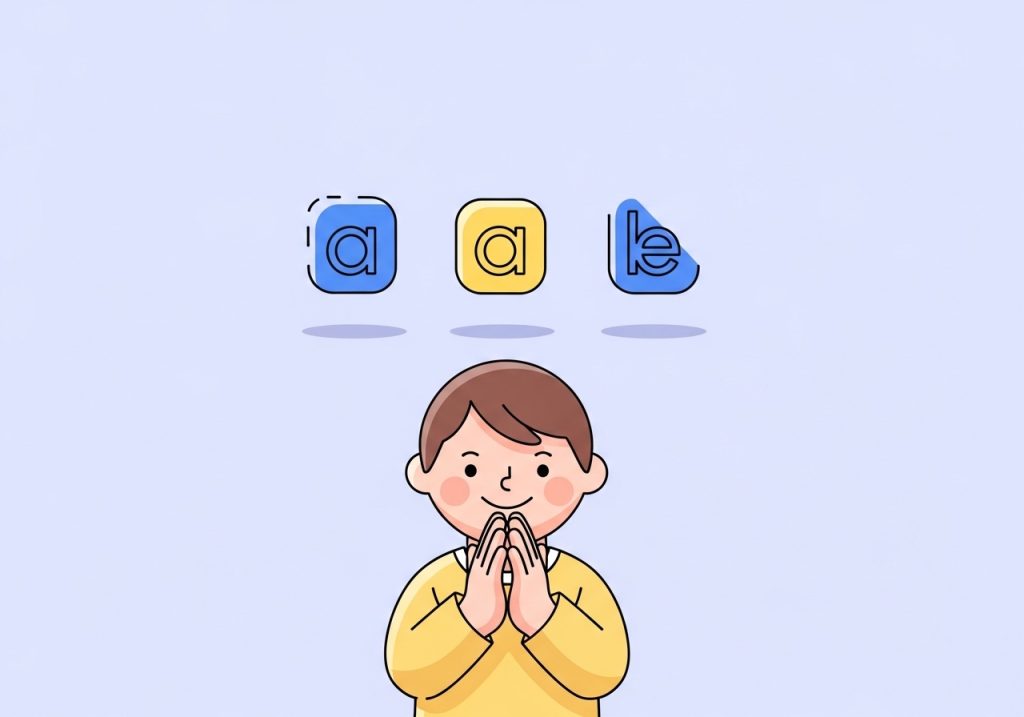
This skill bridges the gap between syllable awareness and individual sound awareness. The “onset” is the initial consonant sound or blend in a syllable, and the “rime” is the vowel and the rest of the sounds that follow. For example, in the word “cat,” the onset is /c/ and the rime is /at/.
Working with onsets and rimes helps children understand word families (e.g., cat, bat, hat, sat). You can play a game where you provide the rime, such as “-ake,” and take turns adding different onsets to make words (cake, rake, bake, take). This helps children see patterns in words and is a powerful tool for both reading and spelling development. Picture cards can be helpful here, where a child matches all the pictures that belong to the same word family.
Step 5: Phoneme Manipulation Practice
Phoneme awareness is the most advanced level of phonological awareness and involves working with the smallest individual sounds in words. This skill is directly linked to reading success. A child with strong phoneme awareness can hear that the word “cat” has three distinct sounds: /c/, /a/, and /t/. This is a complex area with several sub-skills.
Phoneme Blending
This involves listening to a sequence of separately spoken sounds and combining them to form a recognizable word. For instance, you would say “/sh/ /o/ /p/,” and the child would say “shop.” This skill is essential for decoding words when reading.
Phoneme Segmentation
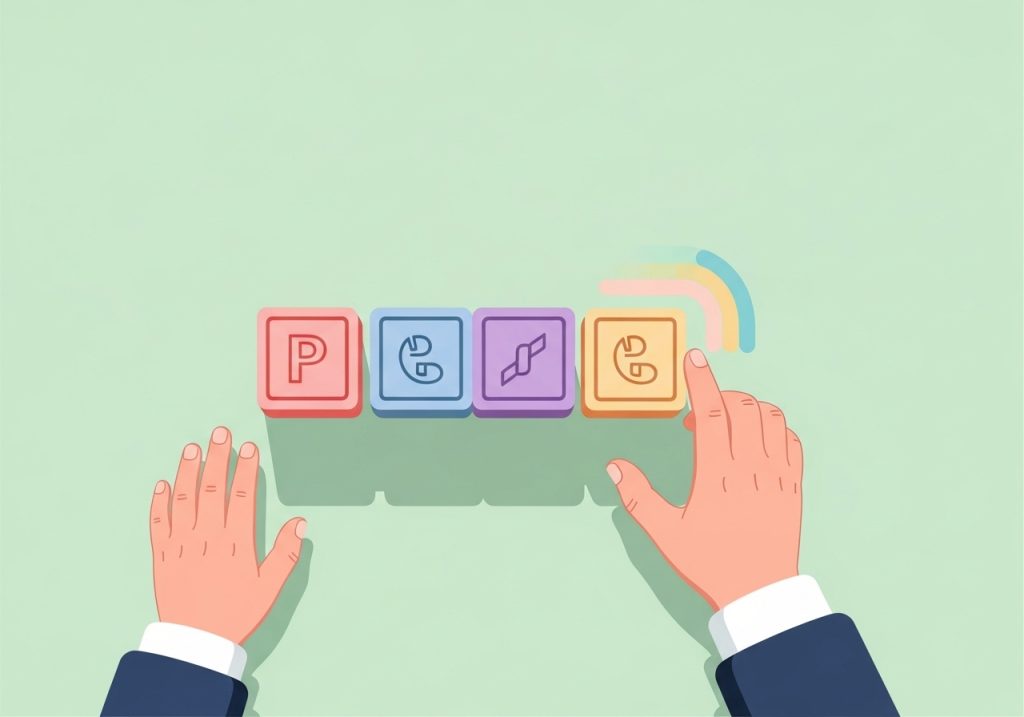
This is the ability to break a word into its separate sounds. For the word “sun,” the child would say “/s/ /u/ /n/.” Using small objects like blocks or coins (known as Elkonin boxes) can help make this abstract concept concrete. The child pushes one object into a box for each sound they hear in a word.
Phoneme Deletion and Substitution
These are the most challenging phoneme awareness tasks. Deletion involves identifying what word remains when a specific sound is removed. For example, “What is ‘smile’ without the /s/?” (mile). Substitution involves replacing one sound with another to make a new word, such as changing the /p/ in “hop” to /t/ to make “hot.” These activities require a high level of auditory processing and control. Because these tasks can be difficult, remembering to use positive reinforcement can keep learners motivated and engaged.
Mastering these phonological skills provides a solid foundation for literacy. It helps children understand how words are constructed from sounds, which is a prerequisite for mapping those sounds onto written letters. By progressing through these stages of phonological awareness activities, from rhymes and sentences to individual phonemes, you equip learners with the auditory tools they need to become successful readers and writers. For many students, these skills become key objectives, making a solid understanding of them essential when writing effective IEP goals for literacy.
Looking for ready-to-use, professionally designed resources to support skill development? The Inspiring OT offers a wide range of printable activities, assessments, and guides created by an experienced occupational therapist. Simplify your planning and help your learners succeed with engaging, low-prep materials. Explore the shop today to find practical tools for therapy, the classroom, or home.
Leave a Reply