
Navigating sensory needs is a critical part of supporting autistic individuals in their daily environments. For occupational therapists, educators, and parents, finding effective ways to help learners regulate, focus, and participate is a constant goal. The right sensory tools for autism are not just accessories; they are foundational supports that can make a significant difference in a person’s ability to engage with the world comfortably and successfully. Understanding which tools to use, and why, helps create a supportive environment where learners can thrive. This guide provides a professional overview of essential sensory tools, explaining their purpose and application in settings from the classroom to the home.
Weighted Lap Pads and Blankets
Weighted items are designed to provide deep touch pressure, a form of proprioceptive input that has a calming and organizing effect on the nervous system. When a weighted lap pad or blanket is placed on an individual, the gentle, firm pressure helps the body release serotonin and dopamine, which promotes a sense of security and relaxation. This is similar to the feeling of a firm hug. This input can help decrease restlessness and increase time-on-task, making it a valuable tool for seated activities.
Unlike a full-body weighted blanket, a lap pad is smaller and more portable, making it ideal for school desks, therapy sessions, or car rides. Research and clinical practice show that deep pressure can help reduce anxiety and improve attention, making these tools a practical support for many individuals. It is important to ensure the weight is appropriate for the user, typically following the guideline of 5-10% of their body weight, though consultation with an OT is always recommended.
- Key Features: Provides consistent deep pressure, portable for use in various settings, made with soft and durable fabrics.
- Who It’s Best For: Individuals who have difficulty sitting still during lessons, those who become easily overstimulated or anxious, and learners who benefit from calming input to improve focus during tabletop tasks.
Discreet Fidget Tools
Fidgets have become common, but it is important to distinguish between a toy and a tool. An effective fidget tool provides an outlet for movement and sensory input without becoming a source of distraction for the user or others. Discreet fidgets are small, quiet, and can be used with one hand, allowing a learner to manipulate them under a desk or in a pocket. This subtle motor activity can occupy restless hands, which in turn helps free up cognitive resources for listening and learning.
These tools are particularly useful for individuals who need to move to maintain an optimal level of arousal for attention. By providing a socially appropriate way to channel this need for movement, fidgets can reduce behaviors like pencil tapping, skin picking, or wiggling in a chair. The goal is to support self-regulation, not to distract from the primary task. Finding the right texture, resistance, and size is key to its effectiveness. According to a study on sensory tools, therapists often report that finding the right match for the individual is a critical factor for success, a principle that applies well to fidget selection.
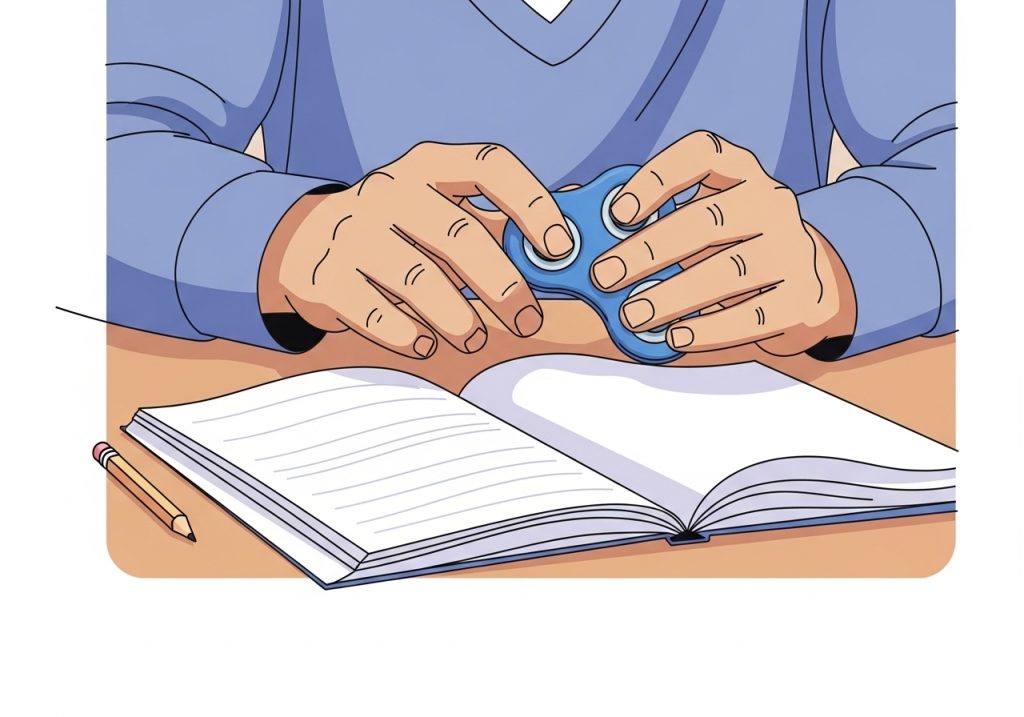
- Key Features: Small and portable, silent or near-silent operation, varied textures and resistances to match sensory preferences.
- Who It’s Best For: Learners in classroom settings who need to move to focus, individuals who need a quiet way to manage anxiety during assemblies or group work, and anyone who benefits from tactile input to stay regulated.
Noise-Reducing Headphones
Auditory sensitivity is common among autistic individuals, and environments like school hallways, cafeterias, and gymnasiums can be overwhelming. The constant hum of fluorescent lights, overlapping conversations, and sudden loud noises can trigger sensory overload, leading to distress, anxiety, and shutdown. Noise-reducing headphones are an essential tool for managing this auditory input. They work by muffling ambient sound, which reduces the overall sensory load without completely blocking noise.
This allows the user to remain present and engaged in their environment but with a lower level of auditory stimulation. For example, a student can still hear their teacher’s voice but the distracting background noise of shuffling papers and distant chatter is diminished. They are particularly useful for helping an individual navigate predictably loud transitions or events, such as fire drills or school assemblies. Providing access to these headphones gives learners a powerful tool for self-advocacy and regulation, helping them stay calm and focused in challenging situations. Successfully regulating sensory input is a key step that can support a learner’s readiness for participating in social skills training and other group activities.
- Key Features: Adjustable fit for comfort, effective sound dampening (not complete cancellation), durable for regular use.
- Who It’s Best For: Individuals with hypersensitivity to sound, those who are easily distracted by background noise, and learners who need support in loud communal spaces like cafeterias or during school events.
Visual Timers
The concept of time can be abstract and confusing, which often leads to anxiety, especially around transitions. A visual timer makes time concrete by showing its passage in a clear, graphical way. As time elapses, the colored portion of the timer disappears, giving the user an unambiguous representation of how much time is left for an activity. This predictability helps reduce the stress associated with not knowing when something will begin or end.
Visual timers are incredibly versatile. A teacher can use one to signal the last five minutes of free play, helping students mentally prepare for cleanup. A therapist can use it to structure a session, showing a client how long they will be working on a non-preferred task before moving to a preferred one. At home, a parent can use it to manage screen time or to create a smooth morning routine. By externalizing the management of time, these timers reduce power struggles and promote independence. Many sensory toolkits for autism include items like this to provide structure and reduce anxiety.
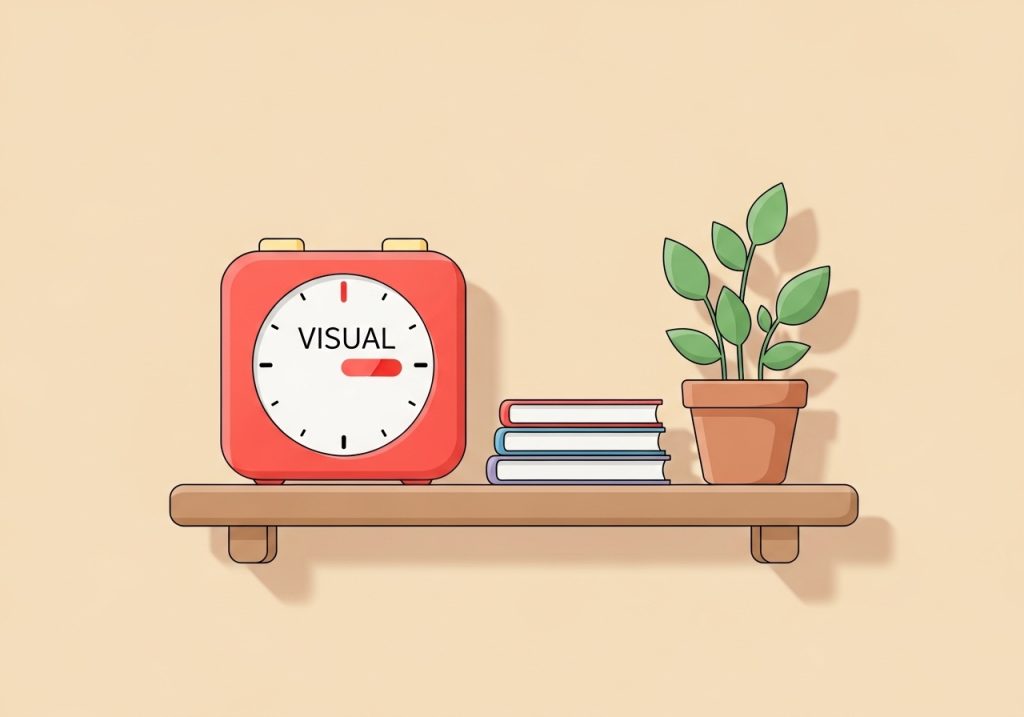
- Key Features: Clear visual display of time, silent operation to avoid auditory distraction, available in various time increments.
- Who It’s Best For: Learners who struggle with transitions, individuals who experience anxiety about schedules and time, and for use in structuring therapy sessions or classroom activities.
Chewable Jewelry and Tools
For individuals who seek oral sensory input, chewing can be a highly effective method of self-regulation. This input to the jaw provides intense proprioceptive feedback that can be very calming and organizing. However, this need often manifests as chewing on shirt collars, pencil ends, or fingernails, which can be unhygienic and destructive. Chewable jewelry, often called “chewelry,” provides a safe, durable, and socially acceptable alternative.
These tools come in various shapes, textures, and toughness levels to meet different oral motor needs. They can be worn as necklaces or bracelets, ensuring the tool is always accessible when needed. By redirecting the chewing behavior to an appropriate item, chewable tools help individuals regulate their nervous systems, reduce anxiety, and improve focus. They are an essential part of a sensory toolkit for anyone who benefits from oral motor input to stay calm and attentive.
- Key Features: Made from non-toxic, medical-grade silicone; available in different toughness levels (soft to extra tough); designed to be discreet and wearable.
- Who It’s Best For: Individuals who chew on non-food items, those who grind their teeth, and learners who use oral input to calm down or concentrate.
Why Compression Vests Are Effective Sensory Tools for Autism
Like weighted blankets, compression vests provide deep pressure input to help calm and organize the nervous system. The difference is that compression offers sustained, constant pressure rather than weight. These vests are typically made of a stretchy material like neoprene or spandex and are worn snugly around the torso. This gentle “hug” can increase body awareness and reduce defensive behaviors associated with sensory sensitivities.
Compression vests are often used for specific periods, such as during a challenging academic task or a transition, rather than all day. An occupational therapist can help determine an appropriate wearing schedule, which is often around 20-30 minutes at a time. The consistent proprioceptive feedback helps the user feel more grounded and secure in their body, which can lead to improved attention, better coordination, and a decrease in sensory-seeking behaviors. Research has shown that sensory integration therapies that use tools like these can improve social and emotional skills.
- Key Features: Provides constant, even pressure; made of breathable, flexible material; adjustable for a snug, comfortable fit.
- Who It’s Best For: Individuals who seek out deep pressure, those with poor body awareness, and learners who need calming input to manage overstimulation in busy environments.
Therapy Putty
Therapy putty is a simple yet powerful tool that offers both tactile and proprioceptive input. The resistance of the putty provides “heavy work” for the small muscles in the hands and fingers. This can be very organizing for the nervous system while also building the fine motor strength necessary for tasks like writing and buttoning. Manipulating the putty by squeezing, stretching, and rolling it is a quiet, contained activity that can help improve focus and reduce fidgeting.
Available in a range of resistances, from extra soft to extra firm, putty can be matched to an individual’s specific needs. It serves as an excellent warm-up activity before handwriting practice or can be used as a calming tool during times of stress. Hiding small objects like beads inside the putty adds a fine motor precision component, making it a versatile tool for achieving a wide range of important developmental skills examples for children.
- Key Features: Available in multiple resistance levels; non-toxic and non-oily; provides tactile and proprioceptive feedback.
- Who It’s Best For: Learners who need to build hand strength, individuals who benefit from tactile input to focus, and as a warm-up tool before fine motor activities.
Sensory Bins
A sensory bin is a container filled with tactile materials designed to stimulate the senses and encourage exploration. Common fillers include rice, dried beans, sand, water beads, or pasta. Small toys, scoops, and funnels can be added to promote fine motor skill development and imaginative play. For a child who is sensitive to certain textures, a sensory bin provides a safe and controlled way to explore them. For a child who seeks out tactile input, it offers a rich and satisfying sensory experience.
This type of activity can be both calming and alerting, depending on the individual and the materials used. It encourages skills like scooping, pouring, and measuring, all while providing valuable sensory information. Using a sensory bin is a fantastic example of how therapeutic play can be structured to meet specific developmental goals in an engaging, child-led way.
- Key Features: Highly customizable with different fillers and tools; promotes exploration and tactile tolerance; can be used for individual or small group play.
- Who It’s Best For: Young learners, individuals with tactile defensiveness or seeking behaviors, and for developing fine motor skills through a play-based approach.
Selecting the right sensory tools for autism involves careful observation and understanding of an individual’s unique sensory profile. A tool that is calming for one person may be overstimulating for another. The most effective approach is to build a personalized toolkit that offers a variety of options for different situations and needs. By working collaboratively, OTs, teachers, and parents can use these tools to create environments that foster regulation, engagement, and successful participation for every learner.
Ready to put these ideas into action? Finding practical, evidence-informed resources can make all the difference in supporting skill development. Visit The Inspiring OT shop for a wide range of printable activities, guides, and tools designed by an experienced occupational therapist. Explore our collection of low-prep materials to enhance learning and growth in your therapy sessions, classroom, or at home.
Leave a Reply