
Cognitive-behavioral therapy (CBT) provides a practical framework for addressing executive dysfunction by teaching individuals to identify and change the unhelpful thought patterns and behaviors that interfere with planning, organizing, and completing tasks. It focuses on building concrete skills to manage daily challenges more effectively. For therapists, teachers, and parents supporting learners with executive function difficulties, understanding CBT principles can offer a new set of tools to foster independence and confidence.
What is Executive Dysfunction?
Executive functions are the set of mental skills that help us get things done. They are the management system of the brain, responsible for goal-directed behavior. When these skills are impaired, it is known as executive dysfunction. This can affect people of all ages and is common in individuals with ADHD, autism, learning disabilities, and brain injuries, though it can also exist on its own.
Key areas impacted by executive dysfunction include:
- Working Memory: The ability to hold and use information for a short period, like remembering multi-step directions.
- Cognitive Flexibility: The capacity to switch between tasks or adapt to changing rules and routines.
- Inhibitory Control: The skill of managing impulses, staying focused despite distractions, and thinking before acting.
In practice, this might look like a student who knows the material but can’t start an essay, a child who has difficulty cleaning their room because they don’t know where to begin, or an adult who consistently runs late because they underestimate how long tasks will take.
The Core Principles of Cognitive-Behavioral Therapy for Executive Dysfunction
CBT operates on the idea that our thoughts, feelings, and behaviors are interconnected. A challenging situation can trigger negative thoughts, which in turn lead to unhelpful feelings and actions (or inaction). Cognitive-behavioral therapy for executive dysfunction applies this model to the specific struggles associated with planning, organization, and self-regulation. It is an approach that supports cognitive skills that help with planning, organization, and self-regulation.
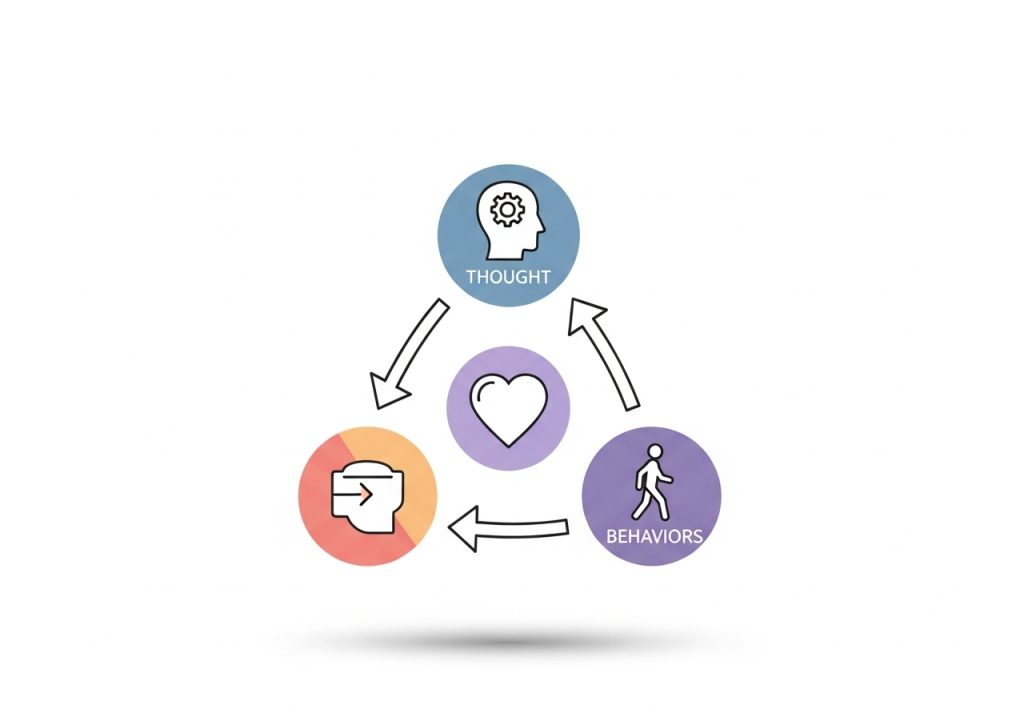
For example, a student facing a large project might think, “This is too hard. I’ll never finish it.” This thought can cause feelings of anxiety and being overwhelmed. The resulting behavior is often procrastination or avoidance. CBT helps the student recognize this pattern and intervene. Instead of letting the negative thought take over, they learn to challenge it and replace it with a more balanced and helpful one, such as, “This project is big, but I can break it into smaller parts and start with the first one.” This shift in thinking reduces anxiety and makes the behavior of starting the task much more likely.
Practical CBT Strategies to Support Executive Functioning
CBT is not just about talking; it is about doing. It equips individuals with practical strategies they can use every day. These techniques help build metacognition, the ability to think about one’s own thinking, which is a critical skill for managing executive dysfunction. Research shows that cognitive‐behavioral therapy (CBT) is an evidence‐supported treatment that can be effective for challenges related to self-regulation.
Cognitive Restructuring
This is the process of identifying and challenging unhelpful or inaccurate thoughts. For executive function challenges, these often sound like all-or-nothing statements (“I’m terrible at time management”) or catastrophizing (“If I forget my homework again, I’ll fail the class”). We can teach learners to catch these thoughts and reframe them into something more realistic and productive, like “Time management is hard for me, but I can use a planner to help me remember deadlines.”
Task Initiation and Breakdown
The feeling of being overwhelmed is a major barrier for individuals with executive dysfunction. A core CBT strategy is breaking large, intimidating tasks into small, concrete, and manageable steps. This is a fundamental component of many effective structured practice and problem-solving exercises. Instead of putting “clean room” on a to-do list, the list might become:

- Put clothes in the hamper.
- Gather all the trash and put it in the bin.
- Put books back on the shelf.
- Make the bed.
Checking off each small step provides a sense of accomplishment and reduces the mental energy required to start.
Problem-Solving and Goal Setting
CBT involves teaching a structured approach to problem-solving. This includes defining the problem clearly, brainstorming potential solutions, evaluating the pros and cons of each, choosing one to try, and then assessing the outcome. This systematic process helps learners feel more in control and less reactive. It is often paired with setting SMART (Specific, Measurable, Achievable, Relevant, Time-bound) goals to make progress tangible.
Developing Self-Monitoring Skills
Another important technique is helping individuals become more aware of their own patterns. This could involve using a simple log to track when they get distracted, what triggers their procrastination, or how long tasks actually take. This data provides valuable insights, helping them anticipate challenges and implement strategies proactively rather than reacting after a problem has occurred.
How to Integrate CBT-Informed Approaches in Different Settings
Applying these principles does not require you to be a licensed CBT therapist. Educators, OTs, and parents can integrate CBT-informed strategies into their existing supports to create a consistent and empowering environment.
For Therapists and Educators: Frame feedback and instructions using CBT language. Instead of just providing a visual schedule, explain its purpose: “This schedule helps us know what’s coming next so our brains don’t have to work so hard to remember everything.” Model breaking down tasks and thinking aloud through your own problem-solving process. Using practical guides for teachers designed by an OT can provide ready-made tools for classroom implementation. Celebrate the effort and the use of strategies, not just the final outcome.
For Parents and Caregivers: Help your child externalize their thoughts. Use tools like thought bubbles on a whiteboard to separate a thought from the person. Validate their feelings (“I can see you’re feeling overwhelmed by this assignment”) before gently guiding them toward a problem-solving strategy (“What’s one small piece we could do first?”). Reinforce routines and use external aids like checklists and timers to reduce the cognitive load at home.
By focusing on how thoughts influence actions, CBT provides a powerful and practical roadmap for building the executive function skills learners need. The goal is to shift the internal narrative from “I can’t” to “Here is how I can,” equipping individuals with the tools to navigate challenges with greater skill and confidence. A good first step is to pick one routine or task and practice breaking it down into smaller, more manageable steps.
Ready to put these strategies into action? The Inspiring OT offers a wide range of practical, low-prep printable activities and guides to support skill development. Created by an experienced occupational therapist, these resources are designed to make skill-building engaging and effective for therapists, teachers, and families. Explore the collection to find tools that simplify your planning and help your learners thrive.
Leave a Reply