

Recognizing the letters of the alphabet is a significant milestone for any young learner. It marks the first major step on the journey toward reading and writing. For therapists, teachers, and parents, finding effective and engaging letter recognition activities is key to building a strong foundation for literacy. While flashcards have their place, a richer, more hands-on approach can deepen understanding and make learning a positive experience for children. This guide offers practical strategies that integrate sensory input and motor skill development to support learners of all abilities.
Why Letter Recognition Is a Foundational Skill
Letter recognition is much more than the ability to sing the alphabet song. It is a complex process that involves several cognitive skills. True mastery means a child can identify a letter by its name, distinguish it from other letters, and eventually connect it to the sound it represents. This skill is critical for several reasons.
First, it involves visual discrimination. A child must learn to see the subtle differences between letters like ‘b’ and ‘d’ or ‘p’ and ‘q’. This ability to notice small details in shapes, lines, and orientation is essential for decoding words accurately later on. Without strong letter recognition, a child will struggle to tell words apart, slowing down reading fluency.
Second, it builds a foundation for writing. Before a child can form a letter, they must have a clear mental image of what it looks like. Activities that strengthen letter recognition also support the visual memory needed for handwriting. Children learn to identify the curves, lines, and intersections that they will eventually replicate with a pencil.
Finally, understanding letters is directly linked to phonological awareness, which is the ability to recognize and work with the sounds in spoken language. As children learn to identify a letter, they also begin to learn its corresponding sound. This letter-sound correspondence is the bridge to reading. Pairing visual letter identification with its sound is a powerful combination, and you can explore many essential phonemic awareness activities to strengthen this connection.
Multi-Sensory Letter Recognition Activities
Children learn best when they can engage multiple senses. Multi-sensory learning helps create stronger neural pathways, making information easier to recall. Instead of relying only on sight, incorporating touch, movement, and sound can make letter learning more concrete and memorable.
Tactile and Kinesthetic Ideas
Getting hands-on with letters helps children internalize their shapes and forms. Movement-based activities also help solidify learning, especially for active kids.
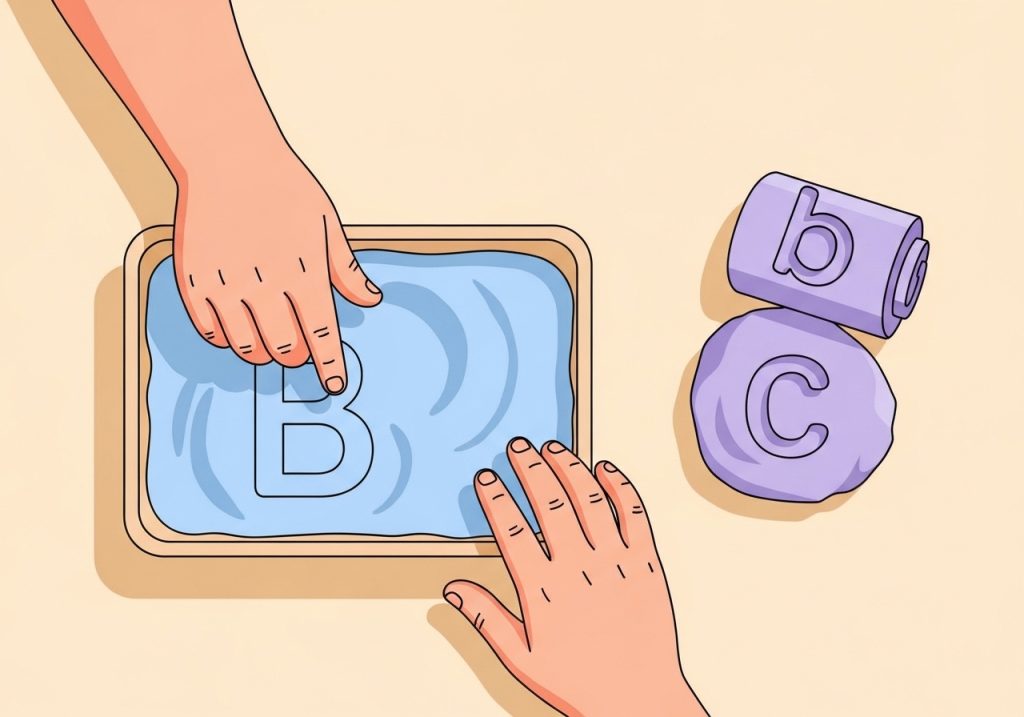
- Sand or Salt Trays: Pour a thin layer of sand, salt, or cornmeal into a shallow tray or baking sheet. Show the child a letter card and have them use their finger to trace the letter in the sand. The sensory feedback from the texture helps reinforce the letter’s shape.
- Play-Doh Letters: Rolling, squeezing, and shaping play-doh is excellent for hand strength. Have children roll out long “snakes” of doh and form them into different letters. They can also press letter stamps or magnets into a flattened piece of doh.
- Body Letters: A fun group activity is to have children use their bodies to form the shapes of letters. They can work alone to make a ‘C’ or ‘T’ or work with a partner to form more complex letters like ‘H’ or ‘M’.
- Sky Writing: Encourage children to use their whole arm to write a large letter in the air. This gross motor movement helps them feel the shape and direction of the letter’s strokes.
Combining Fine Motor Practice with Alphabet Learning
Many letter recognition tasks can be designed to simultaneously build fine motor skills. These skills involve the small muscles in the hands and are crucial for grasping a pencil, using scissors, and managing fasteners like buttons and zippers. Integrating fine motor work with alphabet learning is an efficient way to address multiple developmental goals.
Activities for Hand Strength and Precision
These activities encourage children to use a pincer grasp (thumb and index finger) and develop control over their hand movements.
- Clothespin Matching: Write uppercase letters on a set of clothespins and lowercase letters on a sturdy paper plate or piece of cardboard. The child then clips the clothespin with the uppercase letter to the matching lowercase letter. The act of squeezing the clothespin is great for strengthening hand muscles.
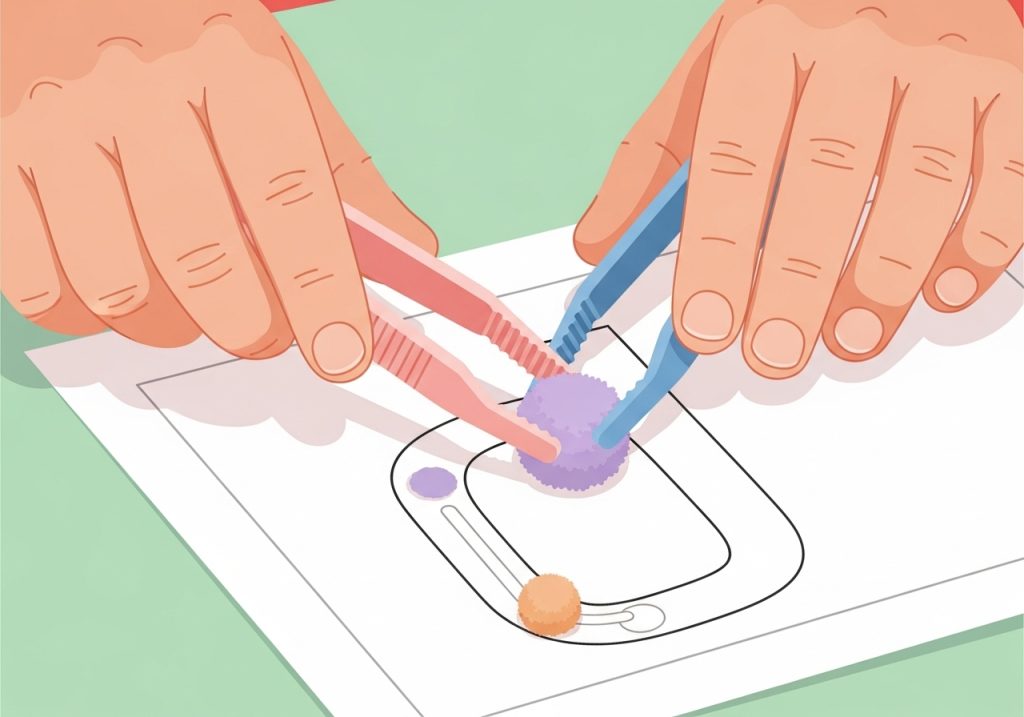
- Pom-Pom Tracing: Draw a large bubble letter on a piece of paper. Have the child use tweezers or their fingers to place small pom-poms or beads along the outline of the letter. This task requires precision and a steady hand.
- Sticker Letters: Similar to pom-pom tracing, children can place small stickers along the lines of a letter. Peeling the stickers off the sheet is also a fantastic fine motor exercise.
Using Printable Resources to Support Letter Knowledge
Printable worksheets and activities can be valuable tools for reinforcing letter recognition in a structured way. When chosen carefully and used creatively, they provide targeted practice and a way to track progress. They should complement hands-on learning, not replace it.
What to Look for in a Quality Printable
Not all worksheets are created equal. When selecting a resource, consider its design and purpose.
- Clarity and Simplicity: The best printables use simple, easy-to-read fonts and avoid visual clutter. Overly decorative letters or busy backgrounds can distract from the learning objective.
- Focused Skill Practice: A good worksheet focuses on a specific task, such as identifying a single letter, distinguishing between two similar letters, or matching uppercase to lowercase.
- Opportunities for Interaction: Look for activities that go beyond simple tracing. Worksheets that involve dabbing, cutting, or sorting can be more engaging and offer more skill practice.
As learners master their letters and begin reading, this structured practice can evolve. Eventually, they will move on to understanding sentences and paragraphs, where using tools like worksheets to identify the main idea becomes a useful next step in building comprehension.
Creative Ways to Use Printables
Think beyond the crayon. A simple worksheet can become a multi-purpose tool.
- Laminate for Reuse: Place worksheets in a plastic sleeve or laminate them. Children can use dry-erase markers, play-doh, or small manipulatives on the surface.
- Make it a Game: Turn a letter-finding worksheet into a game. Use a bingo dauber to stamp the correct letters or race against a timer to see how many can be found in one minute.
- Incorporate Cutting Skills: If a worksheet has letter cards, have the child practice their scissor skills by cutting them out before doing the matching activity.
Ultimately, supporting a child’s journey into literacy is about providing a variety of rich and meaningful experiences. By combining hands-on exploration, fine motor practice, and well-designed printables, you can create a learning environment that is both effective and enjoyable. The goal is to build not just knowledge, but also confidence and a lifelong love of learning. The most successful approach is one that is flexible and responsive to the individual child’s interests and needs.
Ready to put these ideas into practice? Finding the right materials shouldn’t be a challenge. The Inspiring OT offers a collection of OT-created printable resources designed to make skill-building simple and effective. From fine motor activities to handwriting practice, each resource is crafted to support therapists, teachers, and parents in helping learners succeed.
Explore The Inspiring OT shop on Teachers Pay Teachers and find low-prep, engaging activities to support your learners today.
Leave a Reply