

As an occupational therapist, educator, or parent, you are likely familiar with the challenge of making standardized materials work for every learner. While Common Core standards provide a framework for academic goals, the accompanying worksheets often follow a one-size-fits-all format. This can create barriers for students who need support with fine motor skills, sensory processing, or executive functioning. The good news is that with a therapeutic lens, you can transform standard common core worksheets from a source of frustration into a powerful tool for skill development. This guide provides five practical steps to adapt any worksheet to meet the diverse needs of your students.
Step 1: Analyze the Underlying Skill Demands
Before handing a worksheet to a student, it’s important to look past the academic task and analyze the foundational skills required to complete it. A simple math worksheet is not just about counting. It also demands that a student can hold a pencil, form numbers, stay seated, track from left to right, and filter out visual distractions. By breaking down the activity, you can identify potential points of difficulty and proactively offer support.
Consider these key areas:
- Fine Motor Skills: Does the task require precise pencil control for writing, coloring within lines, or cutting? Think about the student’s pencil grasp, hand strength, and in-hand manipulation skills.
- Visual Motor Skills: Is the student asked to copy shapes, letters, or words? This requires integrating visual information with motor output. Look at the demands on eye-hand coordination, spatial awareness, and visual tracking.
- Sensory Processing: How might a student’s sensory profile impact their ability to engage with the worksheet? A child who is sensitive to visual input might feel overwhelmed by a cluttered page. A student with decreased body awareness may struggle to sit upright at a desk without support.
- Executive Functioning: Many worksheets require planning, organizing materials, maintaining attention, and starting a task. For students who need support in these areas, a multi-step worksheet can be daunting without a clear strategy.
By conducting this quick analysis, you can pinpoint exactly where a student might need an adaptation. This shifts the focus from a child’s “inability” to complete a worksheet to your ability to modify the task for their success. Understanding the main types of skills in child development provides a solid foundation for this analysis.
Step 2: Simplify and Clarify Instructions
Worksheet instructions are often written for the “average” student and can be dense with multiple parts. A single sentence might ask a child to “Circle the noun, underline the verb, and draw a box around the adjective in each sentence below.” For a learner with challenges in working memory or attention, this is a recipe for cognitive overload. Simplifying the instructions is a powerful and easy modification.
Here are a few ways to make directions more accessible:
- Break It Down: Re-write or verbally present the instructions one step at a time. For the example above, you could first say, “Let’s find all the nouns. Just circle the noun in each sentence.” Once that is complete, you can introduce the next step.
- Use Visual Cues: Create a simple visual checklist with icons or pictures next to each step. You can also color-code the instructions. For instance, write “circle the noun” in red and give the student a red colored pencil.
- Model the First One: Complete the first problem or sentence together. This “I do, we do, you do” approach provides a clear model and ensures the student understands the expectation before working independently.
Simplifying directions reduces anxiety and frees up a student’s mental energy to focus on the actual learning task. It ensures that you are assessing their understanding of the content, not their ability to decode complex instructions.
Step 3: Adapt the Visual Layout of Common Core Worksheets
The visual presentation of a worksheet can significantly impact a student’s ability to process information and complete the task. Pages that are crowded with text, images, and problems can be visually overwhelming and make it difficult for a student to focus on the relevant information. Modifying the layout is a key strategy for supporting learners with visual processing difficulties or attention challenges.
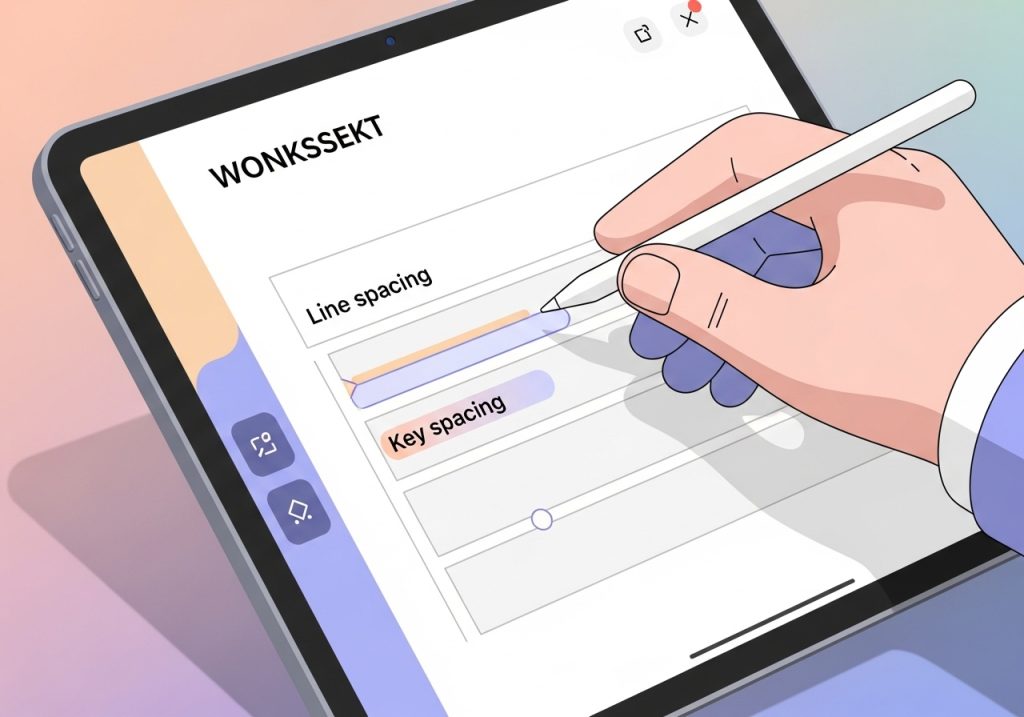
Consider these simple but effective modifications:
- Increase White Space: Make a copy of the worksheet and use scissors to cut it into smaller sections. Present one problem or one row of problems at a time. This reduces visual clutter and helps the student focus on a manageable amount of work.
- Use “Windowing”: Take a blank sheet of paper and cut a small “window” out of the middle. Place this over the worksheet so that only one problem is visible at a time. This simple tool helps direct the student’s visual attention.
- Highlight Key Information: Use a highlighter to draw attention to important words in the instructions or to create clearer boundaries between sections. For math problems, you can highlight the operation sign (+, -, x) to reduce errors.
- Enlarge the Content: For students with visual motor challenges, use a copier to enlarge the worksheet. This provides more space for writing and can make the content easier to see and track.
These adjustments make the worksheet more approachable and allow the student to demonstrate their knowledge without being hindered by visual barriers.
Step 4: Integrate Hands-On and Multi-Sensory Tools
Worksheets do not have to be a paper-and-pencil-only activity. Pairing them with hands-on tools can deepen understanding, increase engagement, and provide valuable sensory input. This transforms the task from a passive one to an active learning experience. Integrating these tools can also help support the development of fine motor skills in a more dynamic way.
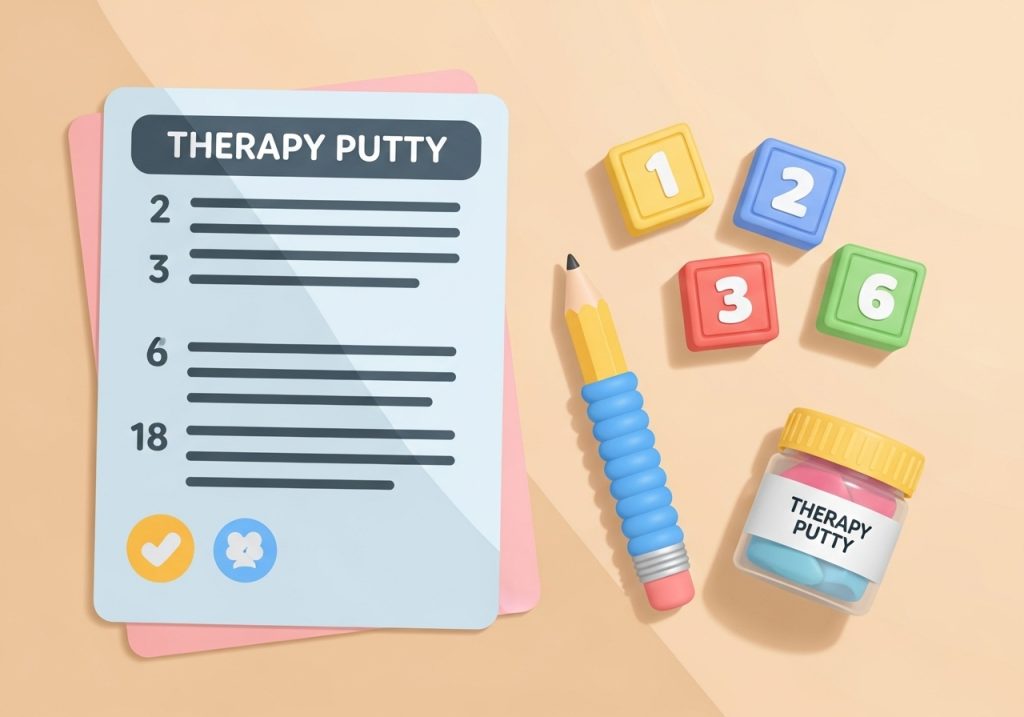
Here are some ideas for incorporating multi-sensory tools:
- Use Manipulatives: For a math worksheet, provide counters, blocks, or beads to help the student solve problems concretely before writing the answer. For a literacy worksheet, use magnetic letters or letter tiles to build words.
- Offer Alternative Writing Tools: Instead of a standard pencil, offer options like weighted pencils, vibrating pens, markers of different thicknesses, or crayons. Writing on a vertical surface, like a whiteboard or an easel, also changes the motor demands and can improve shoulder and wrist stability.
- Add a Tactile Component: Have students trace letters or numbers with their finger on a sand tray or a textured surface before writing them on the paper. Use puffy paint to outline shapes so students can feel the boundaries when coloring.
By adding a hands-on element, you engage more of the student’s senses, which can improve motor control, attention, and memory retention.
Step 5: Prioritize the Process Over the Final Product
Finally, one of the most important adaptations is a shift in mindset. When working with students who are developing foundational skills, the goal is not always a perfectly completed worksheet. The primary goal is to practice the underlying skills. This means celebrating effort, progress, and the use of strategies, even if the final product has errors.
Focus your feedback on the process. Instead of only pointing out a wrong answer, you can say things like:
- “I noticed how carefully you held your pencil on that letter.”
- “You did a great job asking for help when the instructions were confusing.”
- “Look at how you stayed focused on that problem until you finished it.”
This approach builds a student’s self-esteem and resilience. It helps them understand that learning is a process and that their effort is what truly matters. When the pressure to be perfect is removed, students are often more willing to take risks and persist through challenges. This positive and supportive framework is a core tenet of evidence-based practice in education, as it fosters a growth mindset and encourages intrinsic motivation.
By applying these five steps, you can turn any standard worksheet into a customized, therapeutic activity. These adaptations empower you to meet students where they are, build on their strengths, and provide the just-right challenge they need to grow. A worksheet is just a tool, and with these strategies, you can make it a much more effective one for every learner.
Ready for More Skill-Building Resources?
Adapting worksheets is a great start. If you’re looking for expertly designed, low-prep activities that already incorporate these principles, explore The Inspiring OT resource shop. Created by a licensed occupational therapist, our printable activities, assessments, and guides make it easier to support skill development in the classroom, clinic, or at home. Find engaging tools to build fine motor, visual motor, sensory, and life skills today.
Leave a Reply