

As an occupational therapist, teacher, or parent, you are constantly observing a child’s growth and skill acquisition. A well-structured developmental milestones checklist is an essential tool for turning those observations into actionable insights. It provides a clear framework for tracking progress, identifying areas that may need more support, and facilitating communication between everyone involved in a child’s development. This guide walks you through the practical steps of creating a checklist that is both informative and easy to use in any setting, from the clinic to the classroom to the living room.
Step 1: Identify the Purpose of Your Checklist
Before you start listing skills, it is important to define the primary goal of your checklist. The purpose will shape its content, detail, and format. Are you creating a quick screening tool to identify potential developmental concerns? Is it a detailed document for tracking progress against specific therapy or educational goals? Or is it a resource for parent communication, designed to share information about typical development and offer simple activity ideas? A screening tool might be broad, covering key skills across several age ranges. In contrast, a progress monitoring tool would be highly specific to a child’s individual goals. Clarifying your objective from the start ensures the final checklist is fit for its intended use.
Step 2: Choose Relevant Developmental Domains
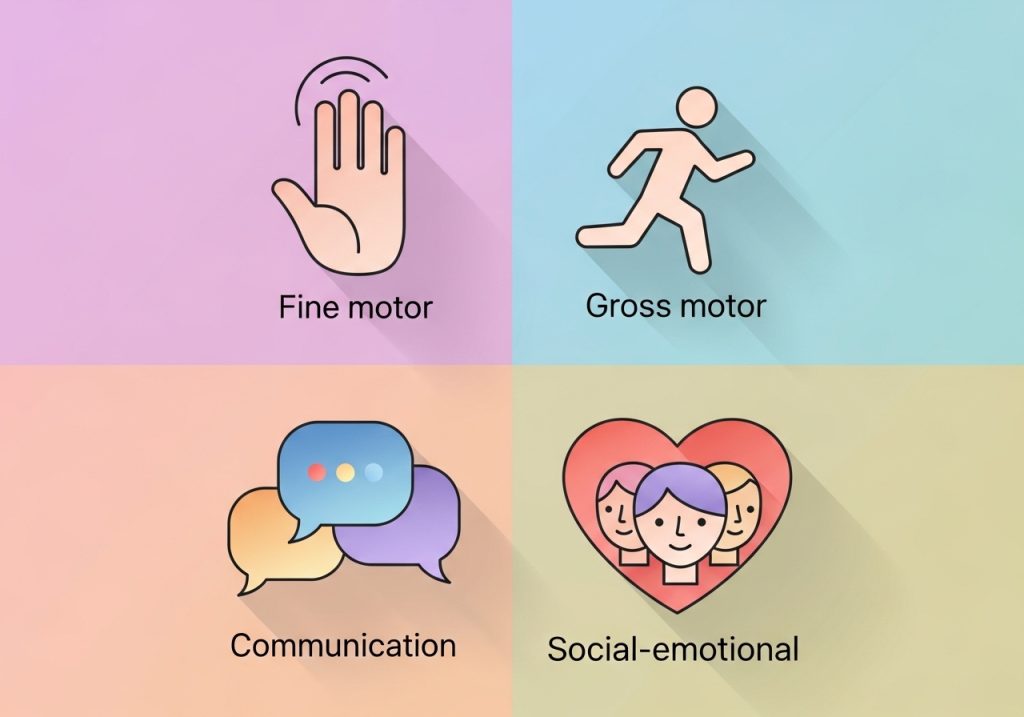
Once you know the purpose, you can select the specific developmental areas to include. Covering every possible skill is often impractical and overwhelming. Instead, focus on the domains most relevant to your objective. Common areas include fine motor skills (like grasping and handwriting), gross motor skills (such as running and jumping), communication and language, cognitive skills, social-emotional development, and activities of daily living (ADLs) like dressing and feeding. For a comprehensive overview, it helps to start with a clear picture of the main types of skills in child development. Choosing the right domains makes your checklist targeted and much more manageable.
Step 3: Source Evidence-Based Milestones
The credibility of your checklist depends entirely on the accuracy of the milestones you include. It is critical to gather information from reliable, evidence-based sources. Organizations like the Centers for Disease Control and Prevention (CDC) and the American Occupational Therapy Association (AOTA) provide well-researched guidelines on typical child development. You can also consult developmental psychology textbooks and peer-reviewed academic journals. When gathering milestones, remember that development occurs within a range, not on a strict timeline. Include age ranges (e.g., “12-18 months”) for skills to reflect this variability. When you rely on principles of evidence-based practice, you create a tool that is trustworthy and professionally sound, which builds confidence with parents and colleagues.
Step 4: Design a Clear and Usable Format
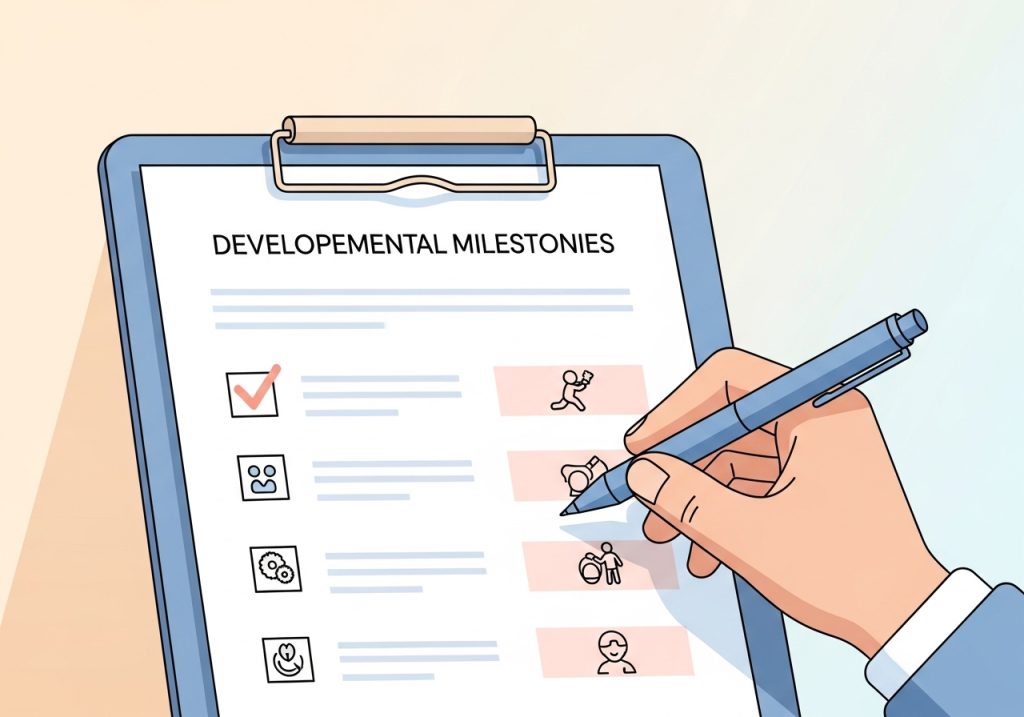
How you organize your checklist is just as important as the information it contains. A cluttered or confusing layout will make it difficult to use effectively. Aim for a clean, intuitive design. A simple grid or table format often works best. Create columns for the milestone description, the target age range, the date observed, and the skill status. For skill status, you might use categories like “Not Yet,” “Emerging,” “Inconsistent,” or “Mastered.” This allows for more nuanced tracking than a simple yes or no. Use clear headings, ample white space, and a simple font to ensure readability. The goal is to create a document that you can fill out quickly during a busy day without sacrificing important details.
Step 5: Implement and Review the Developmental Milestones Checklist
With your checklist designed, it is time to put it into practice. The most effective way to gather information is through naturalistic observation, watching a child during play, daily routines, or classroom activities. This provides a more accurate picture of their skills than a formal testing environment might. Schedule regular times to review the checklist, perhaps weekly or monthly, to update it with new observations. As you track progress, the checklist becomes a dynamic document. It can help you identify skills that are developing well and pinpoint areas where a child might benefit from targeted support, such as by introducing practical visual motor integration activities to strengthen hand-eye coordination.
Step 6: Share Insights and Collaborate with the Team
A developmental milestones checklist is most powerful when used as a collaborative tool. The information you gather is incredibly valuable for the entire team supporting the child, including parents, teachers, and other therapists. Use the completed checklist as a starting point for conversations. It helps ground discussions in specific, objective observations rather than general feelings. When sharing, focus on the child’s strengths as well as areas for growth. Frame it as a way to work together to create a consistent and supportive environment. This collaborative approach ensures that everyone is aligned in their efforts, which ultimately leads to better outcomes for the child.
Creating a custom developmental milestones checklist is a proactive way to support a child’s journey. By defining its purpose, selecting relevant domains, using credible sources, and designing a clear format, you can build a truly functional tool. Regular implementation and collaborative review transform it from a simple piece of paper into a roadmap that guides intervention, celebrates progress, and strengthens the partnership between professionals and families. The ultimate goal is to use these organized observations to provide the right support at the right time.
Ready to put these ideas into action with ready-to-use resources? The Inspiring OT offers a variety of printable activities, assessments, and guides designed by an experienced occupational therapist to make skill-building engaging and effective. Explore the shop for practical, low-prep tools that support development in fine motor, sensory processing, handwriting, and more. Visit The Inspiring OT on Teachers Pay Teachers to find your next favorite resource.
Leave a Reply