

As an occupational therapist, teacher, or parent, you are constantly observing and supporting a child’s growth. Tracking this progress can feel complex, but a well-designed tool brings clarity to the process. A developmental milestones checklist is a practical way to document skills, identify areas needing support, and celebrate achievements along the way. It organizes observations into a clear format, making it easier to see patterns and plan effective interventions. This guide walks you through the essential steps to create and use a checklist that is both informative and easy to manage.
Step 1: Define the Purpose and Scope
Before you begin listing skills, it is important to clarify the primary goal of your checklist. A tool designed for a quick classroom screening will look very different from one used for a comprehensive OT evaluation. Consider who will use the checklist and in what context. Are you a teacher looking to identify students who may need extra support? Are you a therapist conducting an initial assessment? Or are you a parent wanting to track your child’s progress at home? Answering these questions first will help you determine the level of detail required.
Your scope should also define the specific age range you are targeting. Developmental expectations for a three-year-old are vastly different from those for a five-year-old. Focusing on a narrow age band, such as 48-60 months, allows for greater specificity and accuracy. A checklist that tries to cover too wide an age range can become generic and less useful for targeted goal setting.
Step 2: Gather Evidence-Based Resources
The foundation of any reliable developmental milestones checklist is credible, research-backed information. Avoid relying on anecdotal evidence or generalized parenting blogs. Instead, turn to trusted professional organizations and health institutions for developmental norms. Excellent sources include the Centers for Disease Control and Prevention (CDC), the American Academy of Pediatrics (AAP), and the American Occupational Therapy Association (AOTA). These organizations provide detailed timelines for skill acquisition across various domains.
By using an evidence-based approach, you ensure that your checklist reflects established developmental sequences. This not only makes your tool more reliable but also gives you confidence when discussing observations with parents, colleagues, or other professionals. Collect information on key milestones and group them by age to begin structuring your checklist.

Step 3: Select Key Domains for Your Developmental Milestones Checklist
Child development is multifaceted, so a good checklist should be organized into distinct categories or domains. This structure helps you assess different skill sets systematically and identify specific areas of strength or need. Organizing your checklist this way makes it easier to interpret the results and create balanced intervention plans. It provides a comprehensive view of a child’s abilities beyond a single area.
While domains can vary based on your specific purpose, several core areas are commonly included. Understanding the main types of skills in child development is key to building a thorough checklist. Consider including the following categories:
- Fine Motor Skills: Involve the small muscles of the hands and fingers. Examples include grasping objects, using scissors, and buttoning clothes.
- Gross Motor Skills: Involve the large muscle groups used for movement. Examples include running, jumping, and throwing a ball. The differences between gross and fine motor skills are important to track separately.
- Visual Motor Integration: The ability to coordinate visual information with motor movements. Examples are copying shapes, drawing, and catching a ball.
- Self-Care (ADLs): Activities of Daily Living. This includes skills like feeding oneself, dressing, and basic hygiene.
- Social-Emotional Skills: Involve interacting with others, managing emotions, and understanding social cues. Examples include taking turns, expressing feelings, and following group rules.
- Communication: Both receptive (understanding) and expressive (speaking) language. Examples are following directions and using sentences.
- Sensory Processing: How the brain interprets and responds to sensory input from the environment.
Step 4: Write Clear, Observable Skill Descriptions
The effectiveness of your checklist depends on how clearly each item is defined. Vague descriptions like “shows good coordination” or “has a mature pencil grasp” are subjective and can be interpreted differently by each observer. Instead, use action-oriented language that describes a specific, observable behavior. This ensures consistency and reliability, no matter who is using the checklist.
For each skill, write a statement that is simple and direct. For example:
- Instead of: “Good pincer grasp.”
Write: “Picks up a small object (e.g., a bead) using the tips of the thumb and index finger.” - Instead of: “Can follow directions.”
Write: “Follows a two-step unrelated command (e.g., ‘Get the ball and close the door’).” - Instead of: “Cuts well.”
Write: “Cuts along a straight line approximately 6 inches long.”
This level of specificity removes ambiguity and provides concrete evidence of skill mastery. It creates a clear picture of what the child can do and makes it easier to track incremental progress over time.
Step 5: Design a User-Friendly Format
A well-organized layout makes your checklist practical and easy to use. A complicated or cluttered format can be overwhelming and may discourage consistent use. Aim for a clean, simple design that presents information clearly. A table format is often the most effective choice. Create columns for the skill description, the date of observation, and a simple rating system. This structure allows you to capture key information at a glance.
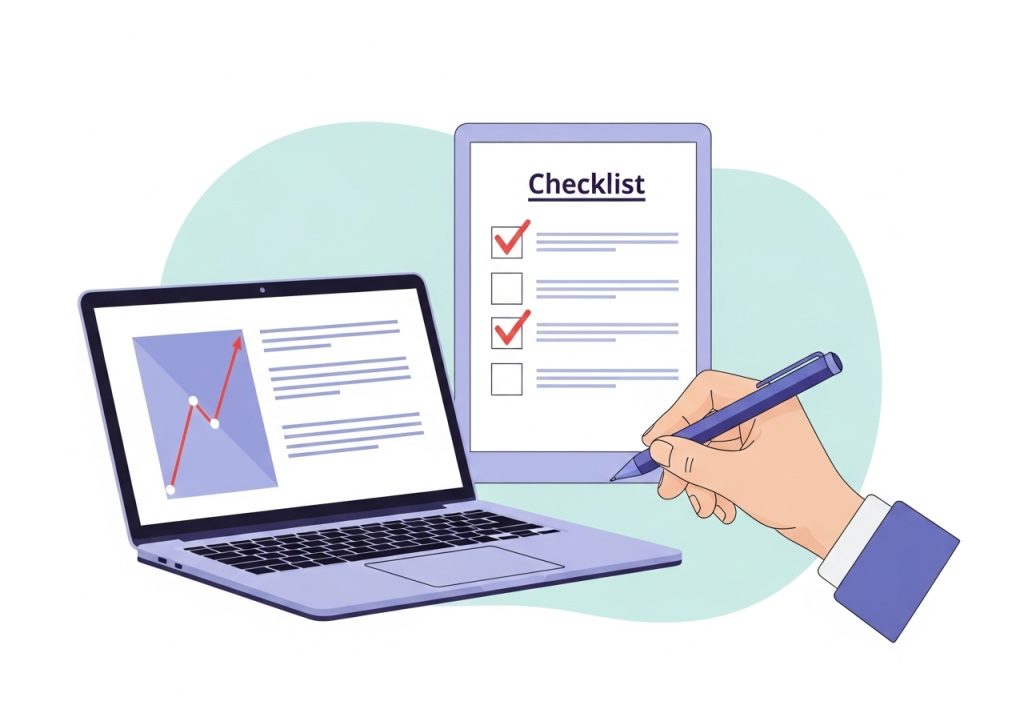
Your rating scale should be straightforward. Avoid complex scoring systems. A simple key works best, such as:
- E – Emerging: The child is beginning to demonstrate the skill but requires assistance or is inconsistent.
- C – Consistent: The child can perform the skill independently and reliably across different settings.
- N/O – Not Observed: The child has not yet demonstrated the skill.
Finally, always include a section for qualitative notes. This space is invaluable for adding context to your observations. You can jot down details about the level of support provided, the child’s level of engagement, or any environmental factors that may have influenced performance. These notes transform the checklist from a simple list of skills into a meaningful record of the child’s learning journey.
Step 6: Plan for Observation and Next Steps
A completed checklist is not an endpoint. Its true value lies in how you use the information you have gathered. Before you start, decide how and when you will conduct observations. A combination of naturalistic observation (e.g., during free play or mealtimes) and structured tasks will provide the most comprehensive picture of a child’s abilities. Observing in different contexts helps you see if skills are generalized.
Once you have data, use it to guide your next steps. The checklist can help you:
- Identify Strengths: Acknowledge and build upon what the child can already do.
- Pinpoint Areas for Support: Clearly see which skills are emerging or absent, which helps you set appropriate goals.
- Inform Intervention Planning: Design activities and strategies that directly target the skills identified on the checklist.
- Communicate with Others: Share concrete, objective information with parents and other members of the child’s educational or therapeutic team.
Remember that a developmental milestones checklist is a guide, not a rigid assessment. Development is not always linear, and children develop at their own pace. Use the checklist as a collaborative tool to support a child’s unique path, celebrate their progress, and provide targeted, effective support where it is needed most.
Creating your own tools can be rewarding, but sometimes you need expertly designed, ready-to-use resources. The Inspiring OT offers a wide range of practical, low-prep activities and assessments created by a licensed occupational therapist. From fine motor worksheets to sensory processing toolkits, each resource is designed to make skill-building engaging and effective. Explore the shop to find evidence-informed materials that simplify your planning and support every learner’s growth.
Leave a Reply