

Field day is a treasured school tradition, a day filled with sunshine, friendly competition, and excitement. For therapists, educators, and parents, it’s also a fantastic opportunity to promote gross motor skills, teamwork, and social participation. However, traditional events can sometimes create barriers for learners with diverse needs. By thoughtfully planning inclusive field day activities, you can ensure the day is a positive and successful experience for every single student, allowing them to build confidence and make lasting memories alongside their peers.
Step 1: Define Your Goals and Assess Student Needs
Before you choose any games, the first step is to clarify your purpose. Are you focused on fostering teamwork, developing specific motor skills, or simply promoting joyful movement? Establishing clear goals will guide your planning. Once you have your objectives, conduct an informal assessment of your students’ abilities and needs. Consider their physical capabilities, motor planning skills, social comfort levels, and sensory sensitivities. Collaborating with the school’s occupational therapist, physical therapist, and special education staff is essential for this process. A comprehensive approach helps you understand what supports will be necessary for meaningful participation. For example, understanding each child’s sensory profile can help you design stations that are engaging without being overwhelming.
Step 2: Design Stations with Universal Design Principles
Instead of creating separate “adapted” activities, structure your field day using the principles of Universal Design for Learning (UDL). This approach involves creating stations that are inherently flexible and accessible to everyone from the start. The goal is to offer multiple ways for students to engage with each activity. For instance, a single station can be designed with variations in difficulty, equipment, and goals. This model empowers students to choose the level of challenge that feels right for them, promoting autonomy and reducing the need for on-the-spot modifications. Think about providing multiple means of representation (visual, verbal, and physical demonstrations) and multiple means of action and expression (allowing students to run, walk, wheel, or even use a switch-activated device to participate).
Step 3: Select and Adapt Your Field Day Activities
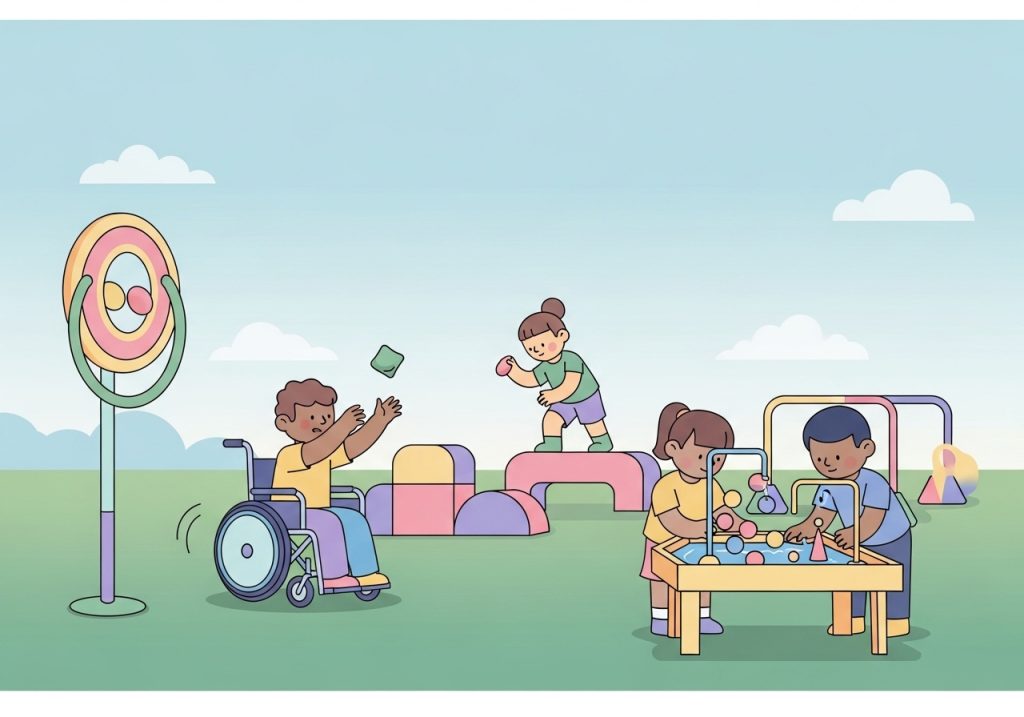
With your goals and a UDL framework in mind, you can now select and modify a range of fun activities. The key is to focus on participation and personal achievement rather than pure competition. By adapting classic games, you can target specific skills while ensuring everyone has a chance to succeed.
Adapted Relay Races
Relay races are a field day staple that can be easily modified. Instead of focusing solely on running speed, create relays that involve different motor tasks.
- Object Carry: Have students carry objects of different sizes and weights, like a beach ball, a stuffed animal, or a beanbag on a racket.
- Dressing Up Relay: Set out large shirts, hats, and scarves for students to put on, run to a cone, take off, and run back. This works on bilateral coordination and motor planning.
- Animal Walks: Instead of running, students can bear walk, crab walk, or frog jump to their destination, which builds core strength and body awareness.
Target and Throwing Games
Target games are excellent for developing hand-eye coordination and grading force. These activities can build essential visual motor integration skills in a fun, dynamic context.
- Beanbag Toss: Use large laundry baskets, hula hoops laid on the ground, or oversized cardboard boxes as targets. Offer different throwing lines for varying levels of challenge.
- Water Sponge Squeeze: Students dip large sponges in a bucket of water, carry them to a second empty bucket, and squeeze the water out. This is a great sensory and grip strength activity.
- Bowling: Use large, lightweight plastic pins and a variety of balls (playground balls, soccer balls) so students can roll or kick to knock them down.
Creative Obstacle Courses
Design a non-competitive obstacle course that encourages students to move their bodies in different ways. Focus on completing the course, not racing through it.
- Tunnel Crawl: Use a pop-up play tunnel for students to crawl through.
- Balance Beam Walk: A low-to-the-ground wooden beam or even a line of tape on the grass can serve as a balance challenge.
- Stepping Stones: Place carpet squares or foam mats for students to step on as they navigate from one point to another.
Step 4: Organize Logistics and Prepare Materials
Smooth execution on field day depends on careful planning. Start by creating a master schedule and a map of the activity stations. Share this with all staff, volunteers, and even older students so everyone knows the flow of the day. Prepare visual supports, such as picture schedules for individual students or large posters at each station with simple instructions and images. Gather and organize all your equipment ahead of time, ensuring you have enough for everyone. If you are using volunteers, hold a brief orientation meeting to explain the goals of the inclusive activities, emphasizing that their role is to encourage participation and celebrate every child’s effort.
Step 5: Facilitate a Positive and Supportive Environment
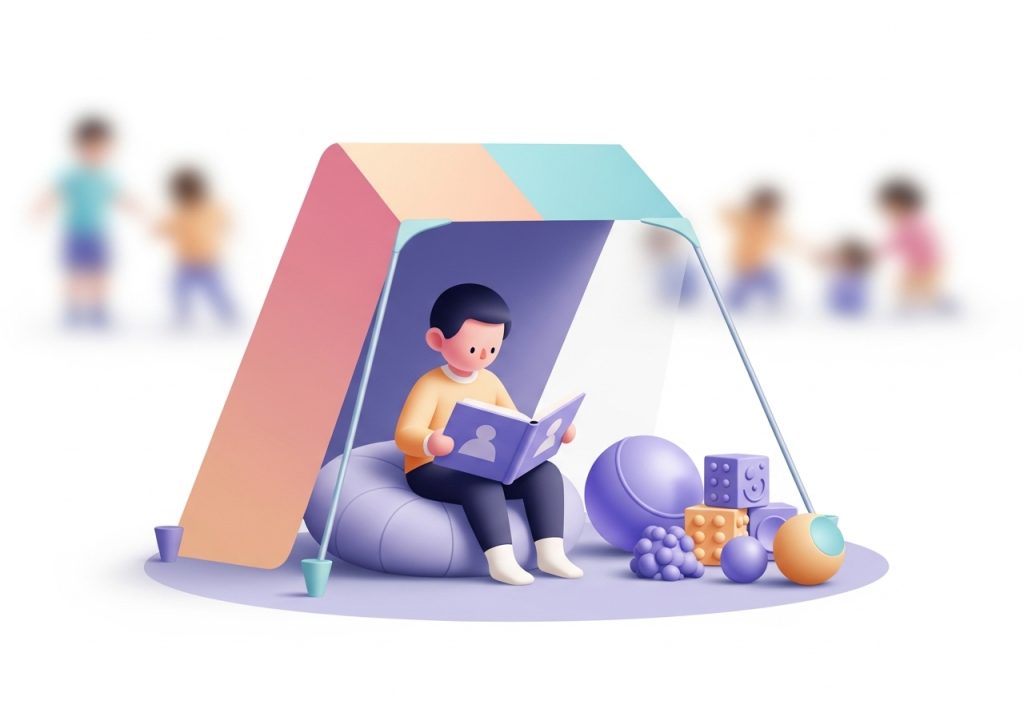
The atmosphere you create is just as important as the activities you plan. On the day of the event, your primary role is to be a cheerleader for all students. Use positive language that emphasizes effort, teamwork, and fun. Encourage peer support by pairing students together as buddies who can help and cheer for each other. Because field day can be loud and stimulating, it’s critical to have a designated quiet area. This space should be slightly removed from the main action and equipped with calming materials like soft cushions, books, or sensory bins. This provides a safe retreat for any student who feels overstimulated and needs a moment to regulate before rejoining the fun. Creating a culture of mutual support can also reduce minor disagreements, but having a plan for helping students practice positive conflict resolution is always a good idea.
A well-planned, inclusive field day does more than just fill an afternoon. It builds community, fosters self-esteem, and reinforces the message that every student belongs. By focusing on universal design, thoughtful adaptations, and a supportive atmosphere, you can create an event that allows children of all abilities to challenge themselves, develop new skills, and experience the pure joy of play. The smiles and high-fives at the end of the day will be a clear indicator of a job well done.
Looking for more low-prep, engaging ways to build essential skills? Explore The Inspiring OT shop for printable activities, assessments, and guides designed by an experienced occupational therapist to support every learner. Find practical resources to make skill-building fun in the classroom, clinic, or at home.
Leave a Reply