

Supporting a child with a specific learning disorder requires a thoughtful, structured approach. For occupational therapists, teachers, and parents, understanding the path from identification to intervention is essential for helping learners build confidence and achieve their potential. This guide outlines five practical steps you can take to provide effective and compassionate support, turning challenges into opportunities for growth. By focusing on collaboration and tailored strategies, you can create an environment where every child has the tools they need to succeed.
Step 1: Understanding What a Specific Learning Disorder Is
A specific learning disorder is a neurodevelopmental condition that affects a person’s ability to learn and use academic skills. The diagnosis, as defined in the DSM-5, points to persistent difficulties in at least one of three key areas: reading (dyslexia), writing (dysgraphia), or mathematics (dyscalculia). These challenges are not due to intellectual disabilities, uncorrected vision or hearing problems, or a lack of adequate instruction. They represent a significant gap between a child’s potential and their actual academic performance.
Key indicators might include:
- Reading: Slow or inaccurate word recognition, poor spelling, and difficulty with reading comprehension. A child may guess at words based on the first letter or struggle to sound them out.
- Writing: Problems with grammar and punctuation, unclear or poorly organized written expression, and significant challenges with spelling. Handwriting itself may be laborious and difficult to read.
- Math: Trouble understanding number concepts, difficulty memorizing basic math facts, and inaccurate mathematical reasoning. They may struggle to grasp quantities or the logic behind calculations.
Recognizing that these difficulties are persistent and unexpected for the child’s age is the first step toward providing the right kind of help. It shifts the focus from a lack of effort to a need for different instructional strategies.
Step 2: Observe and Document Academic and Functional Challenges
Before any formal assessment, careful observation and documentation are critical. This process helps create a detailed picture of the child’s strengths and challenges in real-world contexts. Whether you are in a classroom, clinic, or home setting, take note of specific instances where the child struggles and where they excel. This information is invaluable for creating a holistic view of the learner.
Your documentation should be objective and specific. For example, instead of writing “has trouble with writing,” you might note, “During a 15-minute journaling activity, formed five letters incorrectly, reversed ‘b’ and ‘d’ twice, and expressed frustration after two sentences.” This level of detail provides valuable information for assessment teams and helps in tracking progress over time. You can create a practical list of skills to monitor, which helps structure your observations of tasks like handwriting and visual motor integration.
Step 3: Collaborate with a Multidisciplinary Team
No single person can support a child in isolation. Effective intervention is a team effort. This team often includes parents, general and special education teachers, occupational therapists, speech-language pathologists, and school psychologists. Each member brings a unique professional lens and personal perspective on the child’s abilities and needs.

Regular communication is the foundation of successful collaboration. Share your documented observations in team meetings and listen to the insights of others. This collective knowledge helps in forming a comprehensive understanding of the child’s learning profile. Together, the team can make informed decisions about formal evaluations, eligibility for specialized services, and the development of an Individualized Education Program (IEP) or 504 Plan that truly reflects the child’s needs.
Step 4: Implement Targeted Strategies and Accommodations
Once the child’s needs are clearly identified, the team can implement targeted support strategies. These interventions should be evidence-based and tailored to the individual’s learning style. The goal is not just to help the child get through an assignment but to build underlying skills and foster greater independence.
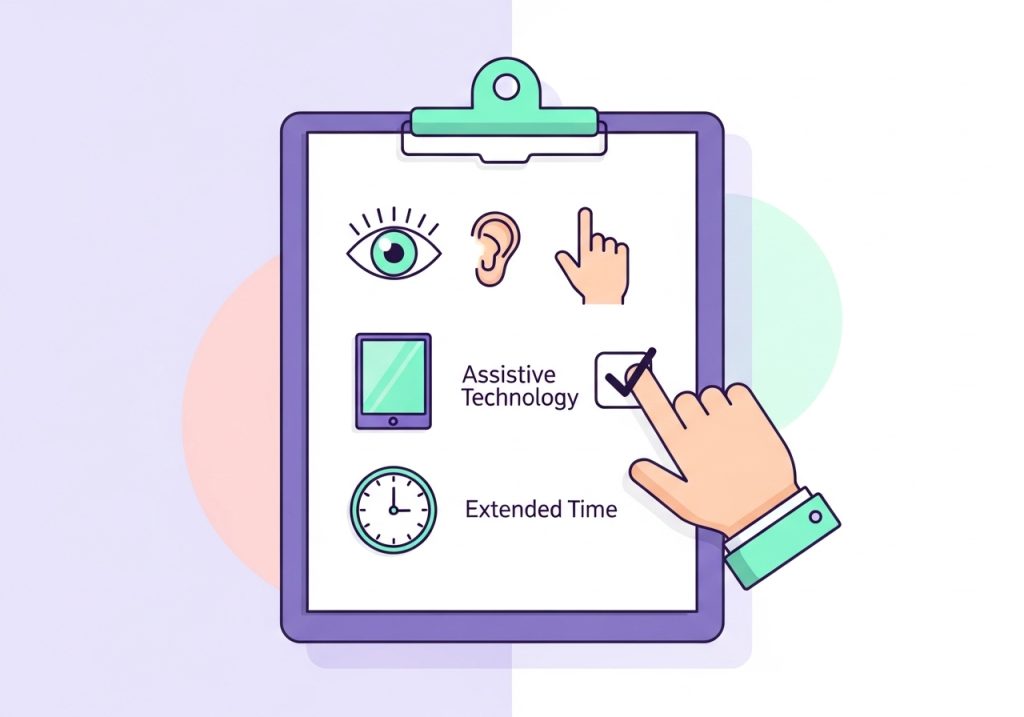
Examples of effective strategies and accommodations include:
- Multisensory Instruction: Using visual, auditory, and kinesthetic-tactile pathways to reinforce learning. For example, using sand trays to practice letter formation, using colored blocks to understand math concepts, or having students trace words with their fingers helps make abstract ideas more concrete.
- Accommodations: Adjustments to the learning environment or tasks that provide access without changing the content. This could mean providing audiobooks for a student with dyslexia, offering speech-to-text software for a student with dysgraphia, or allowing the use of a calculator for a student with dyscalculia. Granting extra time on tests is another common accommodation.
- Explicit Instruction: Breaking down concepts into small, manageable steps and providing clear, direct teaching for each step. This approach removes guesswork and ensures the student has a solid grasp of foundational knowledge before moving on. This is particularly useful as you work to build foundational literacy skills.
- Skill-Building Activities: Using targeted activities to develop underlying skills. For instance, fine motor and visual motor worksheets can help improve the hand strength, coordination, and visual perception needed for legible and efficient handwriting.
Step 5: Monitor Progress and Adapt Your Approach
Supporting a child with a specific learning disorder is a dynamic process. It is important to regularly monitor the child’s progress to see if the interventions are working as intended. This can be done through a combination of formal assessments, informal checks for understanding, analysis of work samples, and continued systematic observation.
Use this data to guide your decisions. If a child is making steady progress, celebrate that success and continue with the current strategies. If they are not, or if progress has stalled, the team should reconvene to analyze the situation and adjust the plan. Perhaps an accommodation needs to be modified, or a different instructional approach is required. Flexibility and a willingness to try new approaches are key. This process also involves empowering the student; helping a child learn to communicate what works for them is a critical part of building self advocacy skills and fostering long-term success.
By following these steps, you can create a supportive, responsive framework that empowers children to overcome academic challenges. A structured and collaborative approach not only addresses learning difficulties but also helps build a child’s resilience, confidence, and belief in their own ability to learn and succeed.
Ready to implement targeted, engaging strategies in your therapy sessions, classroom, or home? The Inspiring OT offers a wide range of practical, low-prep resources designed by a licensed occupational therapist. From fine motor activities to sensory toolkits and handwriting guides, you can find evidence-informed tools to support every learner. Explore the shop to find the right materials to simplify your planning and help your learners thrive.
Leave a Reply