

Navigating the educational journey with a child who learns differently can present unique challenges for parents, educators, and therapists. When a child has persistent difficulty with reading, writing, or math despite adequate instruction, it may indicate a specific learning disorder. Understanding this diagnosis is the first step toward providing effective support. This guide offers a practical, step-by-step approach to help you implement strategies that foster skill development, build confidence, and create a positive learning path for your student or child.
Step 1: Understand the Core Areas of a Specific Learning Disorder
The term “specific learning disorder” is an umbrella diagnosis that covers ongoing problems in one of three core academic areas. Recognizing the specific area of difficulty is essential for targeting interventions. These conditions are neurodevelopmental and are not related to a person’s intelligence or motivation. A child may experience challenges in one or more of these areas, and a formal evaluation by a qualified professional is necessary for a diagnosis.
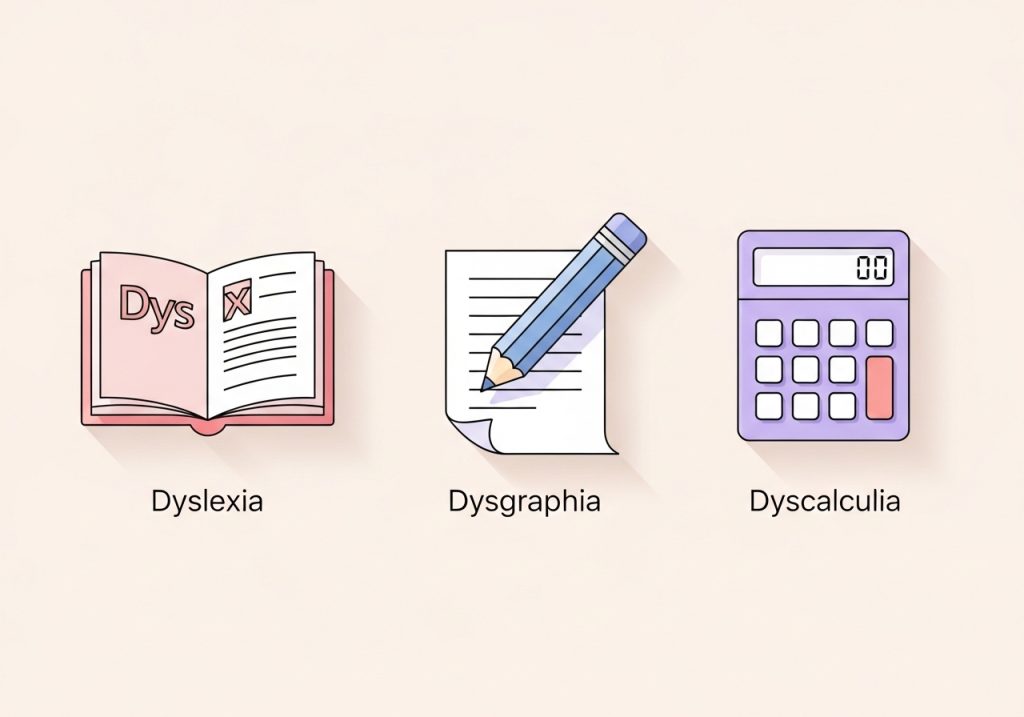
Impairment in Reading (Dyslexia)
This is the most common type of specific learning disorder. A child with an impairment in reading may have trouble with:
- Word Recognition: Difficulty reading familiar words by sight.
- Decoding: Struggling to sound out unfamiliar words.
- Reading Fluency: Reading slowly, with effort, and without accurate expression.
- Spelling: Frequent spelling errors that may not follow phonetic patterns.
- Reading Comprehension: Difficulty understanding the meaning of what they have read.
Impairment in Written Expression (Dysgraphia)
Challenges in written expression can affect both the cognitive and mechanical aspects of writing. A student may show difficulties with:
- Handwriting and Mechanics: Illegible handwriting, poor spacing between letters and words, and inconsistent letter formation.
- Grammar and Punctuation: Making frequent errors in sentence structure and punctuation.
- Spelling: Similar to dyslexia, spelling can be a significant challenge.
- Organization of Ideas: Struggling to organize thoughts into a coherent paragraph or essay.
Impairment in Mathematics (Dyscalculia)
This involves significant difficulty in understanding and working with numbers. Signs of a math-related learning disorder include:
- Number Sense: A poor understanding of quantities and their relationships.
- Memorization of Math Facts: Trouble recalling basic arithmetic facts, such as multiplication tables.
- Accurate Calculation: Making frequent errors when adding, subtracting, multiplying, or dividing.
- Mathematical Reasoning: Difficulty solving word problems or understanding abstract math concepts.
Step 2: Foster a Collaborative Support Team
No single person can provide all the support a child with a learning disorder needs. A strong, collaborative team is crucial for creating a consistent and comprehensive support system. This team approach ensures that everyone is working toward the same goals and using complementary strategies across different environments, like school and home. Key members of the team often include the child’s parents or caregivers, general and special education teachers, a school psychologist, and related service providers such as occupational therapists and speech-language pathologists.
Effective collaboration depends on open communication and shared goals, often formalized in an Individualized Education Program (IEP) or a 504 Plan. Regular meetings and updates ensure that everyone is aware of the child’s progress and any new challenges that arise. When the team works together, they can provide a unified front that reinforces skills and builds the child’s confidence. A key goal of this collaborative effort is to empower the learner over time, helping them develop self advocacy skills so they can articulate their needs and understand their own learning profile.
Step 3: Implement Targeted Strategies and Accommodations
Once you understand the child’s specific challenges, the next step is to implement tailored strategies and accommodations. The goal is not to make the work easier, but to make the learning accessible. This allows the child to demonstrate their knowledge and develop skills without being blocked by the limitations of their disorder.

Effective strategies often involve a multisensory approach, which engages more than one sense at a time to reinforce learning. For example, a child might trace letters in sand while saying the letter sound aloud. Other useful accommodations include:
- Assistive Technology (AT): Tools like text-to-speech software can read digital text aloud for a student with dyslexia. Speech-to-text software allows a child with dysgraphia to dictate their ideas instead of typing or writing them.
- Instructional Adjustments: This can involve breaking down large assignments into smaller steps, providing graphic organizers to help structure thoughts, or giving directions both verbally and in writing.
- Environmental Modifications: Simple changes like preferential seating away from distractions or allowing the use of noise-canceling headphones can make a big difference.
- Modified Assignments and Assessments: Providing extended time on tests, offering alternative formats for demonstrating knowledge (like an oral presentation instead of a written report), or reducing the number of problems on a worksheet can all be effective.
For a student struggling with reading, for example, combining these accommodations with direct instruction can help support foundational literacy skills and improve comprehension over time.
Step 4: Use Structured, Evidence-Informed Resources
Children with specific learning disorders often benefit most from instruction that is explicit, systematic, and cumulative. This means teaching concepts directly and in a logical sequence, with each new skill building on previously mastered ones. Using evidence-informed resources is a key part of this process, as they are designed to present information in a way that is clear and easy for struggling learners to process.
Programs like Orton-Gillingham for reading provide a structured literacy approach that has been shown to be effective for students with dyslexia. In addition to formal programs, high-quality worksheets and hands-on activities can reinforce these structured lessons. The most effective resources share common characteristics:
- Clear Instructions: Directions are simple, concise, and often supported by visual examples.
- Systematic Progression: Activities are organized logically, moving from simple to more complex skills.
- Opportunities for Repetition: The materials allow for repeated practice of a skill to help build mastery and automaticity.
- Engaging Format: The design is clean and uncluttered to minimize visual distractions.
Well-designed educational tools like compare and contrast worksheets can also build analytical abilities alongside core academic skills, giving learners multiple ways to engage with information.
Step 5: Create a Positive and Encouraging Learning Environment
The academic challenges associated with a specific learning disorder can take a toll on a child’s confidence and motivation. Creating a learning environment that is emotionally safe and encouraging is just as important as the academic interventions. A positive mindset can fuel perseverance when tasks become difficult, helping a child see themselves as a capable learner.

A strengths-based approach is fundamental. Identify and celebrate the child’s talents and interests, whether they are in art, sports, science, or problem-solving. Help the child use these strengths to support their areas of weakness. For instance, a student who is a great visual artist could draw out the sequence of a story to aid their reading comprehension.
Focus on effort and progress rather than just achievement. Praise should be specific, such as saying, “I noticed how carefully you sounded out that new word,” instead of a generic “Good job.” This helps children see the value in their hard work. Frame mistakes not as failures but as important opportunities for learning and growth. By fostering this resilience, you equip them with the emotional tools they need to navigate challenges both in and out of the classroom.
Supporting a child with a specific learning disorder is a dynamic process. It requires a clear understanding of their needs, a unified team, and a toolkit of effective strategies. By breaking down the process into these five steps, you can create a structured and supportive framework for growth. Remember that consistency, patience, and a focus on the child’s strengths are the keys to helping them build skills, gain confidence, and achieve their full potential.
Ready to find resources that support your learners? The Inspiring OT offers a wide range of practical, evidence-informed activities created by an occupational therapist. From fine motor and handwriting practice to visual perceptual tasks, our downloadable tools are designed to be engaging and easy to implement. Explore the shop to find low-prep materials that help you build essential skills with confidence.
Leave a Reply