

Teaching essential life skills is fundamental to fostering independence and confidence in learners of all ages. From tying shoelaces and preparing a simple snack to managing time and money, these practical abilities are the building blocks for navigating the world successfully. For occupational therapists, teachers, and parents, the challenge often lies in knowing where to start. A systematic, step-by-step approach can transform this complex process into a clear and achievable journey for both the educator and the learner. This guide provides a structured framework to help you teach functional skills effectively, ensuring each learner has the support they need to build lasting competence.
Step 1: Identify and Prioritize Core Life Skills
The first step in teaching life skills is to determine which skills are most relevant and immediately beneficial for the learner. This process should be collaborative, involving the learner (to the extent possible), their family, and their educational team. The goal is to select skills that increase the individual’s autonomy and participation in their daily routines at home, school, and in the community. Not all skills hold the same weight, so prioritization is key.
Begin by observing the learner’s daily activities. Where do they encounter challenges? What tasks do they consistently need help with? Consider different domains, such as personal care (hygiene, dressing), domestic tasks (meal prep, cleaning), community participation (shopping, using public transport), and financial literacy. Discussing goals with the family can provide valuable insight into what skills would make the biggest difference in their daily lives. For example, learning to independently get dressed in the morning might be a higher priority than learning to bake a cake. Having a solid grasp of understanding the different types of skills in child development can help categorize and prioritize these goals effectively.
Once you have a list of potential skills, work together to select one or two to focus on initially. Consider the following factors when prioritizing:
- Safety: Skills related to personal safety, like knowing a phone number or crossing the street, should always be a high priority.
- Learner Motivation: Is the learner interested in acquiring a particular skill? Motivation can greatly impact the learning process.
- Impact on Independence: Choose skills that will give the learner the most immediate boost in autonomy.
- Prerequisites: Does the learner have the foundational motor, cognitive, or sensory skills needed? If not, you may need to start with those.
Step 2: Break Down the Skill into Manageable Parts
Many life skills appear simple to those who have already mastered them, but they are often complex sequences of smaller actions. Breaking a skill down into its individual components, a process known as task analysis, makes it easier to teach and learn. This method prevents the learner from feeling overwhelmed and allows you to pinpoint exactly where they might be struggling.
To conduct a task analysis, perform the skill yourself and write down every single action you take. Be as specific as possible. For example, the skill of “brushing teeth” is not a single action. It includes getting the toothbrush and toothpaste, taking the cap off the toothpaste, squeezing a small amount onto the bristles, turning on the water, brushing all tooth surfaces, spitting, rinsing the mouth, rinsing the toothbrush, and putting everything away. Each of these is a distinct step that can be taught and practiced.

Once you have your list of steps, you can create a visual checklist or sequence strip with pictures or words. This tool serves as a prompt for the learner, helping them remember the order and complete the task independently. Your task analysis becomes the roadmap for your instruction, guiding you through each component of the skill one at a time.
Step 3: Model and Provide Direct Instruction
With a clear sequence of steps, you can begin direct instruction. Modeling is one of the most effective ways to teach a new motor or functional skill. Show the learner how to perform each step of the task exactly as you want them to do it. As you model the action, use simple, clear language to describe what you are doing. For instance, while modeling how to put toothpaste on a brush, you might say, “First, I twist the cap. Then, I squeeze the tube gently.”
After you model the step, have the learner try it. You can use different levels of support, or prompting, depending on the learner’s needs. This might include:
- Hand-over-hand assistance: Physically guiding the learner’s hands to complete the motion.
- Verbal cues: Giving short, direct instructions (“Put your arms in”).
- Gestural prompts: Pointing to the next object or location.
- Visual aids: Using the checklist or sequence strip created during the task analysis.
The goal is to provide just enough support for the learner to succeed and then gradually fade that support as they become more proficient. This ensures they are building true independence rather than becoming dependent on prompts. Keep instruction sessions short, positive, and focused on one or two steps at a time to maintain engagement and prevent frustration.
Step 4: Create Opportunities for Practice and Repetition
Mastery comes from practice. For a new skill to become automatic, it must be performed repeatedly in its natural context. The most effective way to achieve this is by embedding the skill into the learner’s daily routine. If you are teaching dressing skills, practice every morning when the learner gets dressed. If the skill is making a sandwich, have them help prepare their own lunch each day.
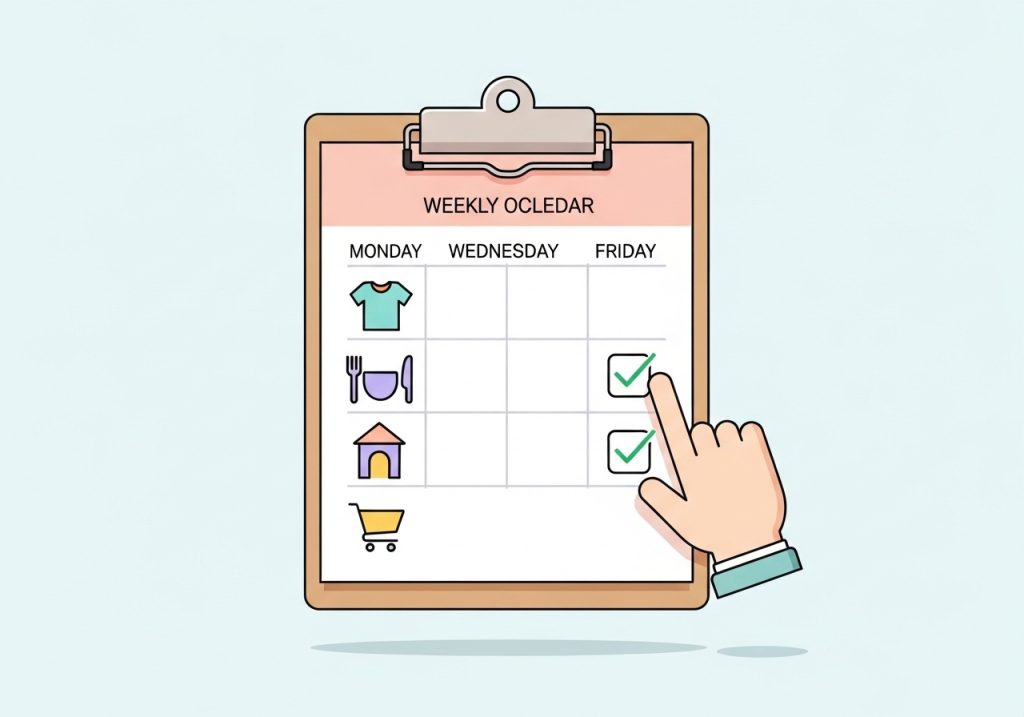
Consistency is crucial. Everyone involved in the learner’s life, including family members and other educators, should be aware of the skill being taught and use the same language and methods to support it. This creates a predictable and supportive environment for learning. In addition to practicing within natural routines, you can use structured activities or simulated environments. For example, you can practice teaching functional money skills by setting up a pretend store at home or in the classroom. This allows for concentrated practice in a low-stakes setting.
Repetition helps build the neural pathways that make a skill automatic. Be patient, as this process can take time. Celebrate small successes along the way to keep the learner motivated and engaged.
Step 5: Provide Specific Feedback and Track Progress
Feedback is essential for learning. It helps the learner understand what they are doing correctly and what they need to adjust. However, generic praise like “Good job!” is less helpful than specific, positive reinforcement. Instead, describe exactly what the learner did well. For example, “I like how you held the toothbrush with a firm grip,” or “You did a great job lining up the edges of the bread.” This level of detail helps them internalize the correct actions.
When correction is needed, be gentle and constructive. You can say, “Let’s try that again, but this time, let’s pour the milk a little more slowly.” Then, model the correct way again if needed. The focus should always be on progress, not perfection.
Tracking progress is equally important. It shows you whether your teaching strategies are effective and provides motivation for both you and the learner. Use the task analysis checklist you created in Step 2 as a data collection tool. You can mark which steps the learner completes independently, with prompts, or not at all. Simple systems like a sticker chart or a graph can also make progress visible and rewarding for the learner. For a more formal approach, using a developmental milestones checklist can help situate the targeted skill within a broader developmental context and track growth over time.
Teaching life skills is a journey of empowerment. By following a systematic approach that includes prioritizing skills, breaking them down, providing clear instruction, ensuring consistent practice, and offering specific feedback, you create a powerful framework for success. This structured method not only makes complex skills more accessible but also builds a learner’s confidence with each small step forward. The ultimate goal is to equip individuals with the competence and autonomy they need to participate as fully as possible in their own lives.
Ready to put these steps into action? Finding practical, engaging, and low-prep materials can make all the difference. The Inspiring OT offers a wide range of printable activities and resources designed by an experienced occupational therapist to support skill development. Explore the shop to find tools that simplify your planning and help your learners succeed.
Visit The Inspiring OT shop for evidence-informed resources.
Leave a Reply