

As educators, therapists, and parents, we often encounter various learning methods. One of the most traditional is rote learning, a technique that has been both widely used and frequently debated. Understanding the rote learning def is the first step toward using it effectively as a tool in your teaching or therapy toolkit. While it’s not a one-size-fits-all solution, rote memorization has a specific and valuable place in skill development when applied correctly. This guide will walk you through what rote learning is, when it’s most effective, and how to integrate it with other strategies to foster deep, lasting comprehension.
Step 1: What is the Rote Learning Def? A Clear Explanation
The rote learning def, or definition, describes a memorization technique based on repetition. The primary goal is to recall information exactly as it was learned. A learner using this method will repeat information, such as a list of words, math facts, or a historical date, until they can recite it from memory. The process focuses on memorization itself, not necessarily on the underlying meaning or context of the information. Think of it as creating a strong neural pathway through repeated practice.
For example, many of us learned the alphabet by singing the “ABC song.” We didn’t initially understand the phonetic properties of each letter or their role in forming words. We simply memorized the sequence through auditory repetition. This is rote learning in its most basic form. It provides the foundational building blocks that are necessary for more complex learning later on. Without knowing the alphabet, a child cannot learn to read or write. Rote learning establishes this essential, automatic recall, which frees up mental energy for higher-order thinking tasks like reading comprehension and written expression.
It’s important to distinguish rote learning from meaningful learning. Meaningful learning occurs when a student connects new information to existing knowledge, understanding its purpose and relationships. While rote learning focuses on “what,” meaningful learning focuses on “why” and “how.” A successful educational approach uses both. Rote learning can secure the foundational facts, while meaningful learning strategies help the student apply those facts in flexible and creative ways.
Step 2: When is Rote Learning Appropriate?
The effectiveness of rote learning depends entirely on the context and the type of information being taught. It is not suitable for complex, abstract concepts that require critical thinking or problem-solving. However, it is an excellent strategy for mastering fundamental knowledge that needs to be recalled quickly and accurately. This automaticity is key to reducing cognitive load during more demanding tasks.
Here are some specific areas where rote learning is highly appropriate:
- Basic Math Facts: Memorizing addition, subtraction, and multiplication tables is a classic example. When a student can instantly recall that 7 x 8 is 56, they can focus their mental effort on solving a complex multi-step algebra problem instead of getting stuck on the basic calculation.
- Sight Words: For early readers, memorizing high-frequency words that don’t follow standard phonetic rules (like “the,” “was,” or “said”) is crucial for developing reading fluency. Automatic recognition of these words allows the reader to focus on decoding new words and understanding the text’s meaning. These are a key part of building foundational literacy skills.
- Safety Information: Personal details such as a home address, a parent’s phone number, or emergency procedures must be memorized exactly. In a high-stress situation, a child needs to recall this information automatically without having to think it through.
- Vocabulary and Terminology: In subjects like science or history, there are often specific terms and definitions that must be learned. Memorizing the definition of “photosynthesis” or the dates of a historical event provides the necessary vocabulary to discuss these topics with precision.
- Spelling Rules: Learning spelling patterns and exceptions often relies on repetition and memorization. While understanding phonetic rules helps, many English words require rote practice.
In each of these cases, the information is self-contained and foundational. The goal is automatic retrieval, which then supports more complex cognitive activities.
Step 3: How to Implement Rote Learning Strategies
Once you’ve identified that rote learning is the right approach for a particular skill, the next step is implementation. Effective rote learning is more than just mindless repetition. The key is to use varied, engaging techniques that reinforce memory without leading to boredom or burnout. Consistency is more important than duration, so short, frequent practice sessions are often more successful than long, infrequent ones.
Consider incorporating these proven strategies:
- Flashcards: This classic tool is effective for a reason. Flashcards allow for quick, active recall practice. You can use them for math facts, sight words, vocabulary terms, or letter recognition. They are portable and can be used for short drills anytime.
- Drills and Worksheets: Repetitive practice through worksheets can help solidify skills like handwriting, spelling, and math calculations. Consistent practice, whether through focused summer worksheets or quick daily drills, helps build muscle memory and automaticity.
- Chanting and Recitation: Saying information aloud engages auditory pathways and can improve retention. Chanting multiplication tables, reciting poems, or spelling words out loud are simple yet powerful techniques.
- Mnemonic Devices: These are memory aids that help a learner associate information with a more memorable phrase, image, or song. An example is using “ROY G. BIV” to remember the colors of the rainbow. Creating mnemonics can be a creative and engaging activity in itself.
- Digital Apps and Games: Many educational apps and online games use repetition and drills in a fun, interactive format. This can be a great way to motivate learners and provide immediate feedback on their performance.

Step 4: Combine Memorization with Meaningful Context
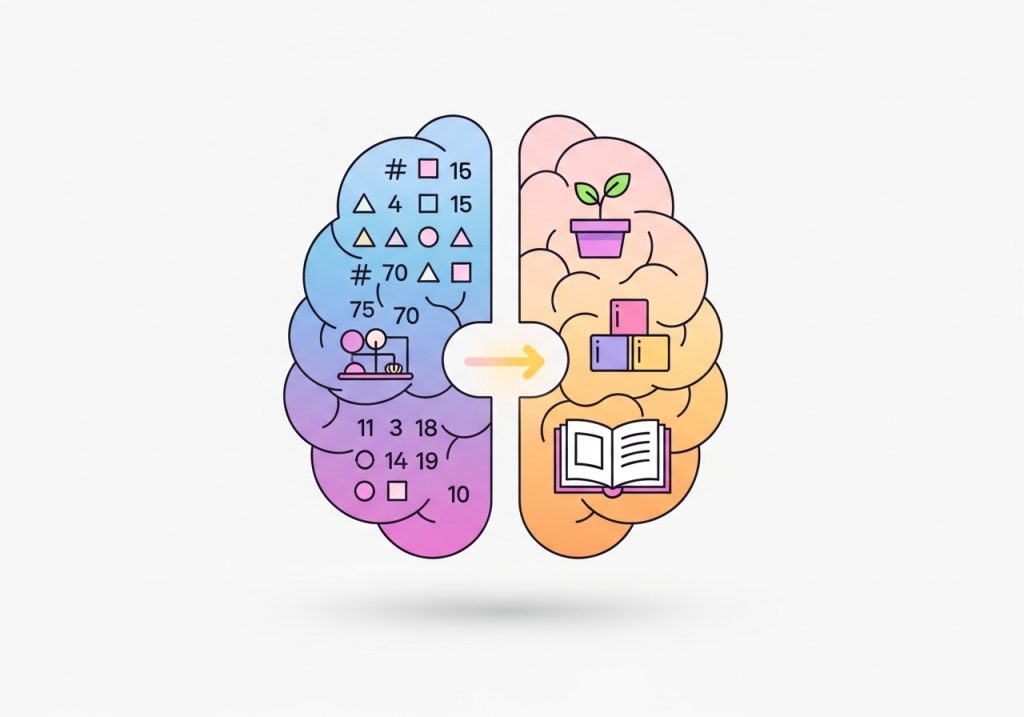
The biggest criticism of rote learning is that it can lead to superficial knowledge without true understanding. A learner might be able to recite a definition but be unable to apply it. To avoid this pitfall, it is essential to connect memorized information to meaningful contexts and hands-on experiences. Rote learning should be a bridge to deeper comprehension, not a final destination.
After a learner has memorized foundational facts, guide them toward application. For instance, once multiplication tables are mastered, introduce word problems that require them to use those facts to solve a real-world scenario. After a child learns a set of sight words, have them read a story that contains those words and discuss what the story was about. This process helps them see the purpose behind the memorization.
Another powerful strategy is to move from memorization to analysis. Once a learner has memorized basic vocabulary, you can use tools like compare and contrast worksheets to help them analyze the relationships between concepts. This pushes them beyond simple recall and encourages critical thinking. By consistently linking memorized facts to practical application and analytical tasks, you ensure that the information becomes part of the learner’s usable knowledge base.
Step 5: Assess Progress and Adjust Your Approach
Like any educational strategy, it’s important to monitor a learner’s progress and adjust your approach as needed. Assessment for rote-learned information should go beyond simple recitation. While quick recall is the initial goal, the true measure of success is whether the learner can apply the knowledge.
When assessing, ask two key questions:
- Is recall automatic? Can the learner provide the information quickly and accurately without having to laboriously figure it out each time?
- Can the information be applied? Can the learner use the memorized fact to solve a problem, answer a question, or complete a more complex task?
Keeping a simple list of skills can help you track their progress with specific memorized facts and see where they might need more support. If a learner is struggling, don’t just increase the repetition. Instead, consider why they are having difficulty. The information might need to be broken down into smaller chunks. Perhaps a different sensory modality would be more effective, such as using songs for an auditory learner or tactile letter cards for a kinesthetic learner. Providing more concrete examples or hands-on activities can also help bridge the gap between memorization and understanding.
Ultimately, rote learning is a valuable and necessary component of a well-rounded education. It equips learners with the foundational knowledge required for more advanced skills. By understanding its definition, knowing when to use it, and thoughtfully combining it with strategies that promote deeper meaning, you can help your students build a strong and flexible knowledge base. The key is to see memorization not as the end of learning, but as the beginning.
Ready to put these strategies into action? Finding the right tools can make all the difference in building foundational skills. The Inspiring OT offers a collection of practical, engaging, and low-prep printable resources designed by a licensed occupational therapist. Whether you’re a therapist, teacher, or parent, you’ll find activities to support skill development in a way that is both effective and fun. Explore the shop to discover worksheets, guides, and activities that can help you balance memorization with meaningful learning.
Leave a Reply