
Second grade marks a significant period of growth for children. They are solidifying foundational academic skills while also developing more complex motor control, social awareness, and self-regulation. Finding the right activities for second graders can feel like a challenge, especially when trying to meet diverse needs in a classroom, therapy session, or homeschool environment. The most effective approach moves beyond simply keeping children busy and instead focuses on purposeful, skill-building tasks that are both engaging and developmentally appropriate. This guide offers a practical, step-by-step process for selecting and implementing activities that support the whole child.
Step 1: Identify Key Developmental Skill Areas
Before choosing activities, it is important to assess the core skills you want to target. For second graders, a thoughtful selection is grounded in understanding their specific developmental stage. Focusing on key areas ensures your activities are purposeful and contribute to meaningful growth. By first identifying what skills need reinforcement, you can make informed choices that lead to better outcomes. The process of targeting a specific set of skills helps create a clear plan for intervention and instruction.
Consider these primary domains for seven- and eight-year-olds:
- Fine Motor Precision: At this age, children are refining their grasp on writing tools, improving their ability to color within lines, and mastering the use of scissors on more complex shapes. Activities should challenge their hand strength, dexterity, and in-hand manipulation skills.
- Visual Motor Integration: This skill involves the coordination of visual information with motor output. For a second grader, this is critical for tasks like copying sentences from a board, spacing words correctly on a line, and completing math problems that require aligning numbers in columns.
- Executive Functioning: Children are beginning to develop crucial organizational skills. This includes planning multi-step projects, managing their time to complete assignments, and keeping their belongings organized. Activities that require following sequences and planning ahead can support this development.
- Sensory Regulation: The ability to manage sensory input and maintain an appropriate level of alertness is essential for learning. Second graders need strategies to stay focused during instruction and to handle the sensory experiences of a busy environment.
Step 2: Select Fine and Visual Motor Activities
Once you have identified your target skills, you can select hands-on tasks that strengthen hand muscles and improve hand-eye coordination. These activities are foundational for academic tasks like writing and drawing. Instead of repetitive drills, choose engaging projects that build skills organically. For example, directed drawing requires students to listen to instructions, process visual information, and execute precise motor movements, integrating multiple skills at once.
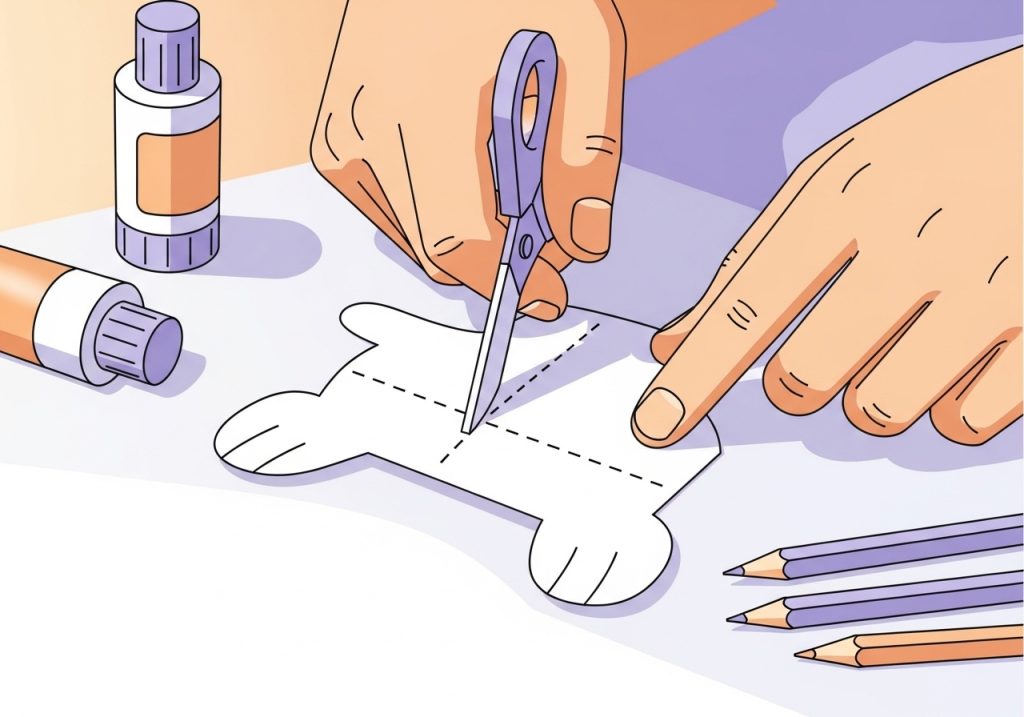
Here are some effective fine and visual motor activities:
- Complex Cutting Crafts: Move beyond straight lines. Provide worksheets with spiral lines, zig-zags, and curved shapes. Creating paper snowflakes or detailed collages requires continuous adjustments of the paper and scissors, which builds bilateral coordination and motor planning.
- Intricate Building Tasks: Using smaller building blocks, like LEGOs with instruction booklets, challenges both fine motor precision and visual-spatial skills. Students must interpret diagrams and manipulate small pieces to create a final product.
- Handwriting Practice: Consistent handwriting practice is still very important in second grade. You can find many helpful print handwriting worksheets with free PDF resources to support legible letter formation, sizing, and spacing. Use paper with clearly defined lines to provide visual cues for proper placement.
- Beading and Lacing: Using beads with smaller holes or creating patterns with lacing cards encourages a pincer grasp, improves dexterity, and demands focused attention.
Step 3: Integrate Fun Activities for Second Graders with Academics
The most effective learning happens when skill development is embedded within meaningful academic content. Combining learning with movement and creativity reinforces concepts and makes abstract ideas more concrete. This approach helps students see the practical application of their skills and can increase their motivation to participate. Instead of treating skill practice as a separate event, weave it into your daily lessons.
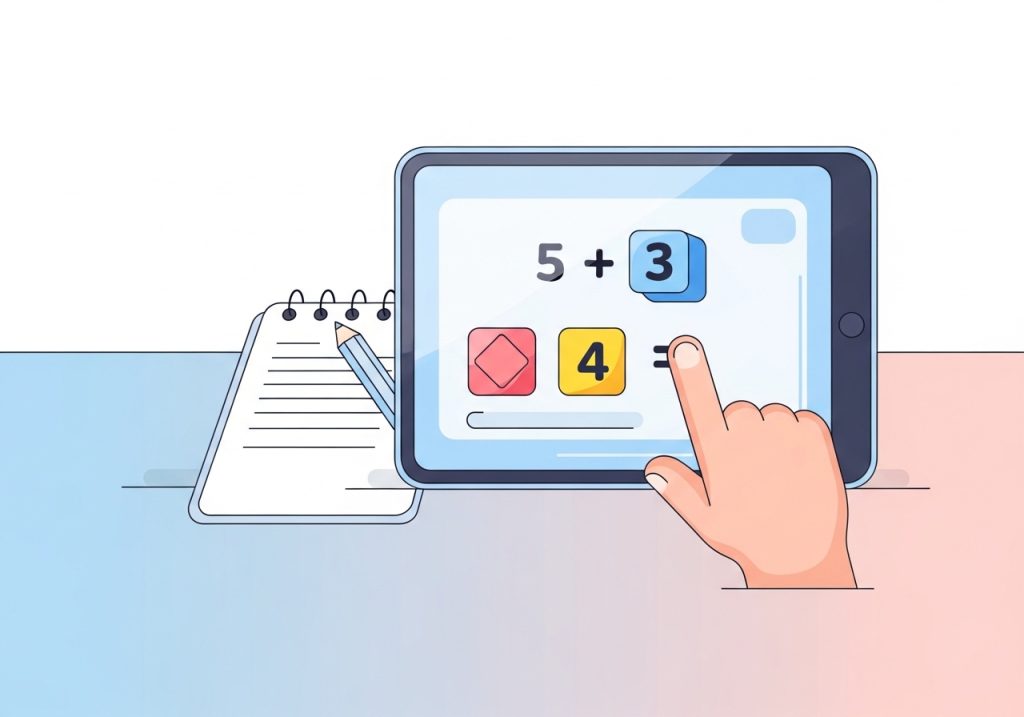
Try these ideas for integrating skills with core subjects:
- Math Manipulatives: Use hands-on tools to teach math. Build arrays with small blocks to understand multiplication, use measuring cups with sand or water to explore volume, or create geometric shapes with toothpicks and marshmallows. These tasks build fine motor skills while reinforcing mathematical concepts.
- Language Arts Puzzles: Write sentences on strips of paper and cut them apart for students to reassemble. This reinforces sentence structure, grammar, and reading skills while also involving a fine motor component. Creating story maps or comic strips to summarize a book requires planning, writing, and drawing.
- Science Experiments: Hands-on science experiments are perfect for skill integration. Tasks like using an eyedropper, tweezing small items for observation, or drawing and labeling diagrams all require fine motor control and visual attention to detail.
Step 4: Incorporate Sensory and Self-Regulation Breaks
A second grader’s ability to sit and attend for long periods is still developing. Planning short, purposeful breaks can help students manage their sensory needs, reduce restlessness, and improve focus. These are not just “free time,” but structured moments designed to help children reset their nervous systems. When children learn to recognize their own sensory needs, they build self-awareness and independence. Providing opportunities to move and recharge is a proactive strategy for classroom management and is essential for many learners.
Simple and effective sensory breaks include:
- Heavy Work Activities: These tasks involve pushing or pulling and provide calming proprioceptive input to the muscles and joints. Examples include wall pushes, chair push-ups, carrying a stack of books, or helping to move furniture.
- Movement Sequences: Guide students through a short series of stretches or movements. Animal walks (like bear walks or crab walks), jumping jacks, or cross-body marches can help organize the brain and prepare the body for learning.
- Mindful Moments: Teach simple breathing exercises, like tracing a square in the air while inhaling and exhaling for four counts on each side. Even one minute of quiet focus can help a child reset. In some situations, learning how to teach de-escalation skills to children can provide valuable tools for emotional regulation.
- Tactile Tools: For some students, having access to a small, quiet tactile tool like therapy putty or a stress ball can help improve focus during seated instruction.
Step 5: Adapt Activities for Diverse Learning Needs
In any group of second graders, there will be a wide range of skill levels. To ensure every child can participate successfully and feel confident, it is critical to adapt activities. Differentiation is not about creating a separate activity for each child but about building flexibility into the tasks you already have planned. Small modifications can make a significant difference in a child’s ability to engage and learn.
Consider these strategies for adapting activities:
- Modify Materials: Offer choices like pencil grips for students struggling with grasp, spring-loaded scissors for those with weak hand strength, or highlighted paper for children who need help with alignment.
- Break Down Tasks: Present multi-step projects one step at a time. Use a visual schedule with pictures or words to show the sequence of the activity. This helps students with executive functioning challenges stay on track.
- Provide Different Levels of Challenge: For a cutting task, you might offer a simple shape for one student and a more complex one for another. For a writing activity, one child might write a single sentence while another writes a full paragraph. The core skill is the same, but the expectation is adjusted.
- Offer Choice: Whenever possible, allow students to choose between two or three different activities that target the same skill. This increases engagement and gives children a sense of ownership over their learning.
By thoughtfully selecting activities that target key developmental areas, you can create a rich learning environment for second graders. The most effective approach is proactive, skill-focused, and flexible. It recognizes that children learn best when they are actively engaged in tasks that are challenging yet achievable. By integrating fine motor, academic, and sensory strategies into your planning, you can support students’ growth and help them build a strong foundation for future learning.
Ready to put these ideas into practice? Finding the right materials shouldn’t be another challenge. For practical, low-prep activities designed by an occupational therapist, explore the resources available at The Inspiring OT. Our printable worksheets, guides, and activities are created to make skill-building engaging and effective for every learner. Visit The Inspiring OT shop to find evidence-informed tools that support therapists, teachers, and families.
Leave a Reply