
Handwriting is a complex skill that involves much more than just holding a pencil and forming letters. For many learners, developing legible and efficient handwriting can be a significant challenge. If you are looking for effective ways to support a child’s penmanship, the key is to look beyond simple letter practice. Understanding how to improve handwriting involves a systematic approach that builds foundational skills first, creating a solid base for success. This guide, grounded in occupational therapy principles, breaks down the process into seven practical and actionable steps.
Understanding How to Improve Handwriting: The Core Components
Before jumping into practice drills, it is important to recognize that handwriting is a developmental process. It depends on the integration of several core abilities, including postural control, fine motor strength, visual perception, and motor planning. When a child struggles with handwriting, the issue often lies in one or more of these underlying areas. By addressing these foundational components systematically, we can create lasting improvements in a child’s writing ability. This approach moves away from simply correcting letter formation and instead focuses on building the physical and cognitive skills necessary for fluid, legible writing.
Step 1: Evaluate Foundational Skills
The first step in improving handwriting is to assess the building blocks that support it. A child needs a stable base to control the fine motor movements of their hands and fingers. Before handing them a pencil, observe their posture and overall strength. Do they sit upright in their chair with their feet on the floor, or do they slump over the table? Can they maintain this position without tiring quickly? Strong core and shoulder muscles provide the stability needed for precise arm and hand control. Also, consider their hand-eye coordination. Can they color within the lines or trace a simple path? Evaluating these foundational skills helps identify the true starting point for intervention and ensures you are addressing the root cause of any difficulties, including any challenges with key visual processing skills.
Step 2: Strengthen Fine Motor and Hand Muscles
Writing can be a workout for the small muscles in the hand. If a child’s hand muscles are weak, they will fatigue quickly, leading to a poor pencil grasp, messy letters, and frustration. Building hand strength and dexterity through play is an effective way to prepare for writing tasks. Incorporate activities that encourage pinching, squeezing, and manipulating small objects into their routine.
- Play with clay or putty: Rolling, pinching, and squeezing therapy putty builds intrinsic hand strength.
- Use tongs or tweezers: Picking up small items like cotton balls or beads with tongs develops the pincer grasp.
- Stringing beads or pasta: This activity requires precise control and hand-eye coordination.
- Building with interlocking blocks: Pushing and pulling apart blocks strengthens the fingers and hands.
- Using a spray bottle: Squeezing the trigger is an excellent hand-strengthening exercise that can be used to water plants or for fun art projects.

Step 3: Establish an Efficient Pencil Grasp
An efficient pencil grasp allows a child to move their fingers to form letters, rather than moving their whole arm. This leads to greater accuracy and less fatigue. The most common functional grasps are the tripod grasp (using the thumb, index, and middle fingers) and the quadruped grasp (which adds the ring finger for support). If a child uses an awkward or immature grasp, it can hinder their writing. To encourage a more efficient pattern, try using small writing tools. Short pencils or broken crayons naturally position the fingers into a tripod grasp. Pencil grips can be helpful for some children, but they should be used as a temporary tool to guide finger placement, not as a permanent solution.
Step 4: Master Pre-Writing Strokes
All letters and numbers are made from a combination of simple lines and curves. Before a child can form a “B” or a “g,” they must be able to create the shapes that form them. These pre-writing strokes develop in a predictable sequence. Practice should focus on mastering one type of stroke before moving to the next. The typical developmental sequence is:
- Vertical Line ( | )
- Horizontal Line ( — )
- Circle ( O )
- Cross ( + )
- Square ( ☐ )
- Diagonal Lines ( / )
- X Shape
Make practicing these strokes fun by using multisensory methods. Have the child draw them in a sand tray, with shaving cream on a table, or with a wet paintbrush on a sidewalk. This makes learning motor patterns more memorable and engaging.
Step 5: Teach Proper Letter Formation
Once pre-writing strokes are solid, you can focus on letter formation. It is crucial to teach letters with a consistent, top-to-bottom and left-to-right motor plan. When children form letters from the bottom up or in segments, it is inefficient and can lead to messy, reversed, or illegible writing. A very effective teaching method is to group letters by their first stroke. For example, “magic c” letters all start with the same curve as the letter ‘c’. This group includes c, a, d, g, o, and q. By learning the motor plan for ‘c’, the child has a head start on forming five other letters. Similarly, letters like ‘l’, ‘t’, ‘i’, and ‘f’ all start with a straight line down. This grouped approach simplifies the learning process and reinforces correct motor patterns.
Step 6: Address Sizing, Spacing, and Alignment
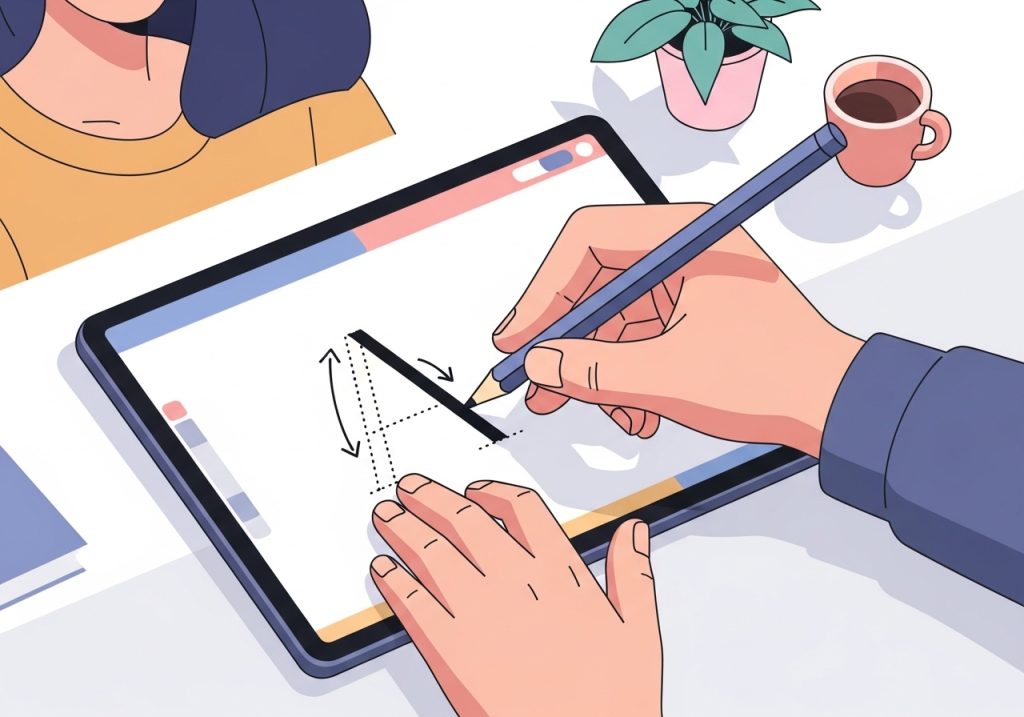
Legible handwriting depends on more than just well-formed letters. Uniformity in size, consistent spacing between letters and words, and proper alignment on the baseline are equally important. Many children struggle with these visual-spatial aspects of writing. Adapted paper can be a great tool to provide visual cues. Paper with highlighted lines (sometimes called “sky, grass, dirt” paper) helps children understand where to place tall, short, and descending letters. To teach spacing between words, have the child place their index finger on the page after each word to leave a space. Using graph paper can also help with both sizing and spacing for individual letters.
Step 7: Make Practice Purposeful and Engaging
Endless drills of writing letters can quickly become tedious and counterproductive. For practice to be effective, it needs to be motivating and meaningful. Connect handwriting practice to real-life activities that the child finds enjoyable. Instead of just copying letters, have them:
- Write a grocery list for a favorite meal.
- Compose a thank-you note or a letter to a friend.
- Create a comic strip with speech bubbles.
- Keep a simple journal about their day.
- Play word games like hangman or tic-tac-toe on a whiteboard.
By making writing purposeful, you show the child the value of their new skill and increase their motivation to improve. Consistent, short bursts of enjoyable practice are far more effective than long, frustrating sessions. For those looking for structured tools, making the most of a daily handwriting practice PDF can be a great way to provide regular, focused skill-building in a manageable format.

Improving handwriting is a journey, not a race. By following these steps, you can create a comprehensive support system that addresses the whole child, not just their penmanship. Focus on building a strong foundation, teaching skills systematically, and keeping practice positive and engaging. This patient, structured approach gives learners the tools and confidence they need to become successful writers.
Ready to support your learners with practical, OT-designed resources? The Inspiring OT offers a wide range of printable activities, worksheets, and guides to make skill-building effective and engaging. From fine motor warm-ups to handwriting practice sheets, our low-prep materials are created to simplify your planning and help every child succeed. Explore the shop to find the perfect tools for your therapy sessions, classroom, or home.
Discover engaging, evidence-informed resources at The Inspiring OT shop.
Leave a Reply