
Have you ever watched a child search for a specific Lego brick in a large bin or try to find their name on a busy worksheet? The ability to visually isolate one object from a complex background is a skill we often take for granted. This crucial visual processing ability is known as figure-ground perception. Understanding and supporting its development can make a significant difference in a learner’s academic and daily life. This guide offers practical figure-ground perception examples and simple activities to help you support this essential skill in the children you teach, treat, or raise.
Step 1: What Is Figure-Ground Perception?
Figure-ground perception is the ability to see and identify a primary object (the “figure”) by mentally separating it from its distracting surroundings (the “ground”). It allows the brain to prioritize important visual information and filter out what is not immediately needed. Think of it as the visual version of hearing your name called across a crowded, noisy room. Your brain singles out that one sound from all the background chatter. Visually, figure-ground perception does the same thing, enabling a child to find a specific word on a page, a face in a crowd, or a toy in a cluttered room.
This skill is a fundamental component of visual perception. Without it, the world would appear as a confusing jumble of overlapping shapes, colors, and patterns. Developing this ability is necessary for organizing and interpreting the constant stream of visual data we encounter every day.
Step 2: Why This Visual Skill Matters for Development
Strong figure-ground perception is critical for success in many areas of a child’s life, from the classroom to the playground. When this skill is underdeveloped, learners may struggle with tasks that seem straightforward to others. Its impact is felt across various functional domains.
For academic tasks, this skill is non-negotiable. During reading, a child must distinguish letters and words from the rest of the text and the white space of the page. Problems in this area can lead to skipping lines or losing one’s place. Similarly, when practicing writing, a learner needs to see the lines on the paper as a distinct background for their letters. Without this, their work might appear messy and disorganized, which is why strengthening visual skills is often part of improving daily handwriting practice. Math worksheets with multiple problems, charts, and graphs also demand strong figure-ground abilities to focus on one problem at a time.
Beyond academics, this skill influences a child’s independence and organization. Daily routines like finding a specific shirt in a drawer, picking out a fork from a silverware tray, or locating a book on a shelf all rely on figure-ground perception. It is one of many foundational core skills in children that contributes to their ability to navigate their environment confidently and efficiently.
Step 3: Real-World Figure-Ground Perception Examples
Figure-ground perception is at work constantly throughout our day. Recognizing it in everyday situations can help you identify opportunities for practice. Here are some clear figure-ground perception examples across different settings.
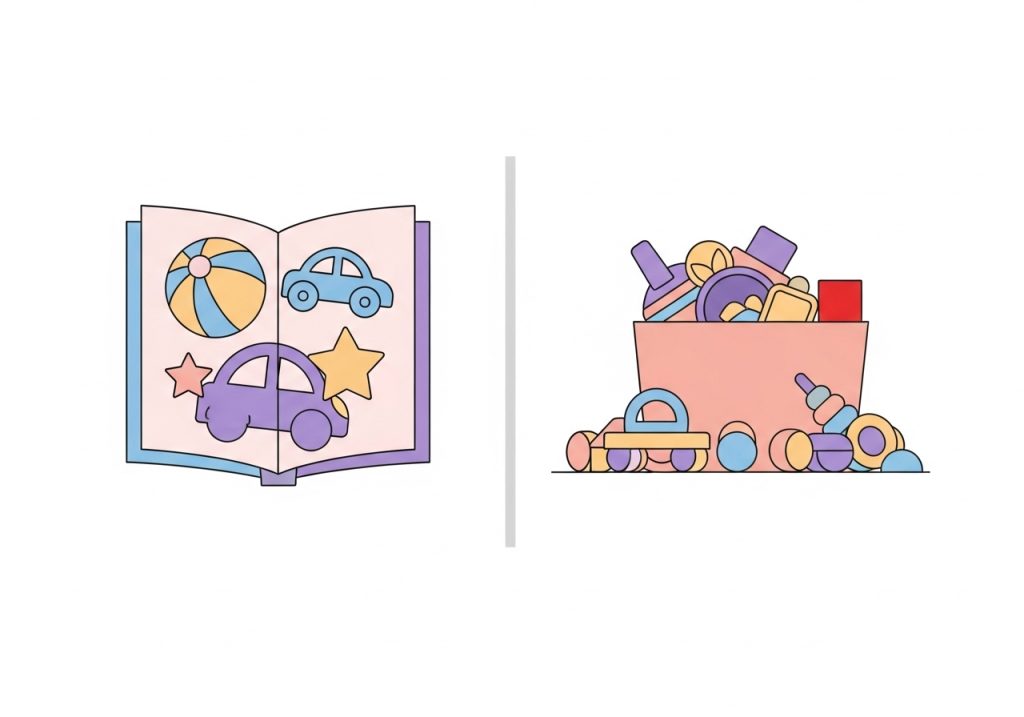
In the Classroom
- Finding a specific word in a dictionary or a sentence in a textbook.
- Identifying a particular country or city on a detailed world map.
- Locating their own name on a paper from a stack of graded work.
- Copying information from a busy whiteboard that contains notes, diagrams, and old markings.
- Focusing on one math problem on a worksheet filled with many problems.
At Home
- Finding a pair of matching socks in a messy drawer.
- Locating a specific cereal box in a crowded pantry.
- Picking out a particular puzzle piece from a pile of similar pieces.
- Finding a specific utensil in a cluttered kitchen drawer.
During Play and Social Activities
- Spotting a friend on a busy playground.
- Finding a specific object in a hidden picture puzzle, like in a “Where’s Waldo?” book.
- Playing “I Spy” and locating the identified object in the room.
- Sorting through a large collection of beads or building blocks to find a specific color or shape.
Step 4: Simple Activities to Build Figure-Ground Skills
Helping a child improve their figure-ground perception does not require specialized equipment. Many effective activities can be integrated into daily routines and playtime using common household or classroom items.

- Hidden Object Worksheets: Printable hidden picture puzzles are a classic and effective tool. Start with simple images that have less background “noise” and gradually move to more complex scenes.
- “I Spy” Games: This simple verbal game can be played anywhere. It encourages children to actively scan their environment and isolate objects based on descriptions.
- Sorting Tasks: Provide a mixed container of objects like buttons, beads, pasta shapes, or small toys. Ask the child to sort them by one attribute, such as color, size, or shape.
- Puzzles: Jigsaw puzzles are excellent for practicing figure-ground skills. The child must find a specific piece (figure) within the jumble of all the other pieces (ground).
- Highlighting and Outlining: On a page of text from a book or magazine, ask the child to find and highlight all instances of a specific letter or word. This trains the eye to pick out details, which is one of many practical comprehension strategies for improving reading focus.
- Real-World Scavenger Hunts: Create a list of items for a child to find around the house, classroom, or outdoors. This turns practice into a fun and active game.
Step 5: How to Identify Potential Figure-Ground Challenges
Some children may find figure-ground tasks more difficult than their peers. Recognizing the signs of a potential challenge is the first step toward providing the right support. While these are not diagnostic criteria, they can indicate that a child might benefit from targeted practice or a professional evaluation.
Look for children who consistently:
- Lose their place while reading or skip entire lines of text.
- Struggle to copy notes accurately from the board.
- Have difficulty finding items in their desk, backpack, or bedroom.
- Seem overwhelmed by visually dense worksheets or book pages.
- Take much longer than peers to complete puzzles or visual search activities.
- Get easily distracted by other visual stimuli in their environment.
- Show frustration with activities that require finding small details in a picture.
If you notice a consistent pattern of these behaviors, it may be helpful to focus on some of the activities listed above. Observing a child’s performance on these tasks can offer valuable information about their visual processing strengths and areas for growth.
Figure-ground perception is a quiet but powerful skill that underpins much of a child’s learning and interaction with the world. By understanding what it is and recognizing its importance, therapists, educators, and parents can effectively support its development. Integrating simple, playful activities into a child’s routine can build their visual processing abilities, leading to greater confidence and independence in the classroom and beyond. The key is to start with simple tasks and gradually increase the complexity, ensuring the child feels successful along the way.
Ready to support your learners with practical, engaging resources? The Inspiring OT offers a wide range of printable worksheets, activities, and guides designed by an experienced occupational therapist to build essential skills. Explore the shop to find low-prep, evidence-informed tools that make learning effective and fun. Visit The Inspiring OT resource shop today.
Leave a Reply