
Teaching cursive can feel like a complex task, but with a structured approach, it becomes a manageable and rewarding process for both the instructor and the learner. For therapists, teachers, and parents looking into cursive handwriting how to, the key is breaking down the skill into sequential steps. Cursive writing offers numerous benefits beyond just an alternative writing style; it helps develop fine motor skills, improves motor planning, and can even support spelling automaticity because letters in a word are connected into a single unit. This guide provides a clear, step-by-step framework to effectively teach cursive handwriting.
Success in teaching cursive often comes from using proven instructional strategies that focus on building skills incrementally. Before starting formal letter instruction, it’s important to ensure the learner is prepared for the task. This includes confirming a comfortable and supportive seating posture, with feet flat on the floor and the desk at an appropriate height. The paper should be slanted slightly, parallel to the writing forearm, to facilitate the natural movement of cursive strokes.
Step 1: Assess Foundational Skills
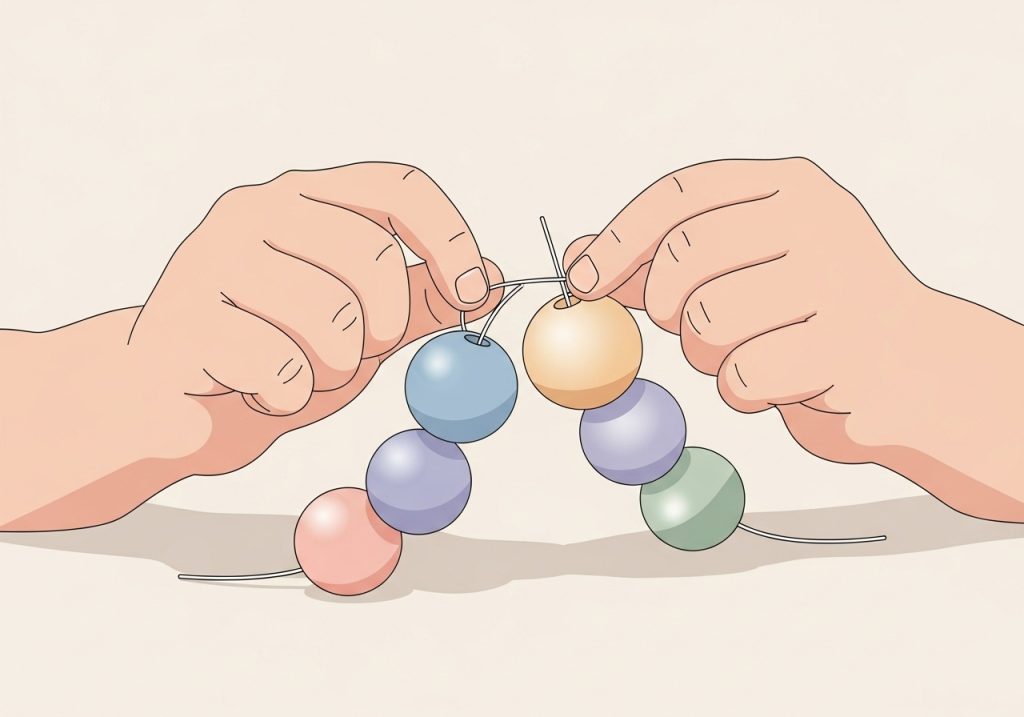
Before teaching letter formation, confirm the learner has adequate fine motor control, visual-motor integration, and a functional pencil grasp. These prerequisite skills are crucial for success and preventing frustration. A student who struggles to form basic print letters will likely find the fluid, continuous motions of cursive very difficult. Check for the ability to form basic shapes, trace lines, and manipulate a pencil with reasonable control. A functional pencil grasp is one that allows for finger movement and does not cause fatigue or pain, even if it isn’t a “perfect” tripod grasp.
Step 2: Introduce Foundational Cursive Strokes
Begin by teaching the basic strokes that form the building blocks of all cursive letters. Mastering movements like the undercurve, overcurve, and loop simplifies the process of learning the complete alphabet. Instead of overwhelming a learner with 26 unique letter formations, you are teaching them a handful of motor patterns that repeat across the alphabet. This method, often called shaping, builds motor memory by teaching smaller components of a skill first. Practice these foundational strokes on lined paper until the learner can produce them consistently and with fluid motion. Examples of these strokes include:
- Undercurve: The smiling stroke that starts on the baseline, curves up, and ends. It is used in letters like i, t, and u.
- Overcurve: The frowning stroke that starts below the headline, curves over, and comes down. It is found in letters like n, m, and v.
- Up and Down Loop: Tall loops used for letters like l, h, and f, and descending loops for letters like g, j, and y.
Step 3: Cursive Handwriting How To Teach Lowercase Letter Groups
Group lowercase letters based on their initial motor pattern. This systematic approach reinforces motor memory and makes learning more efficient than teaching in alphabetical order. By grouping letters that start with the same stroke, you allow the learner to practice a specific motor plan repeatedly, leading to faster mastery. This is a far more effective method than asking them to learn ‘a’, then ‘b’, then ‘c’, as each of these letters requires a different motor approach.
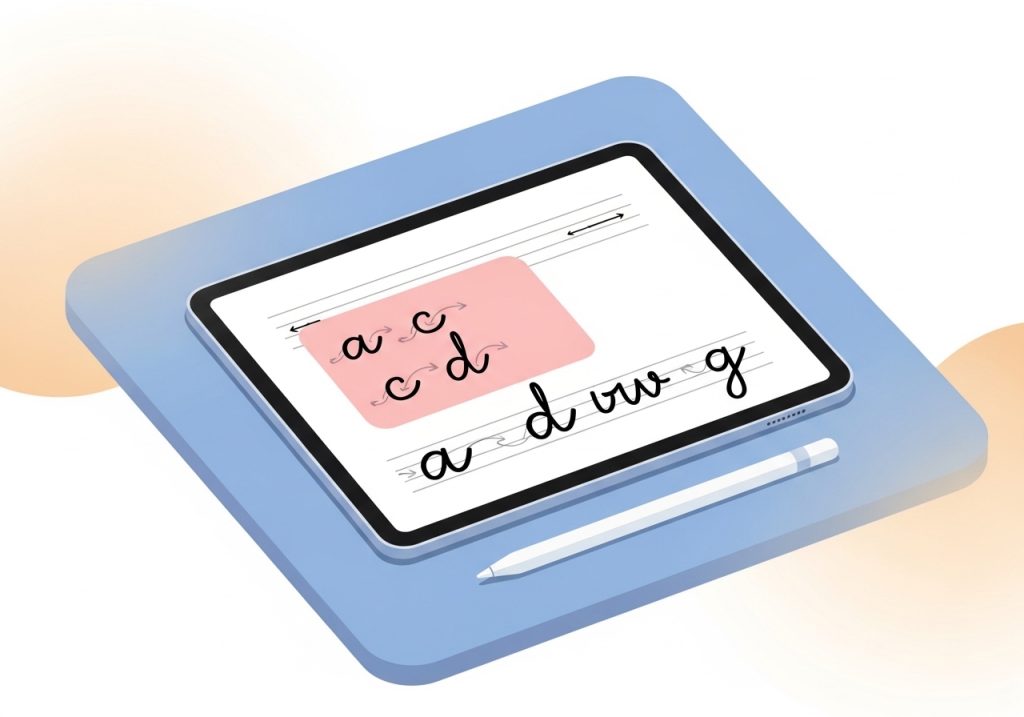
A common way to group letters includes:
- Wave Curve Letters: These letters start with a curve similar to the letter c (c, a, d, g, o, q).
- Loop Letters: These letters incorporate ascending or descending loops (e, l, h, k, b, f, j, g, y, p, z).
- Hill and Valley Letters: These letters are formed with overcurves and undercurves (n, m, v, x).
Step 4: Focus on Connecting Letters into Words
The essence of cursive is the fluid connection between letters. Practice joining the newly learned letters to form simple words, emphasizing smooth, continuous lines without lifting the pencil. Start with connecting letters from the same motor group (e.g., ‘an’ or ‘all’) before moving to more complex combinations that cross motor groups. Pay special attention to tricky connections, such as those following letters that end high off the baseline, like ‘o’, ‘v’, or ‘w’. Consistent practice with two- and three-letter words helps solidify the concept of cursive flow.
Step 5: Introduce Uppercase Letters
Once the learner is comfortable with lowercase letters and connections, introduce uppercase letters. Many uppercase cursive letters do not connect to the next letter, so they can be taught as separate skills. While they can also be grouped by similar strokes (for example, C, E, G, and O all share a common oval shape), they are often learned more as individual symbols. The primary goal is legibility and proper use at the beginning of sentences and for proper nouns.
Step 6: Practice with Purpose and Consistency
Move beyond rote drills to meaningful writing activities like creating lists, writing short stories, or composing letters. When learners use cursive for authentic purposes, they are more motivated to improve their skills. Short, consistent practice sessions are more effective than infrequent, long ones. A daily 10-15 minute session helps build muscle memory without causing burnout or fatigue. Throughout this process, focus on progress rather than perfection. Applying positive reinforcement examples for effort and improvement can help maintain a student’s confidence and engagement.
Teaching cursive handwriting is a process that builds skill upon skill. By starting with foundational abilities, introducing strokes systematically, and providing meaningful practice, you can guide any learner toward legible and fluent cursive writing. Remember that every student learns at a different pace, so patience and consistent encouragement are the most valuable tools you can provide.
Ready to put these steps into action? Finding the right resources can make all the difference. The Inspiring OT offers a wide range of practical, low-prep printable activities and worksheets designed by an experienced occupational therapist to support handwriting development. Save time on planning and find engaging, evidence-informed materials to help your learners succeed. Explore the complete collection of fine motor, visual motor, and handwriting tools today.
Leave a Reply