
Setting meaningful goals is fundamental to supporting student growth. For occupational therapists, teachers, and parents, however, translating broad academic needs into specific, actionable objectives can be a challenge. Vague goals like “get better at math” or “improve reading” lack the clarity needed to guide instruction and measure progress. This guide provides practical and well-defined academic goals examples across several key learning domains. These examples are designed to be starting points that you can adapt to fit the unique needs of your learners, ensuring every objective is clear, measurable, and focused on building essential skills for success in the classroom and beyond.
Improve Handwriting Legibility and Fluency
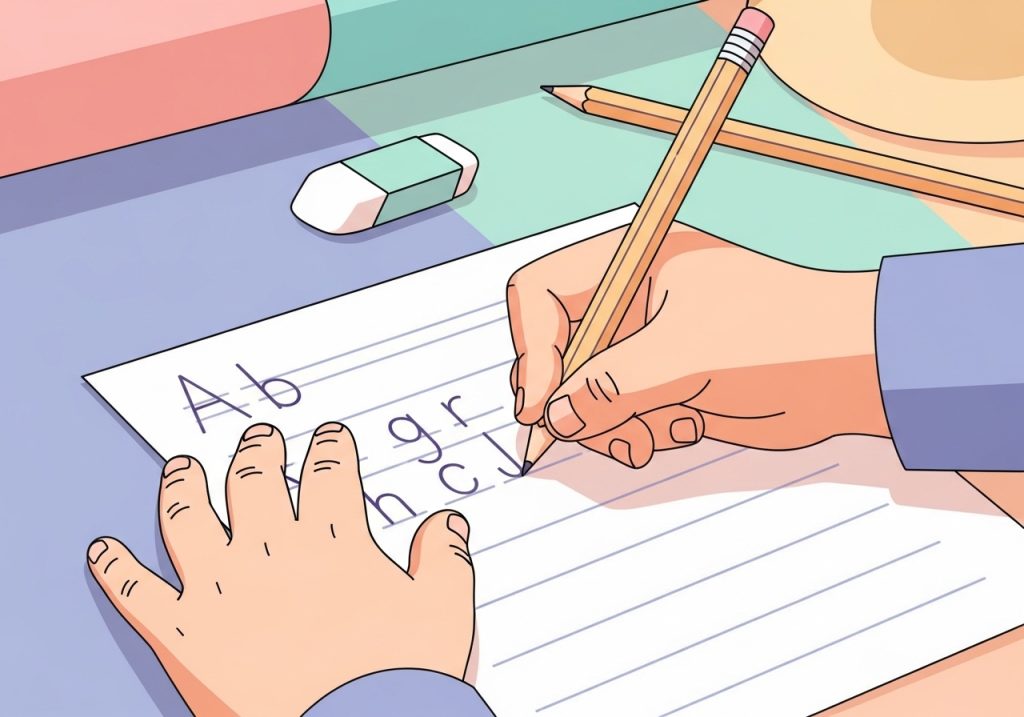
Handwriting is more than just making marks on a page; it’s a critical tool for communication. When a child struggles with legibility or speed, it can lead to frustration, difficulty completing assignments, and an unwillingness to engage in written tasks. A well-structured goal focuses on the specific components of handwriting that need support, whether it’s letter formation, spacing, or overall neatness. By targeting these areas, we can help students produce written work they are proud of and that others can easily read.
Effective handwriting goals break down the complex process of writing into manageable parts. Instead of simply aiming for “neater handwriting,” focus on the specific motor patterns and visual skills involved. Consider aspects like starting letters from the top, using consistent sizing for lowercase and uppercase letters, and leaving appropriate space between words. For students who are ready, you might also explore the structured process of teaching cursive handwriting, which can improve fluency for some learners. The objective is to make the physical act of writing more automatic, freeing up cognitive resources for focusing on content and ideas.
Specific Goal Examples:
- For Letter Formation: By the end of the semester, the student will independently form all lowercase letters with correct start points and stroke sequences in 80% of opportunities during written assignments.
- For Spacing: Given a writing prompt, the student will use finger-spacing or a similar visual cue to leave a clear space between words in 4 out of 5 sentences across three consecutive writing samples.
- For Legibility and Sizing: When writing a 3-5 sentence paragraph, the student will write all letters on the baseline and use appropriate sizing (tall letters are tall, small letters are small) so that the writing is legible to an unfamiliar reader.
Enhance Reading Comprehension and Recall
The ability to read words is only the first step. True literacy involves understanding and interpreting what is being read. Reading comprehension goals aim to move students from simple decoding to actively engaging with text. This means helping them identify the main idea, make inferences, recall key details, and understand the author’s purpose. Strong comprehension skills are essential for success across all academic subjects, as students are required to learn from textbooks, articles, and other written materials.
To set effective comprehension goals, it’s important to pinpoint where the breakdown is occurring. Is the student struggling to remember facts? Are they having trouble connecting ideas or understanding vocabulary in context? Goals should target these specific areas. For some learners, difficulties with comprehension may originate from weak foundational skills. In these cases, incorporating effective phonological awareness activities can strengthen the underlying abilities needed for fluent reading and, ultimately, better understanding. Strategies like using graphic organizers, teaching students to ask themselves questions as they read, and practicing summarization can provide the structure they need to process information effectively.
Specific Goal Examples:
- For Main Idea: After reading a grade-level paragraph, the student will state the main idea and identify at least two supporting details with 80% accuracy.
- For Recall: After listening to a short story read aloud, the student will correctly answer five “wh-” questions (who, what, where, when, why) about the text.
- For Vocabulary: When encountering an unfamiliar word in a text, the student will use context clues to determine its meaning and verify with a dictionary or teacher in 4 out of 5 instances.
Develop Executive Functioning for Organization
Executive functions are the mental processes that allow us to plan, focus attention, remember instructions, and manage multiple tasks. In an academic setting, these skills are crucial for everything from keeping a backpack organized to completing a long-term research project. When students have weak executive functioning, they may appear disorganized, forgetful, or unmotivated. Setting goals in this area provides them with the strategies and routines needed to manage their time, materials, and assignments independently.
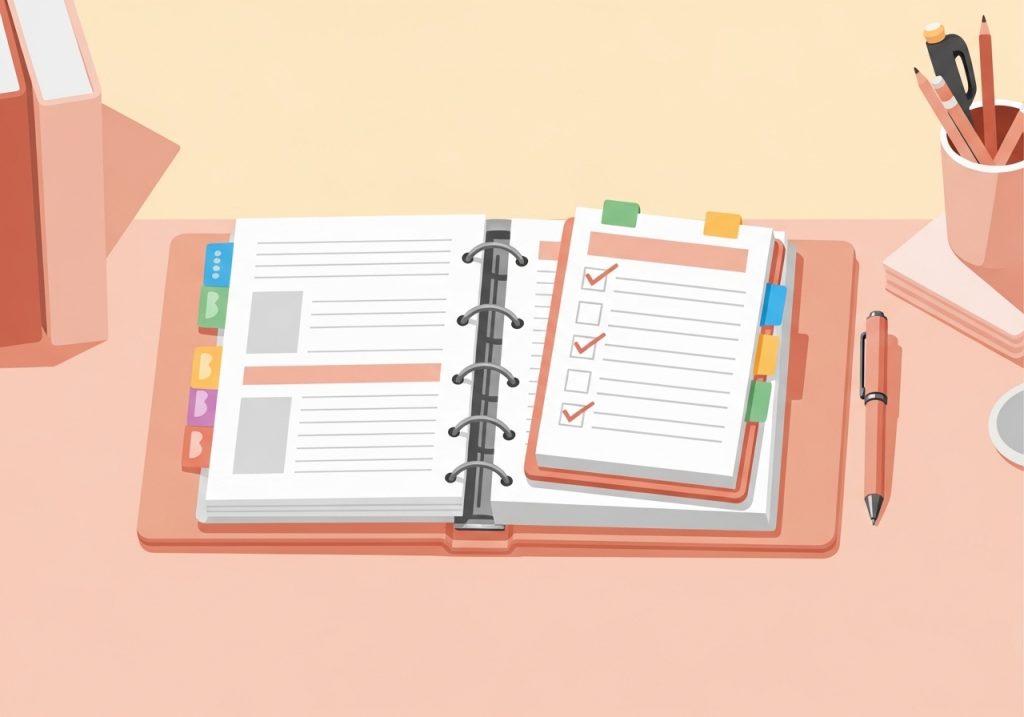
Goals for executive functioning should be highly practical and tied to daily school routines. The focus is on building habits. This might involve creating systems for managing homework, organizing a binder, or breaking down large assignments into smaller, more manageable steps. Visual aids like checklists, planners, and color-coded folders are often effective tools. The aim is to externalize the planning and organizational process until the student can internalize these strategies. A consistent approach is a vital part of effective executive functioning training, helping children build the skills they need for academic autonomy.
Specific Goal Examples:
- For Materials Management: Using a visual checklist, the student will pack their backpack at the end of the school day, ensuring all necessary books, folders, and their planner are included for homework completion on 4 out of 5 days.
- For Task Initiation: When given a multi-step class assignment, the student will independently complete the first step within 5 minutes of receiving instructions in 3 out of 4 opportunities.
- For Planning: Given a long-term project with a final due date, the student will work with a teacher or parent to break it into at least three sub-tasks with their own deadlines and record them in a planner.
Strengthen Emotional Regulation in the Classroom
A student’s ability to manage their emotions has a direct impact on their ability to learn. When children feel overwhelmed, anxious, or frustrated, their capacity to pay attention, process information, and participate in class activities is significantly reduced. Emotional regulation goals help students develop self-awareness and equip them with concrete strategies to manage their feelings in a constructive way. This not only supports their academic progress but also improves their social interactions and overall well-being.
These goals are not about suppressing emotions. They are about teaching students to recognize their feelings and respond to them appropriately. The first step is often building emotional vocabulary so a child can identify and name what they are feeling. The next step is to create a toolkit of coping strategies, which could include taking deep breaths, asking for a short break, squeezing a stress ball, or looking at a calming picture. The goal is for the student to use these tools proactively before their emotions become too intense to manage, allowing them to remain engaged and available for learning.
Specific Goal Examples:
- For Self-Awareness: Using a visual scale (e.g., a feelings thermometer), the student will identify their emotional state with 80% accuracy when prompted by an adult during a challenging academic task.
- For Strategy Use: When feeling frustrated or overwhelmed, the student will independently choose and use one pre-taught calming strategy (e.g., deep breathing, taking a 2-minute break in a designated space) in 3 out of 4 instances.
- For Communication: The student will use an “I feel __” statement or a communication card to express their needs to a teacher before their frustration escalates, replacing disruptive behaviors with functional communication.
Key Academic Goals Examples for Foundational Math
Success in mathematics is built upon a strong foundation of core concepts and skills. When students have gaps in their understanding of basic number sense, computation, or problem-solving, they will inevitably struggle with more advanced topics. Setting specific goals for foundational math helps identify and address these gaps directly. This ensures that learners have the solid base they need to build confidence and competence in their mathematical abilities.
When writing key academic goals examples for math, be as specific as possible. Instead of “improve at word problems,” define the type of word problem (e.g., single-step addition within 20). Instead of “learn multiplication,” target specific fact families. This level of detail makes it easier to design targeted instruction and track progress. Using manipulatives, drawing pictures, and connecting math concepts to real-world scenarios are powerful strategies to make abstract ideas more concrete and accessible for learners.
Specific Goal Examples:
- For Number Sense: Given a set of numbers up to 100, the student will correctly identify which is greater or less than with 90% accuracy.
- For Computation: The student will accurately solve 2-digit addition problems without regrouping, completing a worksheet of 20 problems with 95% accuracy within 10 minutes.
- For Problem-Solving: Given a single-step word problem involving subtraction within 50, the student will identify the correct operation and solve the problem accurately in 4 out of 5 opportunities.
Thoughtfully crafted academic goals are powerful tools for educators, therapists, and parents. By moving beyond generalities and focusing on specific, measurable skills, we create a clear path for student development. The examples provided here can serve as a blueprint for writing meaningful objectives in handwriting, reading, organization, emotional regulation, and math. Remember to tailor each goal to the individual learner, celebrate small steps of progress, and adjust your strategies as needed. This intentional approach helps build not only academic skills but also the confidence and resilience students need to thrive.
Ready to turn these goals into action? Putting effective plans into practice requires the right tools. The Inspiring OT offers a wide range of practical, evidence-informed resources designed by an occupational therapist to support skill development. From fine motor activities to sensory toolkits and handwriting worksheets, our low-prep printables make it easier to provide targeted, engaging instruction. Explore The Inspiring OT shop on Teachers Pay Teachers to find resources that simplify your planning and help your learners achieve their goals.
Leave a Reply