
A visual representation is the practice of using charts, images, and diagrams to make information easier to understand, which is a critical tool for helping learners grasp abstract concepts and follow structured routines. For many children, especially those with processing, attention, or language challenges, auditory and text-based information can be overwhelming. Visuals provide a concrete, stable reference point that supports comprehension and reduces anxiety.
Defining Visual Representation in a Learning Context
At its core, visual representation means turning words and abstract ideas into something we can see. This is not a new concept, but its application in therapy and education is essential. Instead of just hearing instructions or reading a list, a learner can look at a picture, a symbol, or a sequence of images. This externalizes the information, moving it from something they have to hold in their working memory to something they can refer to in their environment. This process uses design elements like illustration and layout to convey information and emotions effectively.
Examples of visual representation include:
- Picture Schedules: A sequence of images showing the steps of a task or the events of a day. This is a foundational strategy, and you can learn more about how to create an effective preschool visual schedule to support routines.
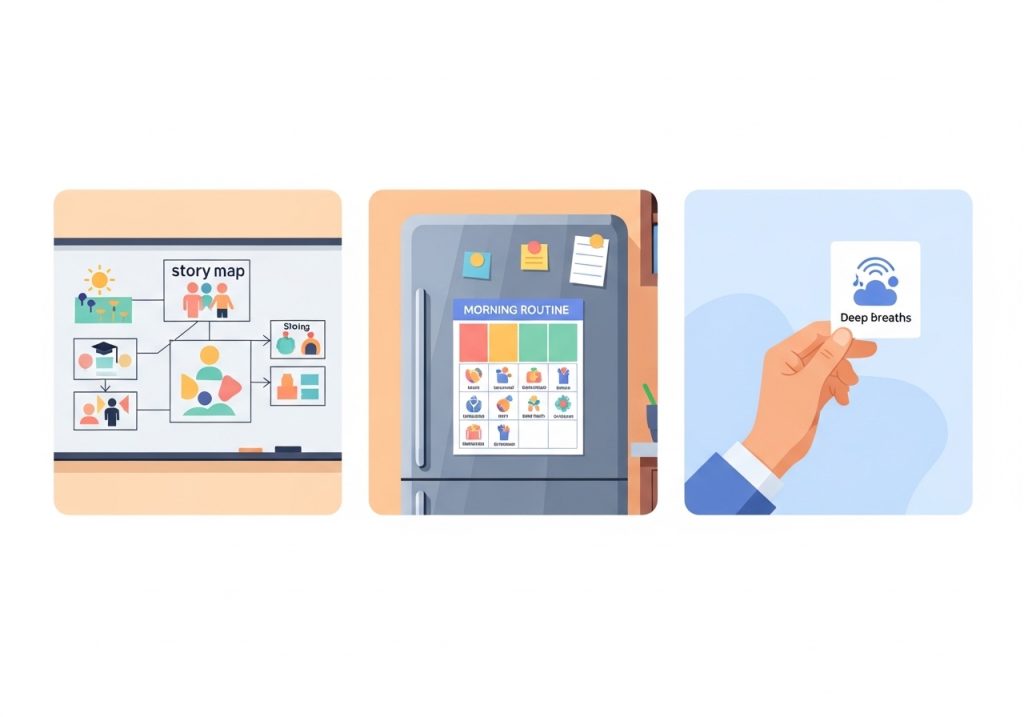
- Graphic Organizers: Maps and charts that organize information about a topic, such as a Venn diagram or a story map. These tools help learners see the relationships between different pieces of information.
- First-Then Boards: A simple board showing what needs to be done now (first) and what will happen next (then). This tool is excellent for building motivation and managing transitions.
- Feelings Charts: Pictures of faces or characters depicting different emotions to help children identify and communicate their feelings. This builds emotional literacy and supports self-regulation skills.
- Visual Timers: Timers that show the passage of time with a colored disc that shrinks, making an abstract concept visible. This helps children understand “how much longer” without needing to read a clock.
These tools are not just for non-readers. They benefit all learners by making expectations clear and predictable, reducing the mental energy required to guess what comes next or remember multi-step directions.
Why Visuals Are a Powerful Tool for Development
The effectiveness of visual supports is rooted in how the brain processes information. The visual processing centers of the brain are powerful, and for many people, images are easier and faster to process than text or spoken language. For children who struggle with executive functions, language processing, or anxiety, this difference is significant. Research from the National Institutes of Health confirms that the act of creating visual explanations improves learning by showing parts and processes directly.

Here are some of the key benefits:
- Reduces Cognitive Load: A visual schedule or checklist offloads the mental effort required to remember a sequence of steps. This frees up cognitive resources for the child to focus on performing the actual task, rather than just remembering what the task is.
- Increases Predictability: Knowing what to expect reduces anxiety and resistance to transitions. A visual schedule allows a child to see what is coming next, giving them a sense of control and security in their environment.
- Supports Emotional Regulation: Tools like a feelings thermometer or zones of regulation chart give children a concrete way to identify and communicate their internal state. This is the first step toward learning to manage their emotions effectively.
- Promotes Independence: When a child can refer to a visual chart for their morning routine, they are less dependent on adult prompts. This builds autonomy and self-confidence, which are critical for overall skill development for growing learners.
- Enhances Communication: For children who are non-verbal or have expressive language difficulties, visual aids can be a primary mode of communication. Pointing to a picture of a snack is a much clearer way to express a need than becoming frustrated.
- Adapts to Diverse Needs: Visuals are a core component of Universal Design for Learning (UDL) because they present information in a different modality. This is one of many practical differentiated instruction examples that can support every learner in a group.
Practical Ways to Use Visual Aids Every Day
Integrating visual supports does not need to be complicated. Simple, clear visuals are often the most effective. The goal is to provide just enough information to clarify expectations without creating clutter or overwhelming the learner.
For Therapists and Educators:
- Session Agendas: Start each session by reviewing a simple picture schedule of the planned activities. This helps the child transition into the therapy space and understand the session’s flow. You can use Velcro-backed pictures on a strip so activities can be removed once completed, providing a sense of accomplishment.
- Task Breakdowns: Break down multi-step tasks, like crafting or handwriting exercises, into a sequence of visual steps. This is particularly helpful for activities that involve sequencing and motor planning.
- Behavioral Cues: Use simple cue cards for common instructions like “quiet voice,” “listening ears,” or “gentle hands” to provide non-verbal reminders. This can be less disruptive to the group and less confrontational for the individual child.
- Social Stories: Create or use pre-made social stories with pictures to teach social skills or prepare a child for a new or challenging situation, such as a fire drill or a field trip.
For Parents and Caregivers:
- Routine Charts: Create charts for morning, after-school, and bedtime routines. Use photos of your child doing each step for personalization. This turns an abstract list of commands (“get ready for school!”) into a concrete, manageable checklist.
- Chore Lists: A visual chore chart with check-off boxes makes it clear what needs to be done and gives a sense of accomplishment when tasks are completed. This can reduce arguments about responsibilities.
- First-Then Language: Pair verbal instructions with a simple First-Then board. For example, “First, put on your shoes, then we can go to the park.” This shows a clear and immediate reward for completing a non-preferred task.
- Outing Previews: Before going to a new place like the dentist or a birthday party, look up pictures online or draw a simple map of what to expect. This preparation can dramatically reduce anxiety about the unknown.
Key Principles for Creating Effective Visuals
To make your visual supports successful, keep a few guidelines in mind. The tool should help, not add more confusion. The most effective visuals are those that are designed with the specific user in mind.
Keep It Simple: Avoid cluttered images or too much text. Use clear, simple icons or photos against a plain background. The focus should be on the core message. Too many distracting elements can make the visual less effective.
Be Consistent: Use the same image to represent the same activity every time. If a picture of a book means reading time, do not use it to mean library day. Consistency helps build a quick, automatic association, reducing the cognitive effort needed to interpret the visual.
Involve the Learner: Whenever possible, have the child help create or choose the pictures for their schedules or charts. This ownership increases their motivation to use the tool. When a child feels they are part of the process, they are more likely to engage with the support.
Place It Strategically: Put the visual aid where the task occurs. A morning routine chart belongs in the bedroom or bathroom, and a handwashing sequence should be right by the sink. The visual should be at the child’s eye level and easily accessible.
A visual representation is a fundamental strategy for making our world more predictable and understandable for learners. By translating abstract expectations into concrete images, we empower children to participate more independently and confidently in their daily lives. Start with one routine or task, create a simple visual for it, and observe how it can improve cooperation and build skills.
Ready to put these strategies into action? Finding the right visual aids can make all the difference, but you don’t have to create everything from scratch. The Inspiring OT shop offers a wide range of practical, OT-designed printables to support skill development. Explore our collection of low-prep visual schedules, fine motor activities, and regulation tools to help your learners succeed.
Visit The Inspiring OT shop today to find your next great resource.
Leave a Reply