
The Thanksgiving season offers a wonderful opportunity to blend festive fun with meaningful learning. For therapists, educators, and parents, finding engaging activities that also support developmental milestones is key. The right children’s activities for thanksgiving can do more than just keep kids busy; they can actively build fine motor strength, improve sensory processing, and enhance visual motor skills. By incorporating therapeutic principles into seasonal crafts and games, we can help children strengthen foundational abilities in a way that feels like play. Simple crafts involving cutting, gluing, and designing are excellent for building concentration and independence, turning holiday prep into a productive skill-building session.
This guide presents five occupational therapist-approved activities designed to support growth in these critical areas. Each activity is low-prep, uses common materials, and can be easily adapted for different ages and skill levels. Whether you are working in a classroom, a therapy setting, or at your own kitchen table, these ideas provide a framework for making Thanksgiving a time of connection, gratitude, and skill development. These activities focus on the process, not just the final product, allowing children to explore materials and movements at their own pace.
Turkey Fine Motor Feather Hunt
This activity helps develop pincer grasp, hand strength, and bilateral coordination. Children use tongs or their fingers to place craft feathers into a playdough turkey body, strengthening small hand muscles and improving precision. It’s a playful way to work on skills essential for tasks like buttoning, zipping, and writing.

Targeted Skills
- Pincer Grasp: Picking up individual feathers with the thumb and forefinger strengthens this crucial grasp pattern.
- Hand Strength: Squeezing tongs to grab feathers or pushing feathers into firm playdough builds intrinsic hand muscles.
- Bilateral Coordination: Using one hand to stabilize the playdough turkey while the other hand places the feathers encourages both hands to work together.
- Hand-Eye Coordination: This task requires children to visually locate a feather and guide their hand to pick it up and place it accurately.
Materials Needed
- Brown playdough (store-bought or homemade)
- Colorful craft feathers
- Googly eyes (optional)
- Small piece of red or orange paper for the wattle and beak
- Child-safe tongs or tweezers (optional, for an added challenge)
How to Set Up the Activity
- Shape the brown playdough into a round ball to serve as the turkey’s body. You can make it flat on the bottom so it sits securely on the table.
- Attach the googly eyes, wattle, and beak to create the turkey’s face.
- Place the craft feathers in a bowl or scattered on the table near the playdough body.
- Invite the child to give the turkey its feathers. They can use their fingers (pincer grasp) or tongs to pick up one feather at a time and push it into the playdough.
Adaptations for Different Skill Levels
- For younger children: Encourage them to use their whole hand to grab feathers and stick them into the playdough. Softer playdough is easier to work with.
- For an increased challenge: Use small tweezers to pick up the feathers. You can also have the child follow a color pattern, adding a cognitive element to the task.
Gratitude Paper Chain Craft
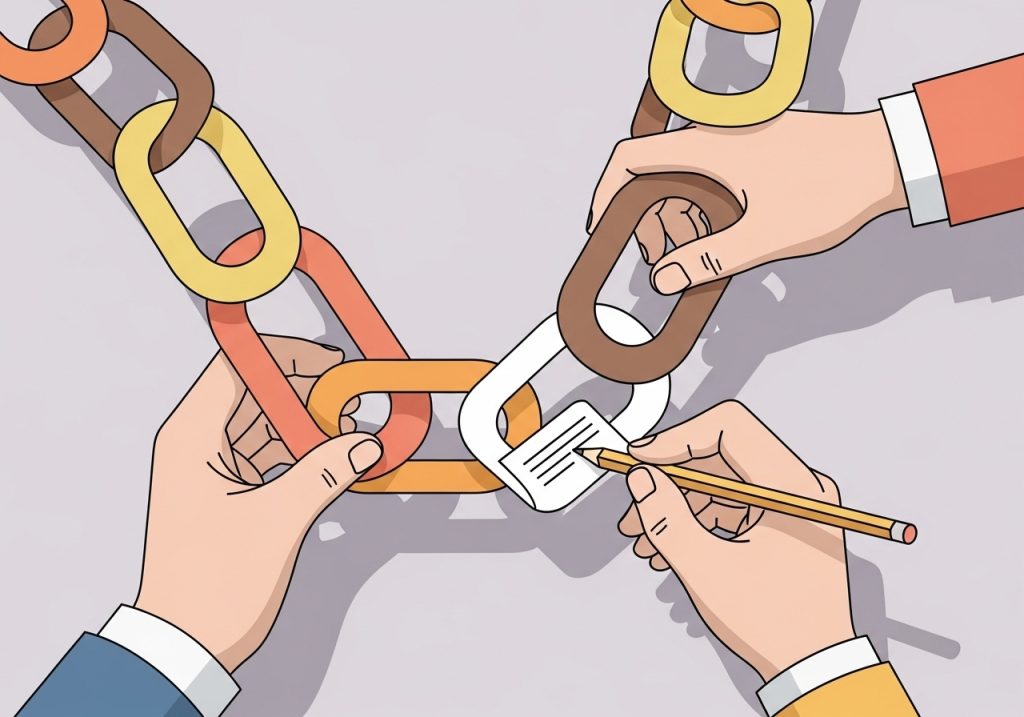
Support handwriting, emotional regulation, and fine motor skills with a gratitude chain. Each link contains something a child is thankful for, combining writing practice with a meaningful holiday concept. Creating a thankful chain is a simple yet powerful way to encourage reflection and positive thinking. This activity is easily scalable for a whole classroom or can be a quiet individual task.
Targeted Skills
- Handwriting Practice: Writing on the paper strips reinforces letter formation, spacing, and pencil grasp.
- Fine Motor Control: Cutting the strips, applying glue, and linking the circles requires precision and control of small hand muscles.
- Emotional Regulation: The act of identifying and expressing gratitude is a valuable social-emotional learning tool that helps children focus on positive experiences.
- Scissor Skills: Cutting along lines to create the strips is excellent practice for developing scissor skills.
Materials Needed
- Construction paper in fall colors (red, orange, yellow, brown)
- Scissors
- A ruler and a pencil
- Glue stick or tape
- Markers or crayons
How to Set Up the Activity
- Use the ruler and pencil to draw lines on the construction paper, creating strips that are about 1-2 inches wide and 8 inches long.
- Have the child cut along the lines to create the paper strips. Provide assistance as needed.
- On each strip, prompt the child to write or draw something they are thankful for. Examples could be family, friends, pets, or favorite toys. According to education experts, creating gratitude chains can be done individually or as a group project.
- Take one strip and form it into a circle, securing the ends with glue or tape.
- Loop the next strip through the first circle and secure its ends. Continue this process, adding one link for each thing the child is thankful for.
Adaptations for Different Skill Levels
- For pre-writers: Have them draw a picture of what they are thankful for on each strip. An adult can write the word underneath. You can also pre-cut the strips.
- For older children: Encourage them to write full sentences or add decorative details to each link. They can also take on the responsibility of measuring and drawing the lines for the strips.
Sensory-Rich Pumpkin Pie Playdough
Engage the senses with homemade playdough scented with pumpkin pie spices. This tactile activity promotes hand strength, bilateral coordination, and sensory exploration while being a calming tool for many children. The warm, comforting scent and soft texture can be a grounding experience, making it a great option for kids who need help regulating. It also serves as a great example of using sensory adaptations to create a supportive environment.
Targeted Skills
- Sensory Processing: The scent, texture, and warmth of the playdough provide rich tactile and olfactory input.
- Hand Strength: Kneading, rolling, squeezing, and pinching the dough builds the small muscles in the hands and fingers.
- Creativity and Imagination: Children can use the dough to create Thanksgiving-themed shapes like pumpkins, pies, or turkeys.
- Self-Regulation: The repetitive motion of playing with playdough can have a calming effect, helping children manage anxiety or excess energy.
No-Cook Recipe and Materials
- 2 cups all-purpose flour
- 1/2 cup salt
- 2 tablespoons cream of tartar
- 2 tablespoons vegetable oil
- 1 to 1.5 cups boiling water (handled by an adult)
- 2 teaspoons pumpkin pie spice (or a mix of cinnamon, nutmeg, and ginger)
- Orange food coloring (optional)
How to Make and Use the Playdough
- In a large bowl, mix together the flour, salt, cream of tartar, and pumpkin pie spice.
- Add the vegetable oil to the dry ingredients.
- An adult should carefully pour the boiling water into the bowl and stir the mixture with a wooden spoon until it starts to form a sticky ball.
- Once the dough is cool enough to handle, turn it out onto a floured surface and knead it for several minutes until it becomes smooth and elastic. Add the food coloring during this stage if desired.
- Provide the child with the finished playdough along with tools like rolling pins, cookie cutters, or plastic knives for creative play.
Cornucopia Visual Motor Tearing Craft
Create a cornucopia collage by tearing and gluing pieces of colored construction paper. This task strengthens hand muscles, develops hand-eye coordination, and provides graded fine motor control practice. Tearing paper is a surprisingly effective way to build the skills needed for more complex tasks like writing and using scissors.
Targeted Skills
- Hand and Finger Strength: Tearing paper requires significant strength from the small muscles in the hands and fingers.
- Bilateral Coordination: Children must use both hands in a coordinated way, one to hold the paper steady and the other to tear.
- Visual Motor Integration: Gluing the torn pieces within the lines of the cornucopia shape refines a child’s ability to match their motor output to visual cues. Improving eye to hand coordination is essential for many academic and life skills.
- Spatial Awareness: Deciding where to place each piece of paper to fill the space helps develop an understanding of spatial relationships.
Materials Needed
- A large sheet of paper (e.g., cardstock or poster board)
- A marker to draw the cornucopia outline
- Construction paper in various fall colors (yellow, orange, red for fruits/veggies; brown for the cornucopia)
- Glue stick
How to Set Up the Activity
- On the large sheet of paper, draw a simple, large outline of a cornucopia horn.
- Provide the child with the colored construction paper. Instruct them to tear the paper into small pieces.
- Demonstrate how to apply glue inside the cornucopia outline and then stick the torn pieces of brown paper onto the glued area to fill it in.
- Next, have them tear pieces of the other colors to represent fruits and vegetables spilling out of the horn. They can glue these pieces just outside the opening of the cornucopia.
Adaptations for Different Skill Levels
- For an easier task: Draw thicker outlines and provide larger pieces of paper to tear. The focus can be more on the tearing motion itself rather than precise placement.
- For a more complex task: Encourage the child to tear paper into specific shapes (e.g., small circles for grapes, long strips for carrots) and arrange them more deliberately in the collage.
Themed Children’s Activities for Thanksgiving Mazes
Use printable Thanksgiving-themed mazes to enhance visual motor skills and pencil control. Navigating a maze requires planning and precise movements, which are foundational skills for handwriting. Mazes challenge a child to visually scan a path, plan their route, and execute the motor plan with a writing tool, all while staying within the lines.
Targeted Skills
- Visual Scanning and Tracking: The eyes must scan the page to find the correct path from start to finish.
- Motor Planning: The child must think ahead to anticipate turns and dead ends before moving the pencil.
- Pencil Control: Staying within the lines of the maze path improves fine motor precision and graded control, which translates directly to handwriting.
- Problem-Solving: Figuring out the correct path through the maze is a simple yet effective problem-solving exercise.
Materials Needed
- Printable Thanksgiving-themed mazes (many are available online for free or in activity books)
- Pencils, crayons, or markers
- A clipboard can provide a stable writing surface
How to Use This Activity
- Provide the child with a maze appropriate for their skill level. Mazes with wider paths and fewer turns are better for beginners.
- Encourage the child to first trace the path with their finger. This helps them plan the route without the pressure of making a permanent mark.
- Next, have them use a pencil or marker to draw the line from the start to the finish. Remind them to move slowly and try to stay within the lines.
- Celebrate their success when they complete the maze. If they get stuck, gently guide them back to where they went wrong and encourage them to find another way.
Adaptations for Different Skill Levels
- To simplify: Start with very simple mazes or even just tracing straight and curved lines. Using a highlighter to mark the path first can also be a helpful guide.
- To add a challenge: Use more complex mazes with narrower paths and more dead ends. You can also have the child complete the maze with their non-dominant hand or try to complete it without lifting their pencil from the page.
Integrating purposeful, skill-building opportunities into holiday celebrations can make learning feel natural and fun. These children’s activities for Thanksgiving are designed to be more than just crafts; they are tools for development. By focusing on fine motor, visual motor, and sensory skills, you can support a child’s growth while creating lasting holiday memories. Each activity offers the flexibility to be tailored to individual needs, ensuring that every child can participate successfully and feel a sense of accomplishment.
Ready to simplify your planning with more engaging, low-prep resources? The Inspiring OT offers a wide range of practical, evidence-informed activities designed by an experienced occupational therapist. From fine motor worksheets to sensory toolkits, you can find the perfect printable to support skill growth in your classroom, therapy session, or home. Enhance learning and make skill-building successful for learners of all needs.
Explore the full collection of OT-created resources at The Inspiring OT shop.
Leave a Reply