
Cognitive behavioral therapy for executive dysfunction is a structured approach that helps individuals connect their thoughts, feelings, and actions to improve skills like planning, organization, and self-control. For occupational therapists, educators, and parents supporting learners with these challenges, CBT offers a practical framework for building new habits. By understanding how unhelpful thought patterns can interfere with task initiation and follow-through, you can introduce targeted strategies that foster greater independence and success. This guide explains the core principles of CBT and provides actionable ways to apply them in therapeutic, educational, and home settings.
What Is Executive Dysfunction?
Executive functions are the high-level mental processes that allow us to manage ourselves and our resources to achieve a goal. Think of them as the brain’s management system, responsible for planning, organizing, and regulating behavior. Executive dysfunction occurs when there are weaknesses in these skills, making it difficult for a person to manage daily tasks effectively. This is not about a lack of intelligence or willingness; it is about challenges with the underlying cognitive mechanisms that direct behavior.
Common signs of executive dysfunction include difficulties with:
- Planning and Prioritization: Struggling to create a sequence of steps to complete a project or decide which task is most important.
- Task Initiation: Finding it hard to start an assignment, chore, or activity, even when the person knows how to do it.
- Working Memory: Forgetting multi-step instructions or losing track of information needed to complete a task.
- Time Management: Underestimating how long tasks will take and often running late or missing deadlines.
- Emotional Regulation: Having strong emotional reactions to minor setbacks or finding it difficult to calm down after becoming upset. This is an area where using tools like the Zones of Regulation framework can be very helpful.
- Cognitive Flexibility: Struggling to switch from one activity to another or getting stuck on one way of solving a problem.
- Self-Monitoring: Lacking awareness of one’s own behavior and its impact on others or on progress toward a goal.
Executive dysfunction is frequently associated with conditions like ADHD, and many find that targeted ADHD study tips are also effective for these challenges. According to the Attention Deficit Disorder Association, CBT is a powerful tool because it helps individuals identify and change the unhealthy thinking patterns that contribute to these difficulties.
Connecting CBT Principles to Executive Function Skills
Cognitive Behavioral Therapy is based on a simple idea: our thoughts, feelings, and behaviors are interconnected. A person’s thought about a situation directly influences how they feel, which in turn affects how they act. For a learner with executive dysfunction, this cycle can create significant barriers.
Consider this common scenario: A student is assigned a large research project.
- The Thought: “This is way too big. I’ll never be able to finish it.” (Catastrophizing)
- The Feeling: Overwhelmed, anxious, and defeated.
- The Behavior: Procrastination. The student avoids starting the project, which temporarily relieves the anxiety but ultimately makes the situation worse.
CBT provides a method for interrupting this cycle. It teaches the learner to recognize the unhelpful thought (“This is too big”) and replace it with a more realistic and helpful one (“I can start by just finding three sources”). This new thought leads to a different feeling (more capable, less anxious) and a different behavior (starting the first small step). It reframes the challenge from an insurmountable obstacle into a series of manageable tasks.
Core Techniques in Cognitive Behavioral Therapy for Executive Dysfunction
CBT is not just about positive thinking. It involves specific, evidence-based techniques that build concrete skills. Research from the National Institutes of Health confirms that combining executive function training with CBT is a feasible and acceptable approach for improving self-regulation. Here are some of the core methods used.
Cognitive Restructuring
This is the process of identifying, challenging, and changing negative or unhelpful thought patterns. It helps individuals see situations from a more balanced perspective. A simple tool for this is a “thought record,” where a learner writes down a situation, the automatic thought they had, the feeling it caused, and then works to find a more adaptive alternative thought. For children, this can be simplified as “detective thinking,” where they look for evidence that proves their negative thought isn’t 100% true.

Behavioral Activation
Behavioral activation is a strategy designed to combat avoidance and procrastination. Instead of waiting for motivation to strike, the individual schedules specific, meaningful activities. For executive dysfunction, this often means scheduling the very tasks that are being avoided. The key is to start small. For example, scheduling just 10 minutes to clean a messy room or 15 minutes to work on a homework assignment can build momentum and provide a sense of accomplishment, which makes it easier to continue.
Systematic Goal Setting and Problem-Solving
Executive dysfunction makes it hard to see the path from the start of a large task to its finish. CBT introduces structured problem-solving and goal-setting frameworks. One of the most effective methods is task decomposition, which involves breaking a large goal into very small, concrete, and manageable steps. Creating practical goals examples with learners is a great way to practice this skill. Each small step should be specific and have a clear endpoint, removing the ambiguity that often leads to feeling overwhelmed.
Practical CBT-Based Activities for Home and School
Therapists, teachers, and parents can integrate CBT principles into daily routines using simple, practical activities. The goal is to make these strategies a consistent part of the learner’s toolkit.
- Create a “Thought-Feeling-Action” Chart: Use a simple three-column chart to help learners identify the connections. When they face a challenge, have them write or draw what they were thinking, how it made them feel, and what they did. This visual map makes the abstract concept of CBT concrete.
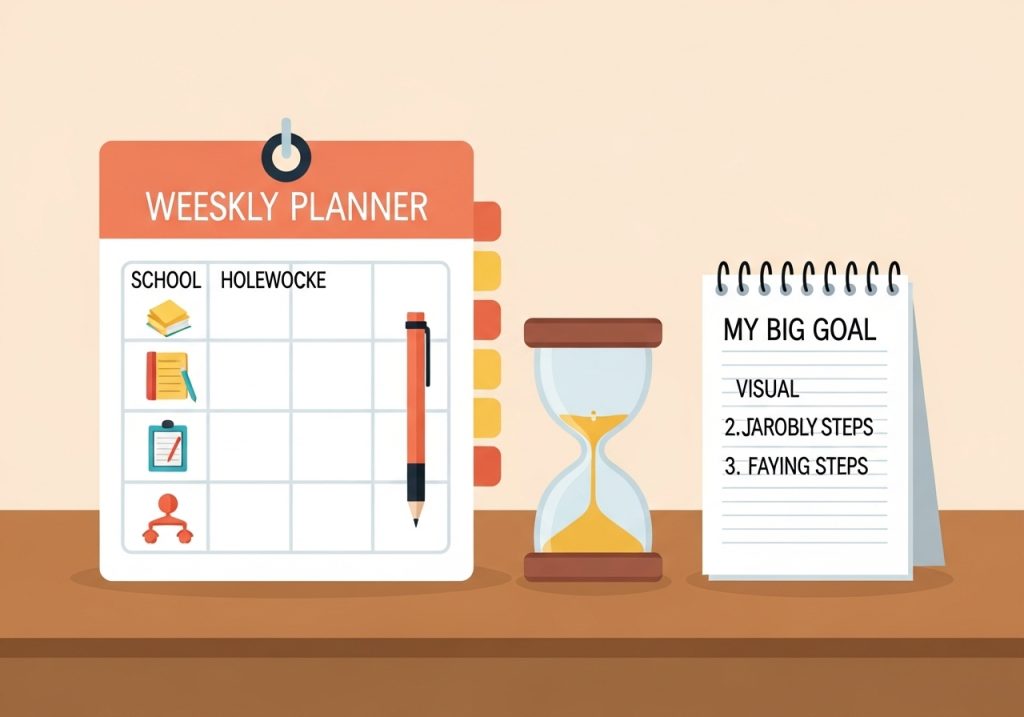
- Use “Get Started” Timers: To combat task initiation problems, use a visual timer for a short period (like 5 or 10 minutes). The goal is not to finish the task but simply to work on it until the timer goes off. This lowers the mental barrier to starting.
- Externalize Planning: Since internal planning is a challenge, use external tools. Whiteboards, sticky notes, digital calendars, and checklists offload the mental work of remembering and organizing. This is a behavioral strategy that supports cognitive weaknesses, a core principle in executive dysfunction therapy.
- Practice Problem-Solving Scenarios: Role-play common problems, like forgetting homework or having a disagreement with a friend. Walk through the steps of identifying the problem, brainstorming possible solutions, and choosing the best one to try.
- Schedule “Worry Time”: For learners who get stuck in anxious thought loops, scheduling a specific 10-15 minute “worry time” each day can be effective. When an anxious thought appears outside of that time, they can “save it” for later, which helps them disengage and focus on the present task.
Measuring Progress and Adapting Strategies
Success with cognitive behavioral therapy for executive dysfunction is measured by gradual changes in behavior and thinking. Progress is rarely a straight line; there will be good days and difficult days. The key is to look for patterns of improvement over time.
Effective ways to monitor progress include:
- Behavioral Checklists: Track specific behaviors, such as how many times a student started their homework without being reminded or how often they used a calming strategy when frustrated.
- Self-Rating Scales: Have learners use a simple 1-5 scale to rate their focus, frustration, or confidence before and after using a CBT strategy. This helps build self-awareness.
- Collaborative Review: Regularly check in with the learner, their teachers, and other caregivers. Discuss what strategies are working and which ones are not. CBT is not a one-size-fits-all approach. Be prepared to modify and adapt techniques to fit the individual’s needs and preferences.
The goal is to empower the learner with a set of tools they can use independently. Over time, the external prompts and structured supports can be gradually faded as they internalize new ways of thinking and behaving.
Ultimately, CBT provides a hopeful and actionable path forward for individuals with executive dysfunction. By focusing on the interplay between thoughts and actions, it moves beyond simply managing symptoms. It equips learners with the skills to understand their own minds and intentionally choose behaviors that align with their goals, fostering resilience, confidence, and long-term success.
Ready to put these strategies into action? Supporting learners with executive dysfunction requires practical, engaging, and easy-to-use tools. At The Inspiring OT, you’ll find a wide range of printable activities, planners, and guides designed by an experienced occupational therapist to build essential skills. Explore The Inspiring OT shop on Teachers Pay Teachers for low-prep resources that make skill-building effective and accessible for therapists, educators, and families.
Leave a Reply