
Therapeutic play is a structured, goal-oriented approach where play is used to help children address developmental, emotional, and social challenges with the guidance of a therapist, educator, or caregiver. While it appears to be simple fun, this method is a deliberate process designed to foster growth and build specific skills. For occupational therapists, teachers, and parents, understanding how to use play therapeutically can transform everyday interactions into powerful opportunities for development.
Understanding Therapeutic Play: More Than Just Fun
Unlike free play, which is entirely child-led and spontaneous, therapeutic play is intentionally planned to work toward a specific outcome. An adult facilitates the activity with a clear objective in mind, whether that is improving fine motor coordination, practicing social turn-taking, or learning to manage frustration. According to research published by the National Institutes of Health, play therapy is considered an effective intervention for a range of childhood issues because it uses the natural medium of play to facilitate healing and growth. The child is still in control of their actions within the activity, but the environment and materials are selected to encourage a particular type of engagement.
The core of this approach is that it meets the child at their level. By using a medium that is natural and motivating for them (play), we can work on challenging skills without causing the stress or resistance that direct instruction sometimes can. It creates a safe space for children to experiment, make mistakes, problem-solve, and build confidence. The adult’s role is not to teach in the traditional sense, but to support the child’s process of discovery and skill acquisition through carefully structured interactions.
The Core Benefits of Using Therapeutic Play for Skill Development
Integrating purposeful play into a child’s routine can produce significant gains across multiple domains. Because the activities are engaging, children are often more willing to participate for longer periods and persist through difficulties. The benefits are wide-ranging and interconnected.

- Motor Skill Enhancement: Activities like threading beads, using tongs to sort small objects, or building with blocks directly target fine motor skills. These tasks require hand-eye coordination, finger dexterity, and in-hand manipulation. Activities involving climbing, jumping, or navigating obstacle courses help develop gross motor skills, balance, body awareness, and coordination.
- Sensory Processing and Regulation: Play with sensory bins (filled with sand, water, or rice), textured balls, or weighted items helps children understand and respond to sensory input. These activities can be calming for an overstimulated child or alerting for an under-responsive one, helping them find a state of optimal arousal for learning and engagement.
- Social and Communication Skills: Board games, role-playing, and collaborative building projects provide a natural context for practicing turn-taking, sharing, negotiation, and understanding non-verbal cues. Children learn to express their ideas, listen to others, and work toward a common goal in a low-stakes environment. This is especially helpful for children who need direct practice with social interactions.
- Emotional Expression and Regulation: Through pretend play with dolls or puppets, children can act out scenarios, express feelings they may not have words for, and explore different emotional responses. This helps them process experiences and develop coping strategies. A therapist or educator can use this play to help a child identify feelings and connect them to specific behaviors and tools for self-regulation.
How to Structure a Therapeutic Play Session
A successful therapeutic play session requires thoughtful preparation. It is not just about setting out toys, but about creating an experience with a purpose. Following a few key steps can help you facilitate an effective session, aligning with best practices that emphasize the creation of a therapeutic treatment plan. Following a structured process helps ensure the play is productive and goal-directed.
- Identify a Clear Goal: What specific skill do you want to target? Be precise. Instead of a broad goal like “improve fine motor skills,” aim for something like “improve pincer grasp” or “practice using scissors to snip paper.” A clear goal guides your choice of activity and allows you to measure progress. Thinking about practical, actionable goals is the foundation of any therapeutic plan.
- Choose the Right Materials: Select toys and materials that naturally encourage the target skill. If the goal is pincer grasp, provide small objects like pom-poms and tweezers. If you are working on emotional identification, use illustrated cards or puppets with different expressions. The materials should be engaging but not so complex that they distract from the primary objective.
- Set Up the Environment: Minimize distractions. Create a dedicated space where the child can focus on the activity. Ensure the setup is inviting and that all necessary materials are easily accessible. The physical environment sends a message to the child that this time is special and focused.
- Facilitate, Don’t Direct: Your role is to guide, not command. You can model the activity, offer gentle encouragement, or ask open-ended questions like, “What do you think will happen if…?” or “How can we solve this problem?” Let the child lead the exploration as much as possible within the structured framework. This fosters independence and intrinsic motivation.
- Observe and Adapt: Pay close attention to the child’s engagement, frustration levels, and successes. Be ready to modify the activity if it is too easy or too difficult. The goal is to create a “just-right challenge” that builds skills without causing discouragement. Flexibility is key to keeping the experience positive and productive.
- End with a Positive Acknowledgment: Conclude the session by acknowledging the child’s effort and specific achievements. For example, say “I saw how carefully you placed each block on the tower,” instead of a generic “Good job.” This reinforces their actions and builds self-esteem by connecting their effort to a tangible outcome. As noted in play therapy best practices, collaborating with the child and their caregivers is essential.
Practical Therapeutic Play Activities for Home and School
Here are some examples of therapeutic play activities categorized by the primary skill they target. Many of these activities address multiple skills at once, making them efficient and holistic tools for development.
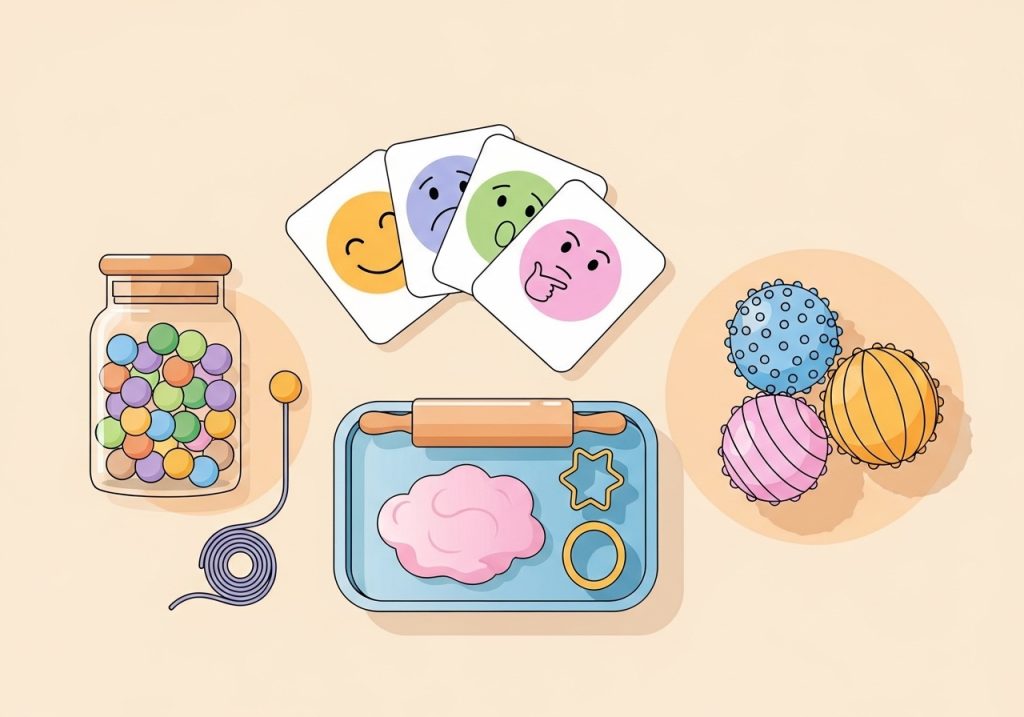
For Fine Motor Skills
- Play-Doh Creations: Rolling, pinching, and squeezing Play-Doh builds hand strength and bilateral coordination. Using tools like plastic knives or cookie cutters introduces skills needed for tool use, such as handwriting and cutting.
- Lacing and Threading: Using lacing cards or threading large beads onto a string develops hand-eye coordination, pincer grasp, and concentration. You can increase the difficulty by using smaller beads or more complex patterns.
- Sticker Activities: Peeling and placing stickers is an excellent way to practice fine motor precision. You can draw shapes or lines for the child to place the stickers on, adding a visual-motor component to the task.
For Sensory and Emotional Regulation
- Sensory Bins: Fill a container with a base material like rice, beans, water beads, or shaving cream. Add scoops, cups, and small toys. This allows for tactile exploration that can be either calming or alerting, depending on the child’s needs and the chosen materials.
- Heavy Work Activities: Pushing a weighted ball, carrying a stack of books, or doing animal walks (like bear crawls) provides deep pressure input to the joints. This proprioceptive input can help organize the nervous system, improve focus, and reduce anxiety.
- Feelings Charades: Write or draw different emotions on cards. Have the child pick a card and act out the feeling with their face and body. This helps build emotional vocabulary, empathy, and the ability to recognize emotions in others.
Integrating Play into Daily Routines and Goals
Therapeutic play does not have to be limited to a formal session. The most effective way to support a child’s development is to embed these principles into everyday life. You can turn getting dressed into a fine motor game by racing to button a shirt. Cooking together can become a sensory activity involving mixing ingredients, following sequential steps, and exploring different smells and textures. Cleaning up can be a sorting game that reinforces categorization and motor planning, such as putting all the red blocks in one bin and all the blue ones in another.
By shifting your perspective, you can see countless opportunities to use play with a purpose. The key is to start with a clear goal and use the motivating power of play to help children build the skills they need for success in the classroom, at home, and in life. This consistent, playful reinforcement helps generalize skills from a therapy session or a specific activity into the child’s broader world.
Ready to bring more purposeful play into your classroom, therapy sessions, or home? The Inspiring OT offers a wide range of practical, low-prep printable activities and resources designed by an occupational therapist to make skill-building engaging and effective. Explore our collection of tools to support fine motor, sensory, handwriting, and life skills development.
Leave a Reply