
Finding high-quality, effective resources that meet diverse student needs can be a persistent challenge for educators and therapists. The right education materials for teachers should be grounded in developmental principles and be easy to implement in a busy classroom or therapy session. As students are expected to develop increasingly complex skills to succeed, the need for well-designed instructional tools is critical. Research from the Learning Policy Institute highlights that professional development, supported by strong materials, is key to helping teachers meet these demands. OT-designed activities provide a practical solution, offering targeted support for the foundational skills students need to succeed in their academic and personal lives.
Fine Motor Skills Toolkit
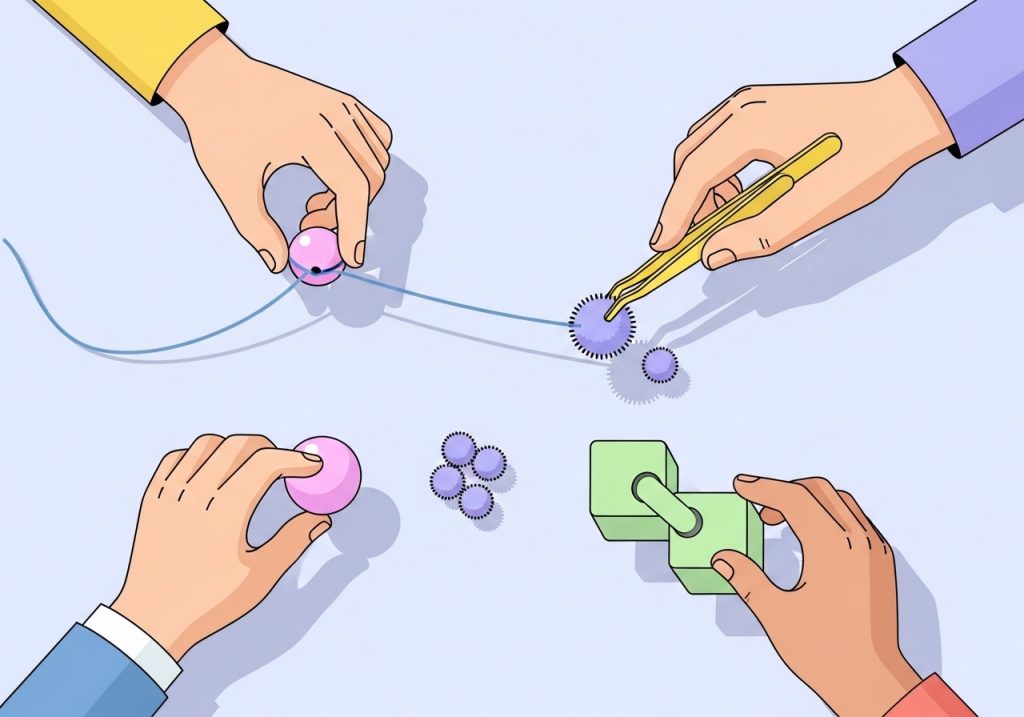
A fine motor skills toolkit is a curated collection of activities that strengthen hand muscles, improve dexterity, and refine coordination. These toolkits move beyond simple worksheets to provide hands-on, engaging experiences. They often include tasks like threading beads, using tongs to move small objects, manipulating therapy putty, and completing pre-writing strokes. For teachers, having a ready-made set of low-prep activities saves valuable planning time and provides a structured way to address skill deficits. For students, these exercises build the essential hand strength and control required for functional tasks like holding a pencil correctly, using scissors, buttoning a coat, and typing on a keyboard. Integrating these activities into centers or morning work can significantly improve a child’s confidence and independence in the classroom.
Key Features
- Variety of Activities: Includes a range of tasks targeting different muscle groups in the hands and fingers, from pincer grasp to bilateral coordination.
- Low-Prep Design: Most activities use common classroom materials or require simple printing and laminating for long-term use.
- Scalable Difficulty: The activities can be easily adapted to meet the needs of different learners, from beginners to those needing a greater challenge.
- Engaging Formats: Uses play-based learning to keep students motivated and interested in skill development.
Who It’s Best For
- Occupational therapists looking for versatile materials for school-based sessions.
- Preschool and kindergarten teachers aiming to build foundational readiness skills.
- Special education instructors working with students on IEP goals related to fine motor development.
- Parents and homeschool educators seeking structured, hands-on activities to support learning at home.
Handwriting Worksheets: Essential Education Materials for Teachers
Handwriting remains a critical skill for academic success, impacting note-taking, test-taking, and written expression. Effective handwriting worksheets go beyond simple letter tracing. As the National Council on Teacher Quality notes, core instructional materials are central to how teachers deliver instruction, and this is especially true for a sequential skill like handwriting. Well-designed education materials for teachers in this area focus on proper letter formation, consistent sizing, appropriate spacing between letters and words, and correct line placement. When you are looking for resources, it’s helpful to understand how to choose a handwriting curriculum that aligns with developmental stages. Themed worksheets, such as those based on seasons or student interests, can help maintain engagement and make practice feel less like a chore. These resources provide a structured way to reinforce instruction and give students repeated opportunities to develop legible, automatic, and efficient handwriting.
Key Features
- Developmentally Sequenced: Introduces letters and strokes in a logical order that builds on previously learned skills.
- Clear Visual Cues: Often includes starting dots, directional arrows, and highlighted lines to guide correct formation.
- Multi-Sensory Approach: May incorporate suggestions for tracing, writing in different mediums (like sand or shaving cream), and building letters.
- Comprehensive Practice: Includes practice for uppercase letters, lowercase letters, numbers, and eventually words and sentences.
Who It’s Best For
- Kindergarten through third-grade teachers responsible for primary handwriting instruction.
- Occupational therapists targeting specific handwriting goals like legibility, speed, or spacing.
- Homeschool educators who need a structured, easy-to-follow handwriting program.
- Parents who want to provide supplemental practice for a child struggling with writing.
Visual Motor Integration Packet
Visual motor integration is the ability to coordinate visual information with motor movements. This skill is fundamental for many classroom tasks, such as copying notes from the board, forming letters and numbers based on a model, drawing shapes, and spacing words correctly on a page. A student with weak visual motor skills may struggle to keep up with written work, even if they know the material. A visual motor integration packet typically includes a series of graded activities like tracing paths, copying complex designs from one box to another, and completing connect-the-dots puzzles. These exercises help train the brain to accurately perceive visual input and guide the hands to reproduce it, forming a critical link for academic activities.
Key Features
- Progressive Difficulty: Activities start with simple lines and shapes and gradually advance to more complex designs and patterns.
- Targeted Skill Practice: Focuses specifically on the “eye-hand coordination” needed for academic work, separate from handwriting formation itself.
- Minimal Instructions: The visual nature of the tasks makes them easy for many students to understand with little verbal direction.
- Data Collection Friendly: The clear, often quantifiable, nature of the tasks makes it easy to track progress over time.
Who It’s Best For
- School-based OTs who need standardized activities to assess and treat visual motor deficits.
- Teachers who notice students struggling with copying work from the board, despite strong content knowledge.
- Vision therapists and developmental optometrists as part of a comprehensive therapy program.
- Special education resource teachers supporting students with learning disabilities related to visual processing.
Sensory Diet Template and Idea Cards
Many students have sensory processing needs that affect their ability to focus, regulate their emotions, and participate in learning. A sensory diet is a personalized plan of activities designed to meet a child’s specific sensory needs throughout the day, helping them maintain an optimal level of arousal. These templates and idea cards make it easier for teachers and OTs to create and implement these plans. The cards might suggest short activities like wall pushes (proprioceptive input), swinging (vestibular input), or playing with therapy putty (tactile input). Understanding how an occupational therapist can help with sensory issues is the first step in creating this supportive environment. By integrating these sensory breaks into the daily routine, educators can help students stay calm, focused, and ready to learn, which benefits the entire classroom.

Key Features
- Customizable Templates: Allows for the creation of individualized schedules that fit a student’s specific needs and classroom routine.
- Visual Idea Cards: Provides clear, pictorial examples of sensory activities, making them accessible even for non-readers.
- Categorized Suggestions: Activities are often grouped by sensory system (e.g., calming, alerting, heavy work) to make planning easier.
- Discreet and Practical: Focuses on activities that can be easily and quietly integrated into a classroom setting without disrupting learning.
Who It’s Best For
- Occupational therapists designing and consulting on sensory diets for students.
- Special education teachers working in self-contained or resource classrooms.
- General education teachers who want to support students with sensory needs in an inclusive setting.
- Parents looking for structured ways to provide sensory input and support regulation at home.
Self-Regulation and Emotional Awareness Worksheets
A student’s ability to manage their emotions and behavior is directly linked to their capacity for learning. Self-regulation worksheets provide tools for teaching children to identify their feelings, understand what triggers certain emotions, and use appropriate coping strategies. These materials often align with established frameworks, and a good way to supplement them is by finding a Zones of Regulation book that reinforces the same concepts. Activities might include emotion matching games, feeling thermometers that help a child rate the intensity of their feeling, and social scenario cards that prompt discussions about problem-solving. These materials help build emotional intelligence and give students a vocabulary for expressing their needs constructively. Fostering these skills creates a more supportive and predictable classroom where students feel safe and understood.
Key Features
- Concrete Visuals for Abstract Concepts: Uses tools like charts, thermometers, and color-coding to make emotions easier to understand.
- Scaffolded Learning: Starts with basic emotion identification and builds toward complex problem-solving and coping strategy use.
- Promotes a Common Language: Helps create a shared vocabulary for students and staff to talk about feelings and energy levels.
- Proactive Approach: Teaches skills proactively, rather than reacting to challenging behaviors after they occur.
Who It’s Best For
- School counselors, social workers, and psychologists leading small groups or individual sessions.
- Special education teachers focusing on social-emotional learning (SEL) goals.
- Occupational therapists addressing self-regulation as it impacts school participation.
- Parents and caregivers who want to support their child’s emotional development and coping skills at home.
Incorporating OT-informed resources into your teaching or therapy practice provides targeted, skill-based support that addresses the whole child. By focusing on foundational areas like fine motor control, sensory regulation, and emotional awareness, you equip learners with the tools they need for academic achievement and everyday success in the 21st century, a goal shared by global education initiatives like the OECD Future of Education and Skills 2030. Begin by identifying one key area of need in your students and introducing a relevant resource to support their development.
Ready to bring practical, OT-designed activities into your classroom, clinic, or home? Explore our collection of printable resources created to make skill-building engaging and effective. Save time on planning and find the perfect tools to support your learners’ growth today.
Leave a Reply