
An occupational therapist helps children with sensory issues by creating individualized strategies and activities to help them better process and respond to sensory information from their environment. These professionals are trained to identify the underlying reasons for a child’s sensory-related behaviors and develop practical interventions that support participation in daily life. This approach helps children manage their sensory needs in settings like home, school, and the community.
For parents, teachers, and caregivers, understanding this role is the first step toward finding effective support. Sensory challenges can affect a child’s learning, social interactions, and emotional regulation. Knowing how an OT can assist provides a clear path forward for helping a child thrive.
Understanding Sensory Processing and Its Challenges
Sensory processing, or sensory integration, is the way the nervous system receives messages from the senses and turns them into appropriate motor and behavioral responses. For most people, this process happens automatically. We react to a hot surface, enjoy the texture of a soft blanket, or filter out background noise without much thought.
When a child has sensory processing challenges, this system is not as organized. They might be over-responsive (hypersensitive) or under-responsive (hyposensitive) to sensory input. Sometimes they may have a combination of both. This can look like:
- Over-responsiveness: A child might find everyday sounds painfully loud, dislike the feeling of certain clothing tags, or react negatively to being touched unexpectedly.
- Under-responsiveness: A child may not seem to notice pain, might constantly seek out movement like spinning or crashing, or may touch objects and people excessively to get more input.
- Sensory Seeking: This involves a constant craving for intense sensory experiences. A sensory seeker is often in motion, enjoys loud noises, and prefers strong flavors.
These challenges are not behavioral choices. They are neurological differences that affect a child’s ability to feel comfortable and secure in their own body and environment.
The Role of the Occupational Therapist for Sensory Issues
When addressing sensory issues, an occupational therapist takes a comprehensive approach. Their primary goal is to help the child participate as fully as possible in their desired daily activities, or “occupations.” For a child, these occupations include playing, learning, socializing, and self-care. Research shows that occupational therapy improves sensory skills, relationship-building, language, and self-care abilities.
The process typically begins with a thorough evaluation. An OT uses a combination of standardized assessments, clinical observations, and interviews with parents and teachers to understand the child’s unique sensory profile. This assessment helps pinpoint which sensory systems are affected and how these challenges impact the child’s function.
Based on the evaluation, the occupational therapist develops an intervention plan. This plan is not about “fixing” the child. It is about providing them with the tools and environmental supports needed to succeed. The OT collaborates with the family and school to ensure strategies are consistent across different settings.
Key Sensory Systems Addressed in Occupational Therapy
While we often think of the five basic senses, OT considers eight sensory systems. Understanding them helps clarify the scope of an OT’s work.

- Tactile: The sense of touch. A child may be sensitive to textures of food or clothing, or they might not notice when their hands are messy.
- Auditory: The sense of hearing. This can involve sensitivity to loud noises or difficulty filtering out background sounds in a classroom.
- Visual: The sense of sight. A child might be overwhelmed by bright lights or cluttered rooms, or they may have trouble tracking words on a page.
- Gustatory (Taste) and Olfactory (Smell): These senses are closely linked and can lead to picky eating or strong reactions to certain smells.
- Vestibular: This system, located in the inner ear, governs balance and spatial orientation. A child might fear playgrounds or, conversely, crave constant spinning and movement.
- Proprioceptive: This is the sense of body awareness, based on information from muscles and joints. A child with poor proprioception might play too rough, seem clumsy, or enjoy deep pressure like tight hugs.
- Interoception: The sense of what is happening inside the body, like hunger, thirst, or the need to use the restroom. Difficulties here can impact self-regulation and toilet training.
Practical Strategies OTs Use to Support Sensory Needs
An OT’s toolkit is filled with play-based and practical strategies designed to help a child’s nervous system organize itself. A key concept is the “sensory diet,” which is a personalized plan of activities to meet a child’s sensory needs throughout the day. This helps them stay focused and regulated.
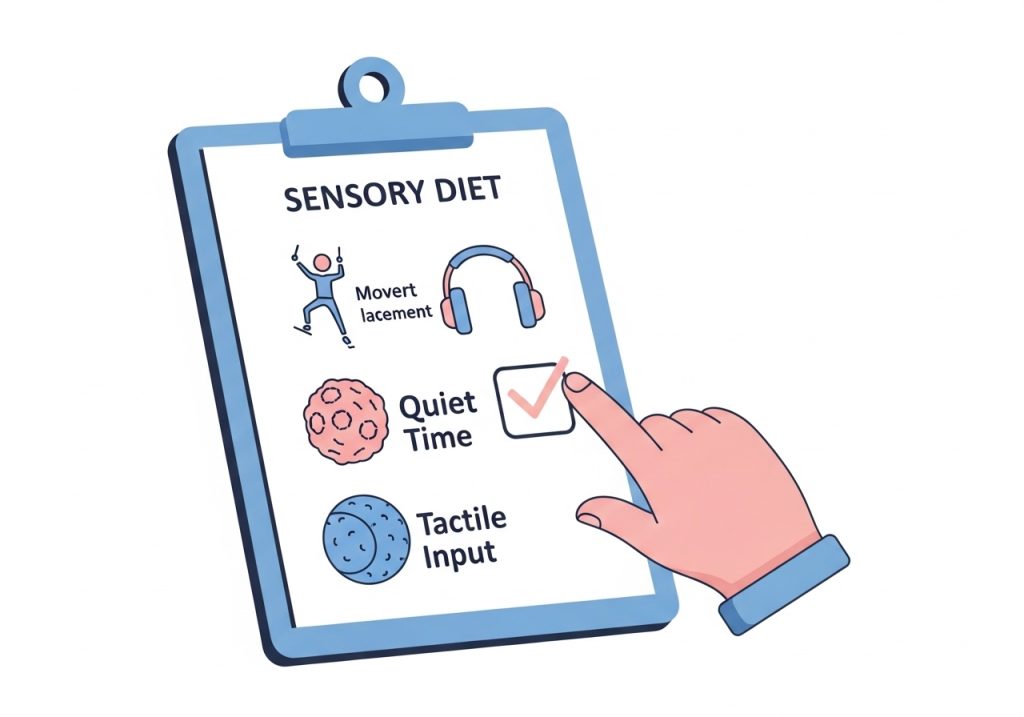
Examples of OT strategies include:
- Heavy Work Activities: Actions that involve pushing or pulling provide proprioceptive input that can be very calming and organizing. Examples include pushing a cart, carrying groceries, or doing animal walks.
- Movement Breaks: Scheduled breaks for jumping, swinging, or spinning can help a child who is under-responsive or sensory-seeking to get the input they need to focus on seated tasks.
- Creating Sensory-Friendly Spaces: An OT might suggest modifying the environment, such as by reducing clutter, providing noise-canceling headphones, or creating a quiet corner with soft pillows for a child to retreat to when overwhelmed.
- Using Specialized Tools: This can include weighted blankets or lap pads for calming pressure, fidget tools to help with focus, or textured cushions for seating. An OT can help identify which of the many essential sensory tools are appropriate for a child’s specific needs.
Using prepared, structured resources like printable activities and worksheets can make it easier for parents and teachers to incorporate these strategies consistently.
How to Know When to Seek an OT Evaluation
It is wise to consider an occupational therapy evaluation if you notice that sensory-related behaviors are consistently interfering with your child’s ability to learn, play, or interact with others. If sensory challenges are causing significant distress for the child or family, professional guidance can make a substantial difference. According to the American Occupational Therapy Association, these challenges can directly impact a child’s performance in school and at home, an area where OTs provide direct support.
Observe if your child frequently has extreme emotional reactions to sensory stimuli, avoids typical childhood activities like getting messy or going to loud parties, or seems uncoordinated and clumsy. These signs might suggest that sensory difficulties are getting in the way of important developmental skills. Start by talking to your child’s pediatrician or school. They can provide a referral to a qualified occupational therapist who specializes in pediatrics and sensory processing.
Supporting a child with sensory issues begins with understanding and having the right tools. The Inspiring OT offers a wide range of practical, evidence-informed resources designed by an experienced occupational therapist to make skill-building engaging and effective. Explore our shop for printable activities, sensory guides, and low-prep worksheets to help your learners thrive.
Leave a Reply