
Developing emotional intelligence is just as important as learning to read or write. For children, understanding their own feelings and the feelings of others is a critical life skill that impacts friendships, school performance, and overall well-being. One of the most effective ways to build this foundation is through play. Using carefully chosen emotional quotient games, therapists, teachers, and parents can create engaging opportunities for children to learn about empathy, self-regulation, and social awareness in a natural, low-pressure way. These activities transform abstract concepts like “perspective-taking” into concrete, memorable experiences.
Emotional intelligence, sometimes called emotional quotient (EQ), involves the ability to perceive, use, understand, and manage emotions. According to the National Association for the Education of Young Children, teaching emotional intelligence in early childhood sets the stage for positive behavior and mental health. The games outlined here are designed to be adaptable for different ages and settings, from a one-on-one therapy session to a dynamic classroom or a quiet evening at home. They require minimal preparation and provide a powerful framework for skill development.
Emotion Charades: Acting Out Feelings
This is a simple, non-verbal game where children act out different emotions for others to guess. The activity improves their ability to recognize and express a wide range of feelings in a supported environment. By focusing on non-verbal cues, Emotion Charades helps children tune into body language and facial expressions, which are major components of social communication.
To play, you only need a set of emotion cards (which you can easily make yourself) or a simple list. Write or draw emotions like happy, sad, angry, surprised, scared, confused, or proud. A child draws a card and must act out the feeling without using words, while others try to guess what it is.
- How it builds EQ: This game directly targets two core skills. The “actor” practices expressing emotions through physical actions, enhancing their self-expression. The “guessers” must carefully observe and interpret non-verbal signals, which strengthens their social awareness and empathy.
- Variations for different levels: For younger children, stick to basic emotions and act them out together. For older children, introduce more complex feelings like frustrated, disappointed, or anxious. You can also reverse the game, where you describe a situation and the child acts out the corresponding emotion.
- Therapeutic application: In a therapy setting, you can pause after each turn to discuss the feeling. Ask questions like, “What made you think they were feeling sad?” or “What does your body feel like when you are surprised?” This deepens the learning and helps children connect physical sensations to emotional states.
Storytelling with Feeling Cards
This activity uses picture cards that show various scenarios or emotions to prompt children to create stories. It helps them understand emotional context and practice perspective-taking. Unlike charades, this game focuses on building narratives around feelings, linking them to causes and effects.
You can use commercial story card sets or create your own with simple drawings or magazine cutouts. The cards could show things like a child falling off a bike, two friends sharing a toy, or someone looking at a broken toy. The child picks one or more cards and tells a story based on the images.
- How it builds EQ: Storytelling requires children to think about a character’s internal state. They must consider what the character might be feeling, why they feel that way, and what might happen next. This process is a direct exercise in empathy and understanding complex social situations.
- Guiding questions to ask: To enhance the experience, prompt children with questions such as, “How do you think the person in the picture feels?”, “What do you think happened right before this picture?”, and “What could they do to feel better?”
- Group activity idea: In a classroom or group, have one child start a story with one card. Then, have each child add to the story using a new card. This collaborative approach also teaches skills like listening, turn-taking, and building on others’ ideas.
The ‘What If?’ Scenario Game
Present children with hypothetical social situations and ask them to brainstorm potential responses. This process builds critical thinking skills, social problem-solving abilities, and empathy. The game is entirely conversational, making it a great option for car rides, waiting rooms, or quiet moments at home.
The premise is simple: you pose a “what if” question related to a social challenge. For example, “What if you saw someone sitting alone on the playground?” or “What if your friend borrowed your favorite crayon and broke it?” Then, you listen to the child’s ideas and discuss the potential outcomes of each response.
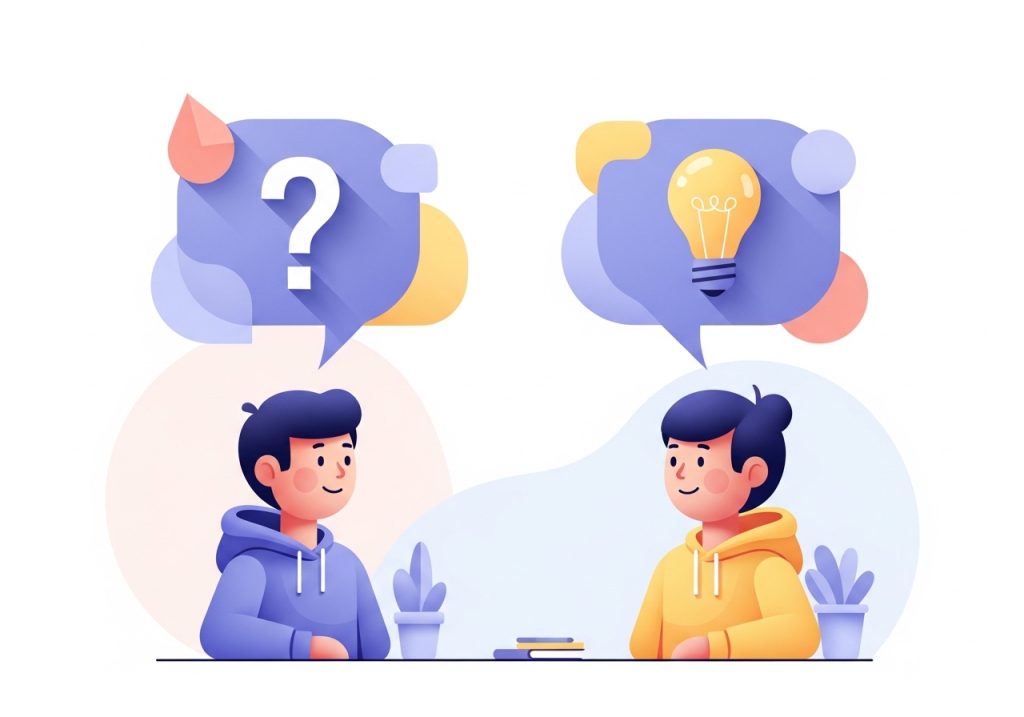
- How it builds EQ: This activity strengthens relationship management and social awareness. It gives children a safe space to rehearse social strategies without the real-time pressure of an actual conflict. They learn to think before they act and consider how their actions might affect others.
- Example scenarios:
- What if you want to play with a toy that someone else is using?
- What if you disagree with your friend about the rules of a game?
- What if you see someone being unkind to another person?
- Focus on empathy: Always bring the conversation back to feelings. After a child suggests a solution, ask, “How do you think the other person would feel if you did that?” and “How would you feel in that situation?” This is a key part of structured social skills training.
Feelings Thermometer for Self-Regulation
A feelings thermometer is a visual tool that helps children identify the intensity of their emotions and learn corresponding coping strategies. It is an effective way to promote self-awareness and emotional regulation. By making an abstract concept like emotional intensity visible, children can better understand and communicate their internal state before they become overwhelmed.
You can create a simple thermometer on a piece of paper, with colors representing different feeling levels. For example, blue at the bottom could be “Calm,” green could be “Okay,” yellow for “Worried” or “Frustrated,” and red at the top for “Angry” or “Overwhelmed.” Next to each level, you can write or draw corresponding coping strategies, like taking deep breaths, getting a drink of water, or asking for a hug.
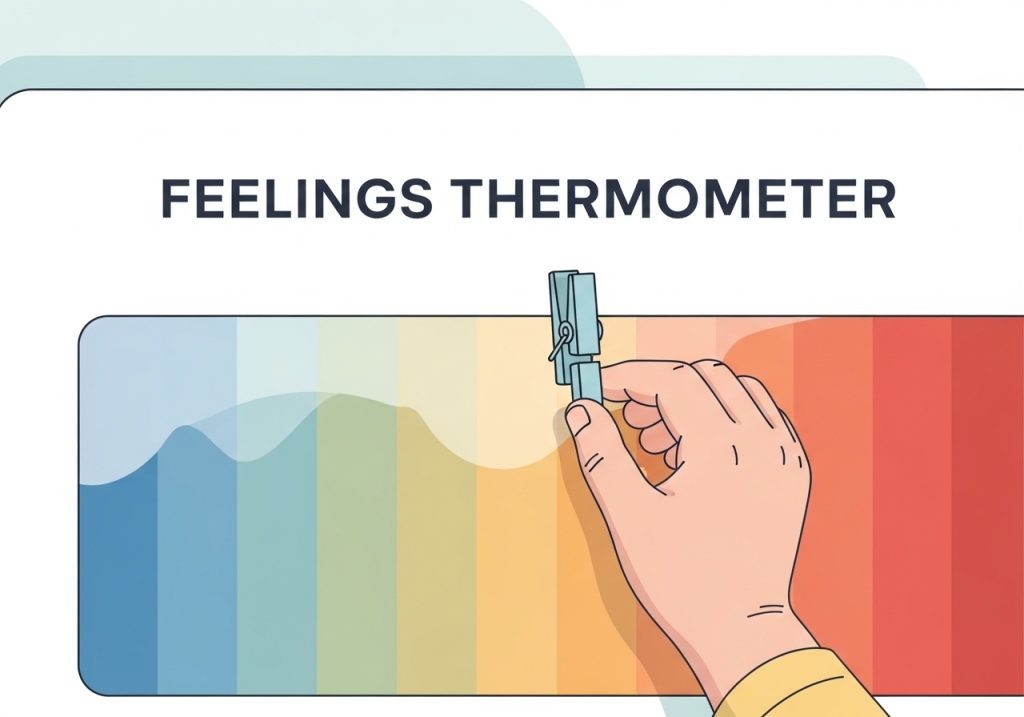
- How it builds EQ: This tool directly teaches self-awareness and self-management, two of the four key skills of emotional intelligence. It helps children recognize the early signs of rising emotions and gives them a concrete plan of action. This proactive approach can reduce emotional outbursts and build a sense of self-control.
- How to use it: Introduce the thermometer when the child is calm. Talk through each level and the associated strategies. Encourage the child to check in with their “temperature” throughout the day. When you notice them becoming dysregulated, you can gently ask, “Where are you on your thermometer right now?” This visual is one of many effective tools for teaching emotional regulation and self-awareness.
- Adaptability: The language and strategies can be tailored to any child. For a non-verbal child, you can use pictures for both the emotions and the coping skills. For older kids, you can use numbers from 1 to 10 and help them brainstorm more sophisticated strategies.
Exploring Emotional Quotient Games with Board Games
Use commercial or DIY board games that incorporate prompts about sharing, taking turns, and responding appropriately to social cues. This provides a structured, fun format for skill practice. Many common children’s board games naturally create opportunities to work on emotional skills, even if they aren’t explicitly designed for that purpose.
Games that involve luck, like Chutes and Ladders, are excellent for practicing how to handle disappointment. Cooperative games, where players work together to win, are great for building teamwork and communication. You can also find board games specifically designed to teach social and emotional skills.
- How it builds EQ: Board games are a microcosm of real-life social interaction. They require players to follow rules, wait for their turn, manage frustration when they lose, and be a gracious winner. These are all crucial aspects of relationship management and self-regulation.
- Facilitating the game: Your role as the adult is to model and gently coach. You can say things like, “It’s hard to wait for your turn, but you’re doing a great job,” or “I see you’re disappointed you slid down the chute. That’s okay, it’s just a game.” This narration helps children label their feelings and learn healthy responses.
- Make your own: Create a simple board game where some of the spaces have prompts like, “Share a time you felt proud,” “Give the person to your right a compliment,” or “Name one thing that helps you calm down.” This turns the game into a direct conversation about emotional experiences.
Perspective-Taking Role-Play
In this activity, children act out different roles in a short, guided scenario. Role-playing encourages them to see situations from another person’s point of view and understand their potential feelings. It moves beyond simply talking about empathy to actually practicing it in a simulated environment.
Choose a simple, common social scenario. For example, one person wants to join a game another person is playing. Assign roles and let them act it out. Then, switch roles so each child gets to experience both sides of the interaction. After the role-play, discuss how it felt to be in each position.
- How it builds EQ: Perspective-taking is the foundation of empathy. When a child has to physically act out another person’s role, they are more likely to understand that person’s motivations and feelings. This exercise makes the concept of “walking in someone else’s shoes” tangible.
- Scenario ideas:
- Asking to share a toy.
- Apologizing after accidentally bumping into someone.
- Inviting someone who is left out to play.
- Keep it positive: Focus on finding positive solutions. The goal is not to perfectly recreate a conflict but to practice prosocial behaviors. Guide the children toward outcomes where everyone feels heard and respected. Celebrate successful problem-solving and compromise.
Strengths and Compliments Circle
This group activity involves each participant sharing a personal strength or giving a genuine compliment to someone else. It is excellent for fostering self-esteem, positive self-talk, and supportive social interactions. This game is particularly effective in classroom or group therapy settings for building a positive and safe community atmosphere.
Have everyone sit in a circle. You can go around the circle and have each person share one thing they like about themselves or one thing they are good at. Alternatively, you can have each person give a specific, genuine compliment to the person next to them. It’s important to model what a good compliment sounds like, focusing on character or effort rather than appearance.
- How it builds EQ: This activity enhances self-awareness by encouraging children to reflect on their own positive attributes. It also builds social awareness and relationship skills by teaching them how to recognize and appreciate the good in others. Learning to both give and receive compliments gracefully is a valuable social skill.
- Modeling is key: Start by giving a thoughtful compliment yourself. For instance, instead of “I like your shirt,” try “I really admire how you kept trying on that puzzle even when it was difficult.” This shows children how to be specific and meaningful.
- Create a visual: You can write down the strengths and compliments on sticky notes and create a “Wall of Strengths” in the classroom or therapy room. This provides a lasting visual reminder of the positive qualities within the group and reinforces the learning from the activity.
Integrating emotional quotient games into daily routines provides children with the tools they need to navigate their social world with confidence and kindness. These playful activities are not just about learning rules; they are about building a deeper understanding of oneself and others. By consistently offering these opportunities, we can support the development of well-rounded, emotionally intelligent individuals who are better equipped to handle life’s challenges and build meaningful relationships.
Ready to put these ideas into practice? The Inspiring OT offers a wide range of practical, evidence-informed printable activities and worksheets designed by an experienced occupational therapist. Our resources make skill-building engaging and accessible for therapists, teachers, and families. Explore our shop for low-prep materials that support emotional regulation, social skills, and so much more. Visit The Inspiring OT shop on Teachers Pay Teachers today to find the perfect tools to enhance successful skill growth in your learners.
Leave a Reply