
As therapists, educators, and parents, we often talk about helping children build new abilities. We use terms like “skills” and “competencies” frequently, sometimes interchangeably. While they are related, understanding the key difference between competencies vs skills is essential for creating effective goals and providing meaningful support. This distinction helps us move beyond teaching isolated actions to fostering true, functional independence in learners. It’s the difference between knowing how to do something and knowing how to apply it successfully in the real world.
Understanding the Foundation: What Are Skills?
A skill is a specific, learned ability to perform a task. Think of skills as the individual building blocks of a larger capacity. They are often concrete, observable, and can be taught and practiced in isolation. A skill is the “what” a person can do. In a therapeutic or educational setting, skills are the discrete actions we target during intervention.
For example, in handwriting, a skill could be:
- Holding a pencil with a functional grasp.
- Forming the letter ‘b’ with correct directionality.
- Applying appropriate pressure on the paper.
In the context of self-care, skills might include:
- Manipulating a button through a buttonhole.
- Zipping a zipper.
- Tying a shoelace.
These actions are fundamental. A child needs to master these specific motor and cognitive skills before they can perform more complex activities. Many educational resources, like a daily handwriting practice PDF, are designed to help learners repeat and automate these foundational skills.

Building the Structure: What Are Competencies?
A competency is the ability to apply a collection of skills, knowledge, and behaviors effectively to meet complex demands in a particular context. If skills are the building blocks, competency is the finished structure. It represents a more holistic capacity to perform a multi-step, functional task. Competencies are the “how” and “why” a person accomplishes something.
Let’s revisit our examples. The skills of pencil grasp and letter formation contribute to the broader competency of written communication. This competency involves not just forming letters, but also organizing thoughts, using correct grammar, and conveying a message legibly on a worksheet or in a notebook.
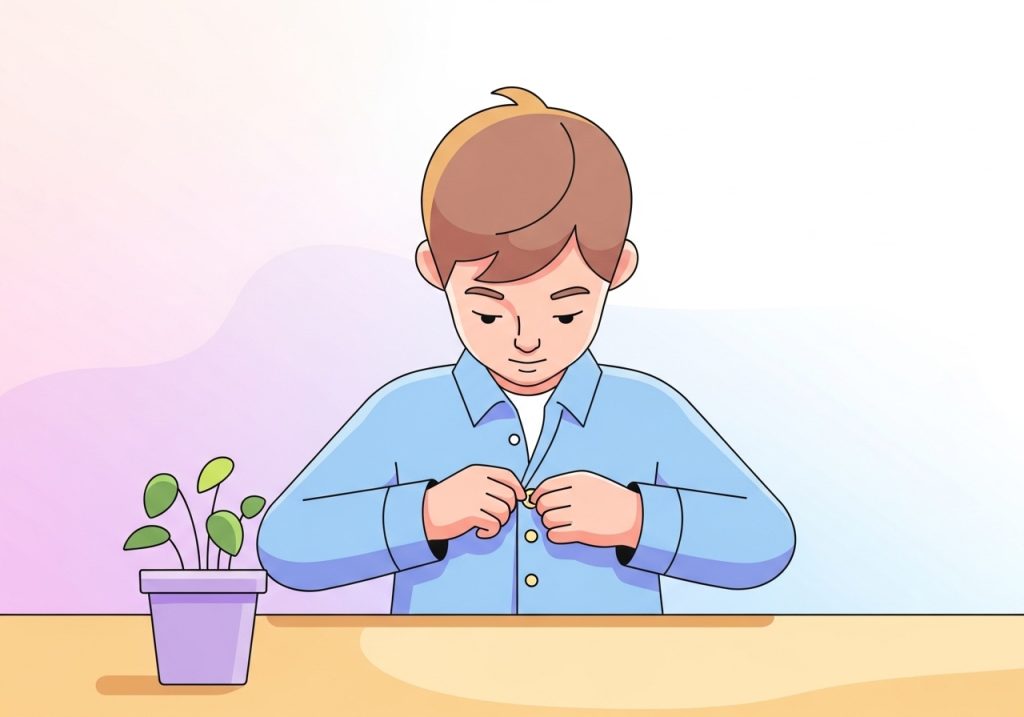
Similarly, the skills of buttoning, zipping, and tying shoes all support the competency of independent dressing. A child who is competent in dressing can select appropriate clothing for the weather, put on all items in the correct sequence, and manage all the fasteners without assistance. They are integrating multiple skills with judgment and planning.
The Core Difference: Competencies vs Skills Explained
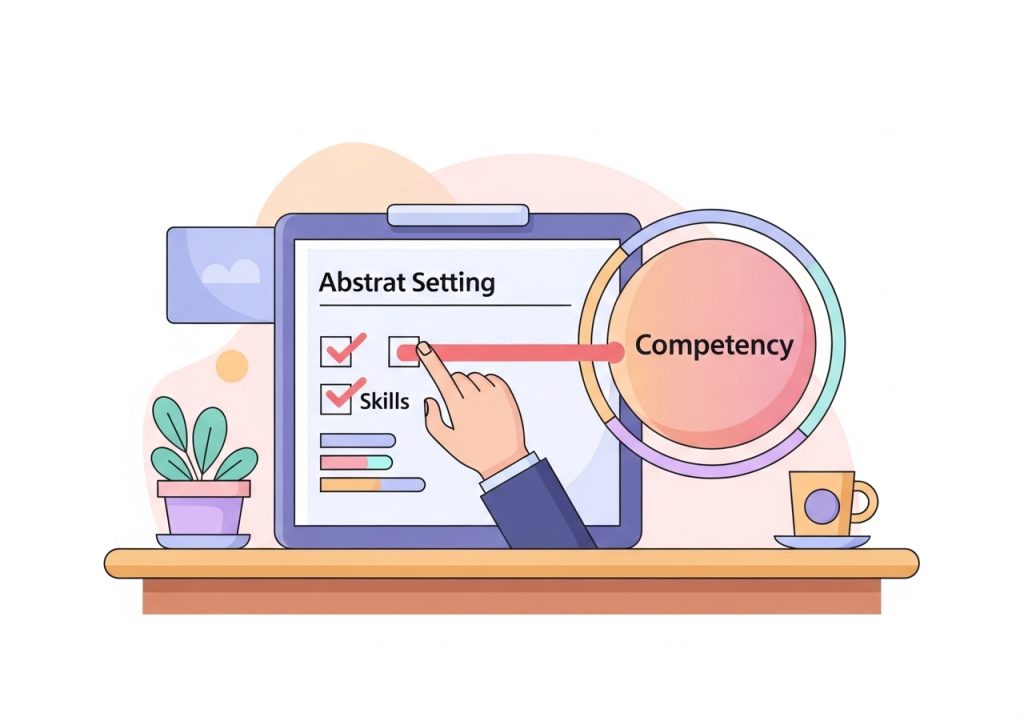
The primary distinction lies in scope and application. Skills are narrow and specific, while competencies are broad and contextual. You can practice a skill, but you demonstrate a competency.
Here’s a simple breakdown:
- Skills are teachable tasks. You can teach someone to cut on a line.
- Competencies are demonstrated abilities. A student shows competency when they can use scissors to complete a multi-step craft project independently.
- Skills are components. They are the individual parts needed to do something.
- Competencies are integrated wholes. They represent the successful combination of those parts in action.
- Skills can be assessed in isolation. Can the child zip their coat once?
- Competencies are assessed in functional situations. Can the child get ready for recess without help?
Think of it like cooking. The skills are chopping vegetables, measuring ingredients, and reading a recipe. The competency is preparing a full meal. You need the skills to achieve the competency, but possessing the skills alone doesn’t guarantee you can successfully make dinner.
Why This Distinction Matters for Goal Setting and Intervention
Recognizing the difference between competencies and skills directly impacts how we support learners. When we only focus on isolated skills, we risk teaching actions that don’t translate into meaningful, real-world function. A child might be able to recite social rules (a skill) but struggle to apply them during unstructured playtime (a competency).
By framing goals around competencies, our interventions become more purposeful. The ultimate objective isn’t just to check off a list of mastered skills, but to see a tangible improvement in a child’s ability to participate in their daily life. This approach ensures our efforts are always tied to a functional outcome.
For instance, an IEP goal might shift from:
- Skill-based goal: “Student will correctly form all lowercase letters with 80% accuracy.”
- Competency-based goal: “Student will independently write a complete, legible sentence in response to a prompt on classroom assignments.”
The competency-based goal still requires the skill of letter formation, but it places that skill within the meaningful context of classroom work. This helps everyone on the child’s team, from the OT to the teacher to the parent, understand the ultimate purpose of the intervention. When you target a specific set of skills, it should always be with the aim of building a larger competency.
Putting It Into Practice: Examples from the Field
Let’s look at how this plays out in different scenarios. By focusing on the end competency, you can identify the necessary skills to build and measure progress more effectively.
Scenario 1: Mealtime Participation
- Competency: Independently eating a meal with utensils.
- Required Skills:
- Gripping a fork or spoon.
- Scooping or piercing food.
- Bringing the utensil to the mouth without spilling.
- Chewing and swallowing safely.
- Using a napkin.
Scenario 2: Classroom Organization
- Competency: Managing personal materials for a classroom transition.
- Required Skills:
- Opening and closing a backpack.
- Placing papers into a folder.
- Putting away pencils and crayons in a box.
- Following a multi-step verbal direction.
Scenario 3: Emotional Regulation
- Competency: Using a coping strategy to manage frustration during a non-preferred task.
- Required Skills:
- Identifying the feeling of frustration.
- Communicating the need for a break.
- Performing a calming breathing exercise.
- Returning to the task after a short break.
In each case, the competency is the functional goal. The skills are the specific, teachable steps that help the learner achieve it. Effective intervention involves breaking down the competency into these component skills, teaching them directly, and then providing opportunities to practice integrating them in the target situation.
Ultimately, a clear understanding of competencies vs skills allows us to be better practitioners and supporters. It helps us design more effective interventions, write more meaningful goals, and truly celebrate the progress a child makes toward greater independence. When planning activities, always ask: is this just practicing a skill, or is it building a competency? That simple question can guide your approach and lead to more significant, lasting outcomes for the learners you support.
Ready to put these ideas into action? Building functional competencies starts with high-quality, targeted resources. The Inspiring OT shop offers a wide range of printable activities, assessments, and guides designed by an experienced occupational therapist to support meaningful skill development. Explore our evidence-informed tools to make your planning easier and help your learners succeed.
Visit The Inspiring OT on Teachers Pay Teachers to find practical resources today.
Leave a Reply