
Peer learning is a powerful tool in any educational or therapeutic setting. It allows learners to build understanding by teaching, questioning, and collaborating with one another. For this process to be truly effective, it requires more than just putting students in a group. It requires a skilled guide. A peer learning facilitator sets the stage, provides structure, and empowers participants to take ownership of their learning journey. This guide walks you through the essential steps to become an effective facilitator, transforming simple group work into meaningful, collaborative learning experiences.
Step 1: Understand the Facilitator’s Role
The first step is to shift your mindset from that of a teacher to that of a facilitator. A teacher often imparts knowledge directly, while a facilitator creates the conditions for learners to discover knowledge themselves. Your primary function is to manage the process of learning, not to be the source of all information. This means you are responsible for guiding discussions, ensuring equitable participation, and helping the group stay focused on its goals. You provide the framework so that the peers can build the content.
Think of yourself as a conductor of an orchestra. Each musician (learner) has their own instrument and skill, but the conductor ensures they play together harmoniously to create a beautiful piece of music. You don’t play the instruments for them. Instead, you keep the tempo, offer cues, and make sure every section contributes to the final result. Your focus is on the group dynamic, the flow of communication, and the overall environment.
Step 2: Establish a Safe and Structured Environment
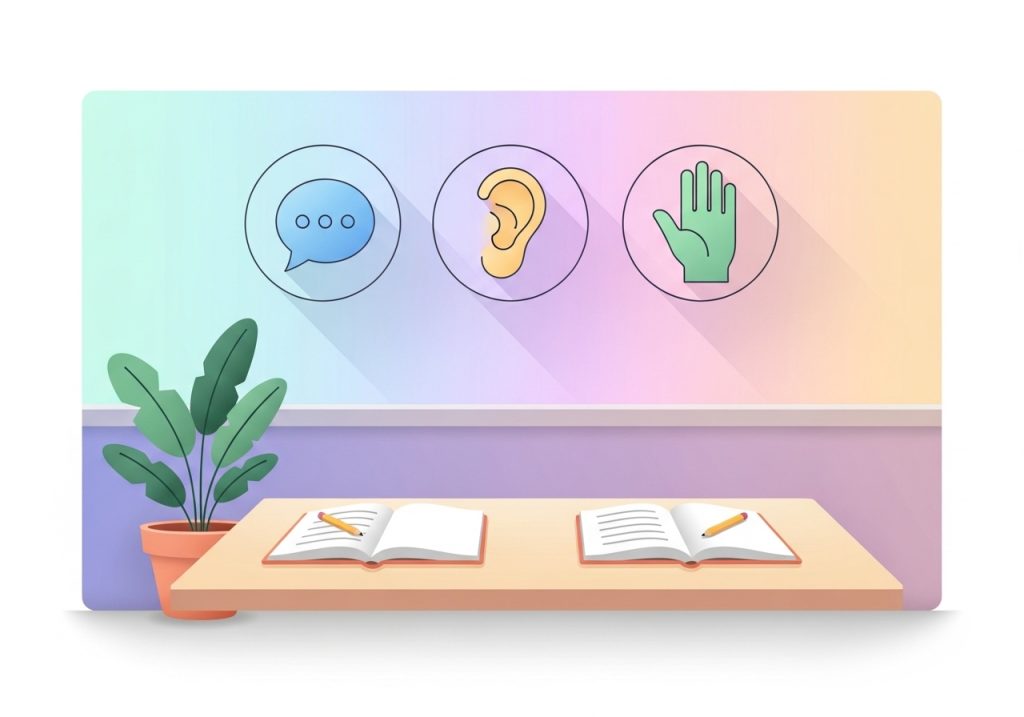
Learning happens best when participants feel safe. A safe environment is one where individuals feel comfortable sharing incomplete thoughts, asking questions, and making mistakes without fear of judgment. This psychological safety is the foundation of successful peer learning. Start by co-creating ground rules or a group agreement at the very beginning. Involving the learners in this process gives them ownership and makes them more likely to adhere to the guidelines.
These rules might include concepts like “Listen to understand, not just to reply,” “Challenge ideas, not people,” and “All ideas are welcome for discussion.” The physical setup matters, too. Arrange seating in a circle or small groups to encourage conversation rather than a lecture-style format where all eyes are on you. This simple change can dramatically alter the dynamic from passive reception to active participation.
Step 3: Set Clear Group Goals and Expectations
A group without a clear purpose can easily get sidetracked. Before starting an activity, ensure everyone understands the objective. What should they accomplish by the end of the session? What does success look like? Define these goals collaboratively when possible to increase buy-in. The goals should be specific and measurable so the group knows when they have achieved them. This process aligns with how you might target a specific set of skills in one-on-one interventions; the same principles of clarity and focus apply.
It is also important to clarify expectations for individual roles and responsibilities within the group. You can assign roles like a timekeeper, a notetaker, or a spokesperson to ensure all necessary tasks are covered. Rotating these roles can also help learners develop different skills. When everyone knows what is expected of them and what the group is working towards, the process becomes more efficient and conflict is minimized.
Step 4: Guide the Process, Don’t Provide Answers
When a group gets stuck, the instinct is often to jump in and provide the answer. An effective peer learning facilitator resists this urge. Your goal is to build the group’s capacity for problem-solving, not to solve the problem for them. Instead, you should use questions to guide their thinking process. Open-ended questions are particularly useful here because they cannot be answered with a simple “yes” or “no” and require deeper thought.

Consider prompts like:
- “What have you tried so far?”
- “Can you explain your thinking on that point?”
- “What is another way you could approach this problem?”
- “How does this connect to what we learned last week?”
- “What information or resource might help you move forward?”
These questions encourage learners to rely on their own critical thinking and the collective knowledge of the group, building greater independence and confidence. You are teaching them how to fish, not just giving them a fish.
Step 5: Model and Encourage Active Communication
Productive collaboration depends on strong communication skills. As the facilitator, you can model what this looks like. Demonstrate active listening by paraphrasing what a participant says to confirm your understanding (“So, if I’m hearing you correctly, you’re suggesting that…”). This not only shows that you are paying attention but also teaches the group a valuable communication technique.
Encourage group members to build on each other’s ideas instead of just waiting for their turn to talk. You can use phrases like, “That’s an interesting point, Sarah. Mark, how does that connect with what you were saying earlier?” to weave different threads of the conversation together. If disagreements arise, guide the conversation toward a respectful exchange of different viewpoints, focusing on the ideas rather than the individuals. Your calm and objective approach will set the tone for the entire group.
Step 6: Introduce Constructive Feedback Protocols
Feedback is a critical component of learning, but it can be difficult to give and receive. Without structure, it can feel personal or unhelpful. Introduce a simple, structured protocol for feedback to make the process safe and productive. For example, a common model is the “I like, I wish, I wonder” framework.
- I like… (Start with something positive and specific about the work.)
- I wish… (Offer a concrete suggestion for improvement.)
- I wonder… (Ask a question to spark further thought or exploration.)
This approach encourages participants to be balanced in their feedback. It also frames suggestions as forward-looking wishes or curious questions, which can be easier to hear than direct criticism. By providing a clear structure, you make the feedback process less intimidating and more valuable for everyone involved.
Step 7: Reflect on the Process and Adapt
Facilitation is a skill that improves with practice and reflection. It’s not a one-size-fits-all approach. At the end of a session, take a few minutes for the group to reflect on its process. This metacognitive step is crucial for improvement. Ask questions like, “What went well for our group today?” and “What could we do differently next time to be even more effective?” This helps the group become more self-aware and take responsibility for its own functioning.
Your own reflection is just as important. After each session, take a moment to consider what worked and what didn’t. Did one group dominate the conversation? Was the task too easy or too difficult? Did you intervene too much or not enough? Being a flexible and responsive facilitator is key to meeting the evolving needs of your learners. Every group is different, and being willing to adapt your approach will greatly increase your effectiveness.
By following these steps, you can create a dynamic and supportive peer learning experience. Your role as a facilitator is crucial for helping learners develop not only subject matter knowledge but also essential skills in communication, collaboration, and critical thinking. These are the skills that will serve them well in any academic or real-world setting. Your guidance makes the difference between chaotic group work and true collaborative success.
Ready to support skill development with engaging, low-prep resources? The Inspiring OT offers a wide variety of practical, evidence-informed activities designed by a licensed occupational therapist. From fine motor skills to sensory processing, our downloadable tools are perfect for therapists, teachers, and parents looking to make learning effective and enjoyable.
Leave a Reply