
As therapists, educators, and parents, our goal is to support meaningful skill development. We often wonder, “Is this strategy working?” or “What does this child need next?” The answer lies in assessment, but it doesn’t always have to mean a formal test. Formative assessment is a powerful, ongoing process that helps us understand learning as it happens. By using simple formative assessment examples, we can adjust our support in real time.
Instead of waiting for a final grade or a summative report, these techniques provide immediate insight into a learner’s progress, strengths, and areas needing more attention. This guide offers practical examples you can use in your therapy sessions, classroom, or at home to make instruction more responsive and effective.
Understanding Formative Assessment
Formative assessment is often called “assessment for learning” because its primary purpose is to guide and improve instruction. It is different from summative assessment, which evaluates learning at the end of a unit, like a final exam. Think of a chef tasting a soup while cooking it. The chef tastes, adjusts the seasoning, and tastes again to perfect the final dish. That in-the-moment adjustment is formative assessment.
For those supporting children, this means gathering information during an activity to make decisions about what to do next. It is a collaborative process that helps learners become more aware of their own progress and actively participate in their own skill development. It transforms assessment from a judgment into a conversation.
Exploring Practical Formative Assessment Examples
Integrating these checks for understanding into your daily routines can be simple and effective. The key is to find methods that fit naturally into your interactions and activities without disrupting the flow of learning. Here are a few reliable formative assessment examples you can begin using today.
1. Structured Observation
Observation is one of the most powerful tools for a therapist or teacher. Instead of just watching, make it a structured practice. Use a simple checklist or anecdotal notes to track specific skills during an activity. This turns a general impression into concrete data. For example, while a child is working on a cutting activity, you might note:
- Grasp on scissors (e.g., thumb-up position, stability)
- Ability to stay on or near the line
- Posture and core stability at the table
- Signs of motor fatigue or frustration
- Helper hand use to stabilize the paper
This data provides specific details about fine motor control, bilateral coordination, and visual motor integration that a finished product alone cannot show.
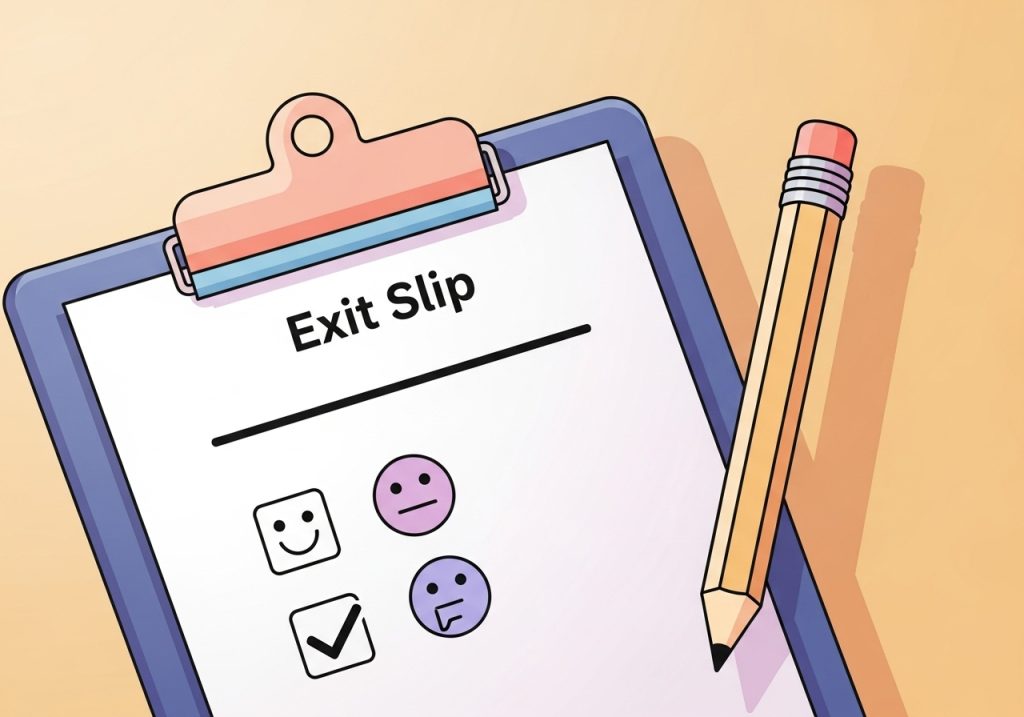
2. Exit Slips
An exit slip is a brief task completed at the end of a session or lesson. It gives you a quick snapshot of understanding. It doesn’t need to be a formal worksheet. It can be a simple, direct prompt that takes just a minute or two to complete.
- For handwriting: “Show me the best lowercase ‘b’ you can make.”
- For emotional regulation: “Draw or tell me one calming strategy we practiced today.”
- For life skills: “Point to the first step in our hand-washing routine chart.”
The responses quickly reveal what was retained and what might need review in the next session.
3. Work Sample Analysis
Reviewing a child’s work is a common practice, but a formative approach changes the focus. Instead of grading it, analyze it for patterns and processes. A handwriting sample from a daily handwriting practice PDF can be reviewed to identify common challenges, such as letter sizing, spacing, or line placement. This analysis directly informs your next instructional goal, whether it’s focusing on specific letter groups or working on spatial awareness. Look beyond correctness to understand the “why” behind the errors.
4. Self-Assessment
Encouraging learners to reflect on their own performance builds metacognition and ownership over their learning. This can be adapted for all ability levels and is a valuable skill in itself.
- Thumbs Up/Middle/Down: After attempting a task, the child gives a thumbs-up if they feel confident, middle if they are unsure, or down if they need help.
- Color Coding: A student can use a green, yellow, or red crayon to color a small circle on their worksheet, indicating their level of confidence or understanding.
- Simple Checklists: Use a checklist with pictures or simple words (e.g., “I held my pencil correctly,” “I took deep breaths when I felt frustrated”) for the child to review their work and behavior.
Adapting Assessments for Diverse Learners
All formative assessment techniques can and should be adapted to meet a child’s unique needs. The goal is to understand their learning, not to test their ability to complete a specific type of task. For a non-verbal child, asking them to point to a picture or use a communication device is a great alternative to a verbal exit slip. For a child with significant motor challenges, verbal explanations or dictating to an adult can replace written responses. Flexibility ensures that your assessment accurately reflects skill and understanding, not just communication or motor ability.
Using Formative Data to Inform Your Next Steps
The information gathered from formative assessments is only useful if it leads to action. Your observations and the student’s responses should directly shape your planning. If an exit slip shows a student consistently reverses letters, you know to incorporate targeted activities for directionality. If structured observation reveals a child struggles with bilateral coordination during a craft, your next session might include activities to strengthen that skill.
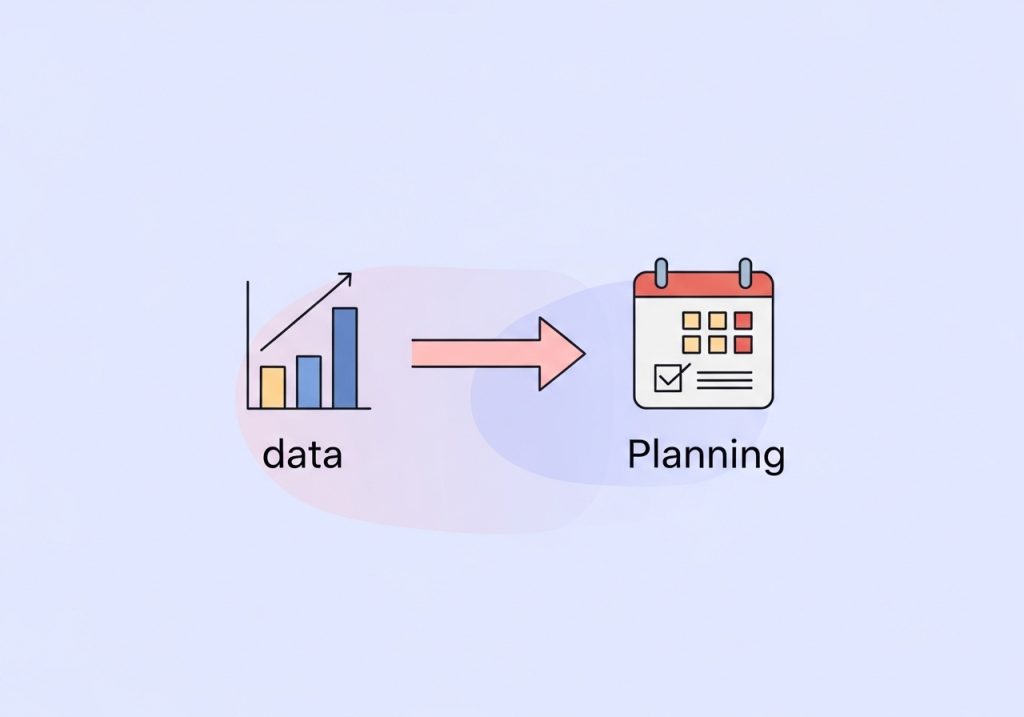
This cycle of assess, analyze, and adjust is what makes instruction truly individualized. It allows you to target a specific set of skills with precision rather than following a rigid plan that may not meet the learner’s current needs. By using these small, consistent check-ins, you create a responsive and supportive environment. This approach makes instruction more efficient and empowers learners by focusing on progress, not just performance.
Ultimately, formative assessments are tools for connection and understanding. They move us from teaching material to teaching children. By observing closely and listening to what their work tells us, we can provide the just-right support that fosters genuine confidence and skill acquisition.
Ready to put these ideas into action? The Inspiring OT offers a wide range of practical, evidence-informed activities and tools designed by an occupational therapist to support skill development. Find engaging, low-prep printables for fine motor, handwriting, sensory processing, and life skills that make learning successful and fun. Explore the collection today to find the perfect resources to complement your instruction.
Leave a Reply