
Understanding and integrating sensory activities into a child’s routine is a powerful way to support their development. These activities are more than just play; they are targeted experiences that help a child’s brain process and respond to information from their senses. For occupational therapists, teachers, and parents, using the right sensory strategies can help children improve focus, manage emotions, and build critical motor skills. By providing structured sensory input, we can help create an optimal state for learning and engagement.
This guide offers five evidence-informed sensory activities designed by an occupational therapist. Each suggestion is practical, easy to implement in various settings, and focuses on building foundational skills that support a child’s success in the classroom, at home, and beyond. Whether you are creating a sensory corner in your classroom or looking for ways to support your child’s needs during homework time, these ideas provide a solid starting point.
Incorporate Heavy Work and Proprioceptive Input
Heavy work activities involve pushing, pulling, or carrying weighted objects to provide deep pressure input to muscles and joints. This input to the proprioceptive system can be very calming and organizing for the nervous system. When a child’s body understands where it is in space, it often leads to improved body awareness, coordination, and attention. Many children who seek out intense movement or seem to crash into things may benefit from structured proprioceptive input.
Integrating these activities does not require special equipment. Everyday chores and play can be adapted to provide this valuable input. The key is to make the tasks a natural part of the daily routine so the child receives consistent input throughout the day. This helps maintain a regulated state, rather than waiting until they become dysregulated. Creating a plan for this type of input is a key part of building a well-rounded sensory diet for a child.

Examples of Heavy Work Activities:
- At Home: Have the child help carry groceries, push a laundry basket full of clothes, pull a small wagon with toys, or help rearrange light furniture. Tasks like kneading dough, vacuuming, or wiping down tables also provide resistance.
- At School: Ask the student to help carry a stack of books to the library, push a cart of supplies, or help wipe down desks or whiteboards. Chair push-ups or wall pushes are great options for a quick movement break right at their desk.
- Play-Based Ideas: Animal walks (like bear walks or crab walks), climbing on playground equipment, digging in a sandbox, or pushing a friend on a swing all provide excellent proprioceptive feedback.
Always supervise these activities to ensure safety. The goal is to offer resistance, not to strain the child. Observe how the child responds. Many children will appear calmer, more focused, and better organized after engaging in a few minutes of heavy work.
Create a Tactile Exploration Bin
A simple container filled with materials like dry beans, sand, or water beads encourages hands-on exploration. This activity, often called a sensory bin, helps to build tolerance and discrimination for different textures. The tactile system is one of our largest sensory systems, and input through the skin provides the brain with critical information about the world. For children who are sensitive to certain textures or those who constantly need to touch things, a tactile bin offers a controlled and acceptable way to get that input.
These bins are versatile tools for skill development. Beyond the sensory benefits, they can be used to work on fine motor skills, visual motor integration, and even academic concepts. By hiding small objects, letters, or numbers in the filler material, you can turn a simple sensory experience into a targeted learning activity. The act of scooping, pouring, and manipulating small items within the bin strengthens hand muscles needed for tasks like writing and using scissors.
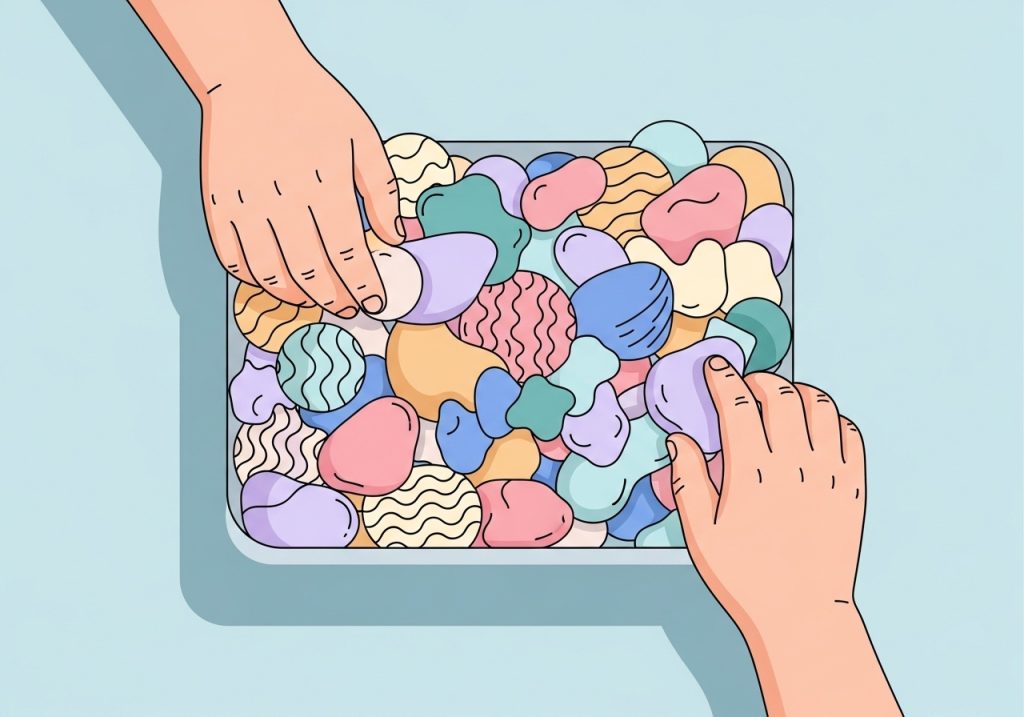
Ideas for Tactile Bins:
- Bin Fillers: Start with non-messy, dry materials like uncooked rice, pasta, or dried beans. You can also use materials like kinetic sand, pom-poms, shredded paper, or water beads for different textural experiences.
- Tools for Exploration: Add scoops, tongs, funnels, and small containers to encourage pouring, measuring, and transferring. These tools help develop hand-eye coordination and fine motor control.
- Themed Bins: Create bins around a theme, such as an ocean bin with blue-dyed rice, seashells, and small plastic sea animals. A construction theme could use black beans or cornmeal as “dirt” with small construction vehicles.
Set clear rules for using the sensory bin, such as keeping the materials inside the container. It’s best to introduce these bins with adult supervision to guide the exploration and ensure the experience remains positive and productive. For children with tactile sensitivities, introduce new textures slowly and never force participation.
Integrate Controlled Vestibular Movement
Activities that involve gentle, controlled movement, such as swinging or rocking, stimulate the vestibular system. This system, located in the inner ear, is responsible for our sense of balance, spatial awareness, and coordinating movement with balance. Well-regulated vestibular processing helps a child feel secure and grounded in their body, which is essential for maintaining posture, controlling eye movements for reading, and coordinating both sides of the body.
Vestibular input can be either very calming or very alerting. Slow, rhythmic, and linear movements like gentle swinging back and forth or rocking in a rocking chair are typically organizing and calming. In contrast, fast, rotational movements like spinning can be highly alerting and may become disorganizing for some children. It is important to watch the child’s cues. A child who is receiving too much vestibular input may become overexcited, dizzy, or nauseous.
Safe Vestibular Activities:
- Swinging: A classic playground swing provides excellent linear vestibular input. Focus on smooth, back-and-forth motion.
- Rocking: Using a rocking chair or simply rocking back and forth on hands and knees can be very soothing.
- Therapy Balls: Sitting on a large therapy ball and gently bouncing or rocking can provide input while a child is doing seated work. This can improve posture and focus.
- Yoga Poses: Poses that involve gentle balance challenges or slow movements, like cat-cow or downward dog, engage the vestibular system in a controlled way.
Movement breaks that include these activities can be especially helpful during long periods of seated instruction. A few minutes of controlled swinging or rocking can help reset the nervous system, allowing a child to return to their work with improved attention and a calmer body.
Try Visual Motor Sensory Activities
These activities combine visual perception with motor skills. Using a sensory component makes skill practice more engaging and effective than relying solely on paper-and-pencil tasks. Visual motor integration is the ability to interpret visual information and respond with a motor action. This skill is fundamental for handwriting, cutting with scissors, catching a ball, and many other daily tasks.
When you add a tactile or proprioceptive element to a visual motor task, you provide the brain with more information. This multi-sensory approach can help solidify motor patterns and make learning more concrete. For example, tracing a letter in a tray of sand provides tactile feedback about the letter’s shape, which reinforces the visual information. This is often more effective than just looking at the letter and trying to copy it. Incorporating these ideas when designing effective lesson plans can make a significant difference for learners who struggle with traditional methods.
Examples of Visual Motor Sensory Activities:
- Writing in Sensory Trays: Use a shallow tray filled with sand, salt, or shaving cream. Have the child use their finger to draw shapes, letters, or numbers.
- Building with Blocks: Copying a block design from a picture card requires the child to visually analyze the structure and then motor plan how to build it.
- Play-Doh or Putty Creations: Rolling, squeezing, and shaping putty to match a picture or form a letter provides both proprioceptive and tactile input while working on visual motor skills.
- Vertical Surface Work: Working on a vertical surface, like a whiteboard or easel, encourages proper wrist extension and shoulder stability, which are important for handwriting. Activities could include drawing, connecting dots, or placing stickers on a target.
These activities turn skill practice into a fun, hands-on experience. They are particularly beneficial for children who are reluctant to engage in worksheet-based tasks. By making learning playful and sensory-rich, you can increase motivation and improve outcomes.
Offer Safe Oral Motor Input
Providing opportunities for safe chewing or sucking can be highly organizing for many children. The mouth is full of sensory receptors, and oral motor input provides intense proprioceptive feedback to the jaw. This input can help improve focus, reduce anxiety, and decrease the likelihood of a child chewing on non-food items like shirt collars or pencils. It’s a strategy often used to help children self-regulate during tasks that require concentration.
It is important to offer this input in a safe and structured way. The goal is to provide a tool that helps the child regulate, not to create a distraction. This can be achieved through specific snacks, drinks, or designated chew tools. When considering this strategy, it’s also helpful to think about the underlying reason for the oral sensory seeking. Is the child anxious? Bored? Overstimulated? Addressing the root cause while providing a safe oral motor outlet is the most effective approach.
Safe Oral Motor Strategies:
- Chewy Foods: Offer crunchy or chewy snacks at appropriate times, such as carrot sticks, apple slices, pretzels, or dried fruit. These foods require more effort to eat and provide significant jaw input.
- Thick Liquids: Drinking a thick liquid like a smoothie, applesauce, or yogurt through a straw requires oral motor work and can be very calming.
- Chew Tools: For children who need persistent input, a safe chew tool can be a great option. These come in various shapes and textures and can be worn as a necklace or bracelet for easy access. Always choose tools that are durable and appropriate for the child’s age and chewing strength.
- Blowing Activities: Activities that involve blowing, like blowing bubbles or blowing a cotton ball across a table with a straw, also engage the oral motor muscles and can be regulating.
By providing acceptable ways to receive oral motor input, you can help a child meet their sensory needs in a way that is safe and socially appropriate. This simple strategy can have a significant impact on their ability to stay calm and focused throughout the day.
Sensory activities are essential tools for supporting a child’s development. By carefully selecting activities that provide proprioceptive, tactile, vestibular, visual motor, and oral motor input, you can help children regulate their nervous systems and build foundational skills. The key is to be observant, start slowly, and integrate these experiences into daily routines in a playful and encouraging way. Each child’s sensory needs are unique, so what works for one may need to be adapted for another. With a thoughtful approach, these strategies can create a supportive foundation for learning and growth.
Ready to put these ideas into practice? The Inspiring OT offers a wide range of practical, evidence-informed printable resources designed to make skill-building engaging and accessible. From fine motor activities to sensory processing toolkits, our materials are created by an experienced occupational therapist to support therapists, educators, and families. Simplify your planning and enhance skill growth with our easy-to-use, low-prep activities. Explore the shop today to find the perfect resources for your learners.
Leave a Reply