
Setting meaningful goals is a fundamental part of supporting a student’s educational journey. For occupational therapists, teachers, and parents, crafting objectives that are both ambitious and achievable can feel like a challenge. The key is to create goals that are specific, measurable, and directly tied to a student’s needs. This article provides several practical academic goals examples that you can adapt for Individualized Education Programs (IEPs), classroom interventions, or at-home support. These examples are designed to build foundational skills that contribute to long-term academic success and confidence.
Well-written goals provide a clear roadmap for both the educator and the learner. They help track progress, identify areas needing more support, and celebrate small victories along the way. Whether you are focusing on handwriting, organization, or reading, having clear objectives transforms abstract challenges into manageable steps. Let’s explore five key areas where targeted academic goals can make a significant difference in a student’s development.
Improve Handwriting Legibility and Speed
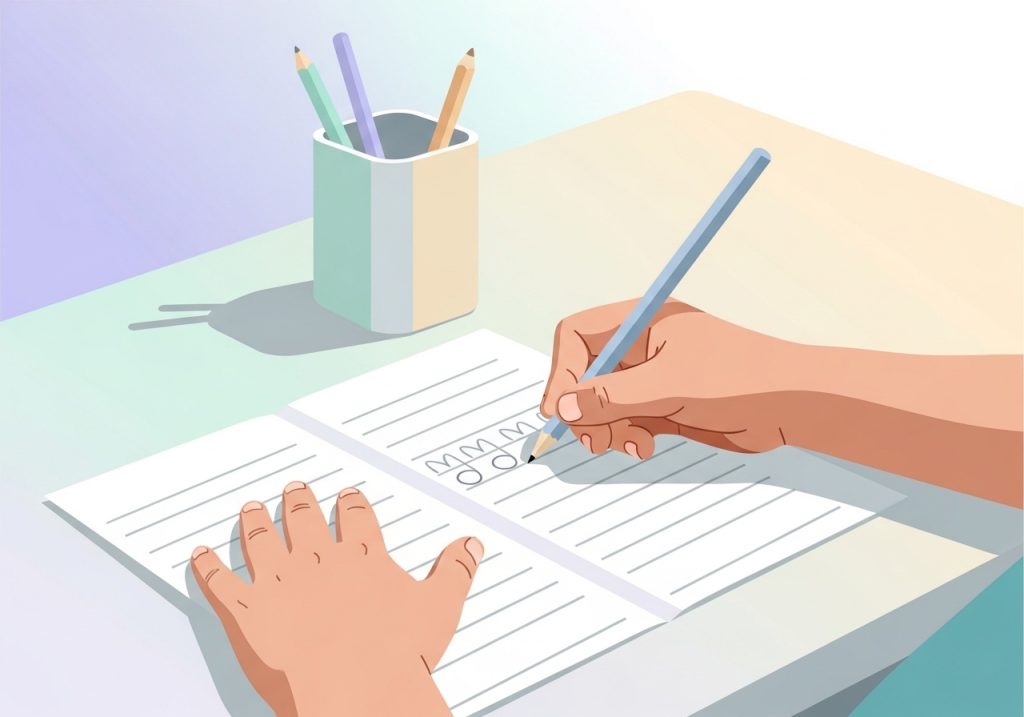
Handwriting remains a critical skill for communication, note-taking, and completing assignments. When a student struggles with legibility or speed, it can affect their performance across all subjects. Goals in this area should target the specific components of handwriting that need improvement, such as letter formation, sizing, spacing, and alignment on the line. The objective is to make writing an automatic and efficient process, not a source of frustration.
Examples of Handwriting Goals
When writing goals for handwriting, break the skill down into its core parts. This allows you to pinpoint the exact area of difficulty and measure progress accurately.
- Letter Formation: By the end of the semester, the student will independently form all 26 lowercase letters with a correct and consistent motor plan in 90% of opportunities during a written task. This can be measured by reviewing writing samples collected weekly.
- Sizing and Alignment: When provided with triple-lined paper, the student will write lowercase letters so they touch the baseline, with tall letters touching the top line and descending letters extending below the baseline, for 8 out of 10 sentences.
- Spacing: During a 5-minute writing prompt, the student will use appropriate spacing between letters (not touching) and words (finger-width) in 80% of their written work, as evaluated by the therapist or teacher.
To support these goals, it is helpful to use a multi-sensory approach. Practice forming letters in sand or shaving cream, build them with clay, or use handwriting worksheets with clear visual cues. For students ready for the next step, learning how to properly form cursive letters can be a powerful goal that also improves speed and flow.
Enhance Reading Comprehension Skills
Reading is much more than just decoding words on a page. True comprehension involves understanding the text, making connections, and remembering key information. Academic goals for reading comprehension should encourage students to think actively about what they are reading. These objectives can focus on skills like identifying the main idea, summarizing, sequencing events, and making inferences.
Examples of Reading Comprehension Goals
Goals for reading should be tailored to the student’s current level and the specific comprehension skill you want to target. Start with foundational skills and build toward more complex analysis.
- Identifying the Main Idea: After reading a grade-level passage of one to two paragraphs, the student will state the main idea and identify two supporting details with 80% accuracy across three consecutive sessions.
- Sequencing Events: Given a short story with four distinct events, the student will correctly place the events in chronological order using pictures or sentences in 4 out of 5 trials.
- Answering Questions: When asked “who,” “what,” “where,” and “when” questions about a short text read aloud, the student will answer correctly for 3 out of 4 questions.
Graphic organizers are excellent tools for building comprehension. Using story maps, KWL charts (What I Know, What I Want to Know, What I Learned), and Venn diagrams helps students organize their thoughts visually. For younger learners, a strong foundation is built through engaging phonological awareness activities that support pre-reading development. Consistent practice with these strategies helps students become more confident and engaged readers.
Develop Foundational Math Skills
Strong math abilities start with a solid understanding of foundational concepts. For many students, difficulties in higher-level math can be traced back to gaps in early numeracy skills. Goals in this area should focus on number sense, which includes recognizing numbers, understanding quantities, counting accurately, and performing simple calculations. These skills are essential not only for school but also for everyday life.
Examples of Foundational Math Goals
Math goals should be hands-on and connected to concrete objects whenever possible. This helps students build a tangible understanding of abstract concepts.
- One-to-One Correspondence: When presented with a set of up to 15 objects, the student will touch and count each object once to determine the total amount with 100% accuracy in 4 out of 5 trials.
- Number Recognition: The student will correctly identify numerals 1-30 when presented in a random order with 95% accuracy.
- Simple Addition: Using manipulatives (like blocks or counters), the student will solve 10 single-digit addition problems (sums to 10) with 80% accuracy.
Incorporate math into daily routines to reinforce these goals. Count snacks, sort toys by color or size, or find numbers on signs during a walk. Using games, puzzles, and interactive worksheets can make learning these skills more engaging and less intimidating. The aim is to build a positive and competent relationship with numbers from an early age.
Strengthen Executive Functioning and Organization
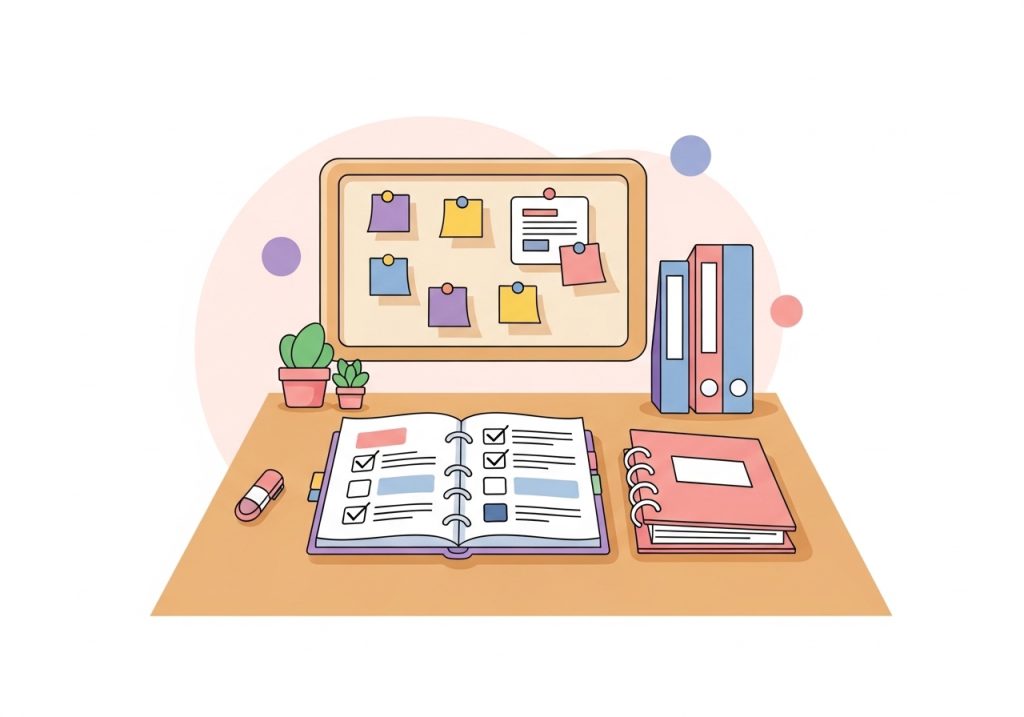
Executive functions are the mental processes that help us plan, focus, remember instructions, and manage multiple tasks. Students who struggle with these skills may have trouble starting assignments, keeping their materials organized, or managing their time. Setting goals for executive functioning is crucial for fostering independence and academic success.
Examples of Executive Functioning Goals
These goals often focus on creating routines and using external tools to support internal processes. Consistency is key to building lasting habits.
- Task Initiation: Using a visual checklist for a 3-step task (e.g., get out materials, read directions, start problem #1), the student will begin their independent work within 2 minutes of the instruction on 4 out of 5 days.
- Material Organization: By the end of each school day, the student will independently sort papers from their desk into the correct folders (e.g., “Take Home,” “Work in Progress”) with no more than one reminder.
- Planning and Prioritizing: Given a long-term project with a due date, the student will work with an adult to break it down into three smaller steps with deadlines and will complete each step by its assigned date.
Visual aids like checklists, planners, and color-coded folders are incredibly effective. Timers can help with time management and task persistence. Implementing these goals often involves specific executive functioning training strategies to build habits that students can eventually internalize. The goal is to provide a scaffold that can be gradually removed as the student becomes more independent.
More Academic Goals Examples for Visual Motor Skills
Visual motor skills involve the coordinated effort of the eyes and hands to perform a task. These skills are essential for activities like copying notes from a board, cutting with scissors, completing puzzles, and aligning numbers in math problems. While related to handwriting, visual motor goals target the ability to perceive visual information and translate it into an accurate motor action.
Examples of Visual Motor Goals
Goals in this area should focus on precision, accuracy, and efficiency in tasks that require eye-hand coordination.
- Copying Shapes and Letters: When shown a model of a pre-writing shape (e.g., circle, cross, square, triangle), the student will accurately copy it with correct formation and closure in 4 out of 5 attempts.
- Cutting Skills: The student will cut along a 6-inch straight line and a 6-inch curved line, staying within ¼ inch of the line, using a mature grasp on the scissors.
- Completing Mazes: The student will complete a simple to moderately complex maze without crossing lines, demonstrating an ability to plan a motor path visually.
Activities like beading, lacing cards, connect-the-dots, and building with blocks are all excellent for developing visual motor integration. These playful activities help strengthen the neural pathways needed for more complex academic tasks. Improving these foundational skills can have a broad impact on a student’s ability to participate successfully in classroom activities.
Creating effective academic goals is a collaborative process that empowers students by giving them clear targets for success. By breaking down complex skills into smaller, measurable steps, you provide a clear path for development. The academic goals examples in this guide offer a starting point for therapists, teachers, and parents to support learners in building the critical skills they need. Remember to adapt each goal to the unique needs of the individual and to celebrate progress at every stage of the journey.
Ready to put these goals into action? Finding the right materials can make all the difference. The Inspiring OT shop on Teachers Pay Teachers offers a wide range of practical, low-prep resources designed by an experienced occupational therapist. Explore our collection of engaging activities, worksheets, and guides to support skill development in a fun and effective way. Visit the shop today to find the perfect tools to help your learners succeed.
Leave a Reply