
Tracking a student’s progress is about more than just grades and test scores. For therapists, educators, and parents, the real story of development is found in the small, consistent steps forward in areas like handwriting, motor skills, and self-regulation. A student portfolio is an excellent tool for capturing this journey, offering a rich, multidimensional view of a child’s abilities and growth. By looking at different student portfolio examples, you can find a method that best suits your learner’s needs and your documentation goals. A well-constructed portfolio tells a compelling story of progress, highlighting strengths and identifying areas for continued support.
Portfolios provide a structured way to collect and review authentic work over time. This approach moves beyond a single snapshot, instead creating a detailed chronicle of a student’s learning. As an evaluation tool, a student portfolio gives educators the chance to show how their professional knowledge and skills lead to improved outcomes and student growth. The following examples offer practical starting points for building a meaningful collection of a student’s work, whether you’re in a clinic, classroom, or home setting.
The Digital Progress Portfolio
This portfolio uses digital platforms to store, organize, and share evidence of a student’s work. Using tools like Seesaw, Google Sites, or even a well-organized cloud folder (like Google Drive or Dropbox), you can collect photos, videos, audio recordings, and scanned documents. The digital format makes it incredibly easy to share progress with parents, administrators, and other members of a student’s support team, fostering a collaborative environment.
Key Features
- Highly Accessible: Portfolios can be accessed and updated from any device with an internet connection, making it convenient for therapists and teachers who work in multiple locations.
- Multimedia Integration: Digital platforms excel at storing various media types. A video of a child successfully navigating an obstacle course is a powerful testament to improved motor planning, while an audio clip of a student reading a passage can track fluency.
- Efficient Sharing: Sharing a link is much simpler than sending home a large physical binder. This allows for frequent, low-effort communication with families, who can view updates in near real-time.
- Space-Saving: It eliminates the need for physical storage space, which is often at a premium in classrooms and clinics.
Who It’s Best For
The digital portfolio is ideal for professionals who manage large caseloads and need an efficient way to document and share progress. It is also well-suited for collaborative teams, distance learning environments, and for students who are motivated by using technology. It provides a dynamic and modern way to showcase student development.
The Work Sample Binder
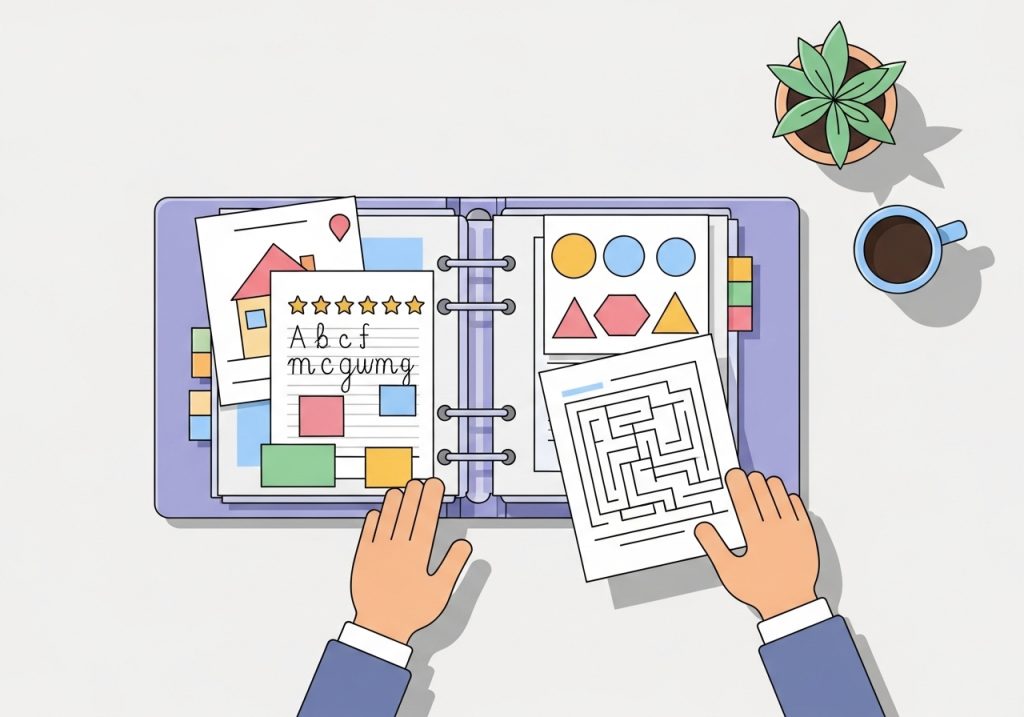
A classic for a reason, the work sample binder is a physical collection of a student’s work organized in a three-ring binder. This tangible portfolio often includes worksheets, writing samples, drawings, cutting activities, and photos of projects. Using dividers with tabs, you can create sections for different skill domains, such as fine motor, visual motor, handwriting, and activities of daily living.
Key Features
- Tangible Evidence: Having a physical collection of work can be very powerful for both the student and their parents. It makes progress feel concrete and real.
- Student-Led Presentation: Binders are perfect for student-led conferences. The student can physically flip through the pages, take ownership of their work, and explain what they learned.
- No Technology Required: This method is accessible to everyone, regardless of their access to or comfort with technology. It is a reliable system that does not depend on internet connections or software updates.
- Chronological Organization: By dating each work sample, the binder creates a clear and easy-to-follow timeline of a student’s development in each skill area.
Who It’s Best For
This method is excellent for younger students who benefit from seeing and touching their completed work. It is also a great choice for educators and therapists who prefer a straightforward, low-tech system or work in settings with limited access to digital devices. It remains one of the most effective student portfolio examples for direct, hands-on review.
The Goal-Specific Tracking Portfolio
This portfolio is less of a showcase and more of a focused data collection tool. It is designed specifically to monitor a student’s progress toward individual goals, such as those outlined in an Individualized Education Program (IEP) or a therapy plan of care. Each piece of evidence included is directly linked to a specific, measurable objective. This approach is powerful because it provides direct evidence of a student’s development, turning the portfolio into a key source of data for evaluation.
Key Features
- Data-Driven: This portfolio centers on objective evidence. It often includes data sheets, progress monitoring graphs, dated work samples, and anecdotal notes that are all tied to a specific goal.
- Clear Alignment: Every artifact in the portfolio serves a purpose: to demonstrate progress (or lack thereof) on a targeted skill. This makes it invaluable for meetings and progress reports.
- Efficient for Reporting: When it comes time to write progress notes or report to the IEP team, all the necessary evidence is already organized in one place, saving significant time.
- Focuses Intervention: By regularly reviewing the portfolio, you can quickly see which goals are being met and which may require a change in strategy or intervention.
Who It’s Best For
The goal-specific tracking portfolio is essential for special education teachers, occupational therapists, speech-language pathologists, and any professional responsible for formal progress monitoring. It is the most direct way to document growth against specific benchmarks, including for students developing the ability to set and track their own self-advocacy IEP goals.
The Photo and Video Portfolio
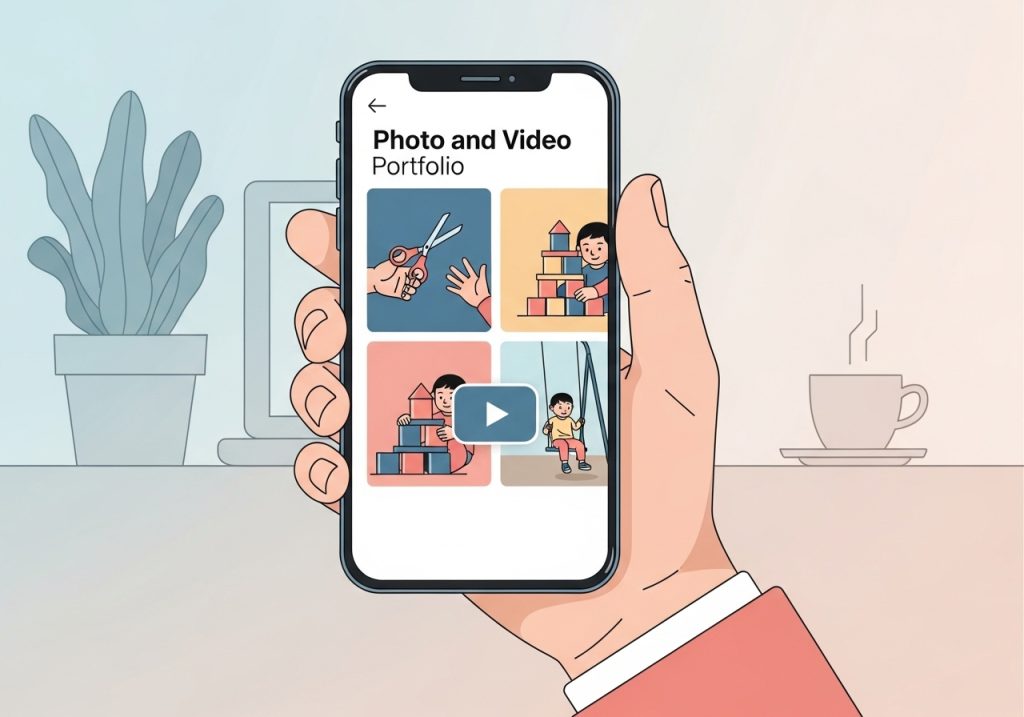
Some skills are nearly impossible to capture on a worksheet. For tracking progress in motor skills, social interactions, or functional life skills, a portfolio built on photos and videos is often the most effective method. This visual-first approach can powerfully illustrate growth in ways that written descriptions cannot. A short video clip of a child tying their shoes or using a fork correctly provides undeniable proof of skill acquisition.
Key Features
- Captures Dynamic Skills: It excels at documenting skills that involve movement, sequence, and interaction, such as cutting with scissors, navigating a playground, or participating in a group activity.
- Powerful Before-and-Afters: Placing a video from the beginning of the year next to one from the end of the year offers a dramatic and motivating comparison of a student’s progress.
- Engaging Format: Both students and parents often find reviewing photos and videos more engaging and easier to understand than looking at data sheets or worksheets.
- Documents Context: Photos and videos capture not just the student’s performance but also the environmental context, which can be useful for analyzing what supports or barriers are present.
Who It’s Best For
This type of portfolio is particularly useful for occupational and physical therapists who need to document changes in gross and fine motor skills. It is also great for tracking progress in social-emotional learning, adaptive behaviors, and various essential life skills that are demonstrated through action.
The Self-Reflection and Assessment Portfolio
This portfolio model puts the student in the driver’s seat. In addition to work samples selected by the teacher or therapist, this collection includes pieces chosen by the student, accompanied by their own reflections. These reflections can take many forms: a written journal entry, a short audio or video recording, or a simple checklist where they rate their own work. The primary goal is to build metacognition, helping students think about their own learning process.
Key Features
- Promotes Student Agency: By involving students in the selection and assessment of their own work, this portfolio fosters a sense of ownership and responsibility for their learning.
- Develops Metacognitive Skills: It encourages students to think about their strengths, identify areas where they struggle, and set personal goals for improvement.
- Provides Deeper Insight: A student’s reflection can reveal their thought process, level of understanding, and attitude toward a task in a way that the work sample alone cannot.
- Encourages a Growth Mindset: This process helps students see learning as a journey of improvement. It emphasizes effort and strategy, which are key components of developing a stronger growth mindset.
Who It’s Best For
The self-reflection portfolio is most appropriate for students who are old enough to engage in thoughtful self-assessment, typically upper elementary age and older. It is an excellent tool for programs that emphasize student-led conferences, executive functioning skills, and social-emotional learning.
Ultimately, the most effective portfolio is one that is used consistently and thoughtfully. You can even combine elements from these different student portfolio examples to create a hybrid system that works best for you and your learners. Whether digital or physical, data-driven or reflective, a portfolio’s true value lies in its ability to tell a comprehensive story of a student’s unique path of growth and achievement.
Ready to fill your student portfolios with engaging, skill-building materials? The Inspiring OT offers a wide range of practical, evidence-informed activities designed by an occupational therapist. Explore the shop for low-prep printables that support fine motor, handwriting, sensory processing, and life skills development. Find the perfect resources to document progress and make learning successful for every child. Visit The Inspiring OT store on Teachers Pay Teachers today.
Leave a Reply