
Finding the right activities for infants can feel like a significant task for therapists, educators, and parents. The goal is to support healthy growth in a way that is both safe and effective. Meaningful play during the first year is critical for building a strong foundation for sensory processing, motor control, and cognitive skills. These early experiences shape how a child interacts with their world, learns to solve problems, and coordinates their movements. Fortunately, many of the most beneficial activities are simple, require minimal materials, and can be integrated into your daily routine.
This guide offers nine professional-approved activities designed to promote key developmental milestones. Each suggestion is grounded in the principles of occupational therapy and child development, focusing on how specific types of play contribute to an infant’s overall skill-building. Whether you are a therapist planning a session, a teacher creating a supportive environment, or a parent looking for purposeful ways to engage with your baby, these ideas provide a practical starting point. Understanding the “why” behind each activity helps in adapting them to an infant’s unique needs, a core concept in the foundations of pediatric OT.
Try Tummy Time with Engaging Variations
Tummy time is a fundamental activity for infant development, providing the essential work needed to strengthen the neck, back, and shoulder muscles. These muscle groups are the building blocks for major motor milestones like rolling, sitting, and crawling. According to child development experts at Pathways.org, consistent tummy time also helps prevent flat spots on the back of the baby’s head (positional plagiocephaly). While the concept is simple, keeping an infant engaged can be challenging. Enhancing the experience with simple modifications makes it more effective and enjoyable.
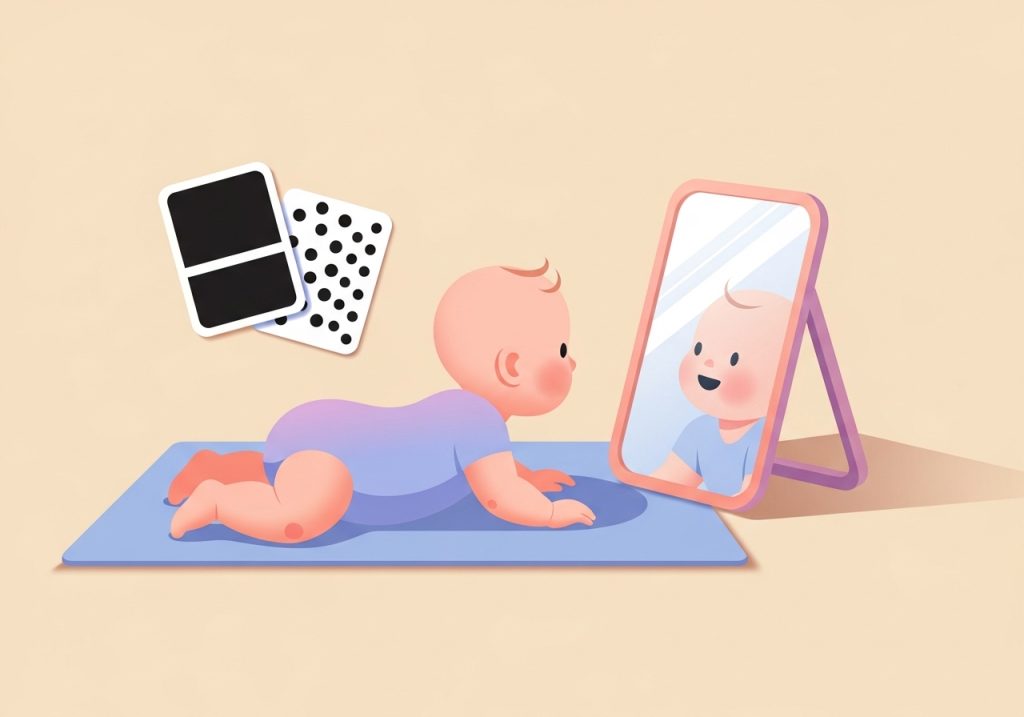
Consider these variations to enrich tummy time:
- Use a Non-Breakable Mirror: Placing a baby-safe mirror in front of the infant encourages them to lift their head to see their reflection. This visual feedback is highly motivating and can extend the duration of tummy time.
- Incorporate High-Contrast Cards: A newborn’s vision is still developing, and they are most attracted to black-and-white or high-contrast patterns. Position these cards within their line of sight to encourage head turning and visual tracking.
- Change the Surface: Try tummy time on different textures, such as a soft blanket, a fuzzy rug, or even on a caregiver’s chest. This adds a sensory component to the motor work.
- Provide Support: For infants who struggle with tummy time, a small rolled-up towel or blanket placed under their chest and armpits can provide support, making it easier for them to lift their head and engage.
Practice Reaching and Grasping
The development of reaching and grasping is a major step in an infant’s ability to interact with their environment. It begins with reflexive movements and gradually becomes more purposeful as hand-eye coordination improves. Providing opportunities for an infant to practice this skill helps refine their motor planning and strengthens the muscles in their hands and arms. This ability is a precursor to more complex skills like self-feeding and writing.
To support this development, offer a variety of safe objects for the infant to explore. Position toys just within their reach to encourage them to extend their arms and attempt to grasp. A play gym is an excellent tool for this, as it allows you to suspend lightweight toys at the perfect distance. You can also hold toys for them to reach for during floor time. Good object choices include soft rattles, textured rings, and lightweight fabric toys that are easy for small hands to hold.
Introduce Simple Cause-and-Effect Toys
Understanding cause and effect is a foundational cognitive skill that helps infants learn they have agency in their world. When they shake a rattle and it makes a sound, they begin to connect their action (the shake) with the outcome (the noise). This is one of the earliest forms of problem-solving. Simple toys that provide immediate sensory feedback are perfect for teaching this concept.
Effective cause-and-effect toys often include:
- Rattles and Shakers: The direct link between movement and sound is easy for an infant to grasp.
- Crinkle Books or Toys: The sound and texture produced when a baby touches a crinkly surface provides instant auditory and tactile feedback.
- Kick-and-Play Pianos: These mats reward kicking movements with sounds or lights, encouraging gross motor activity while teaching cause and effect.
- Activity Centers with Large Buttons: Toys that light up or play music when a large button is pushed help infants learn to use their hands to create a desired response.
Explore Safe Sensory Experiences
Sensory exploration is crucial for brain development. It helps infants learn about the properties of objects and their own bodies. Providing a rich variety of tactile experiences helps build nerve connections and supports the development of the sensory processing system. Creating a simple sensory station allows an infant to safely explore different textures, temperatures, and shapes. Always supervise sensory play closely to ensure safety.
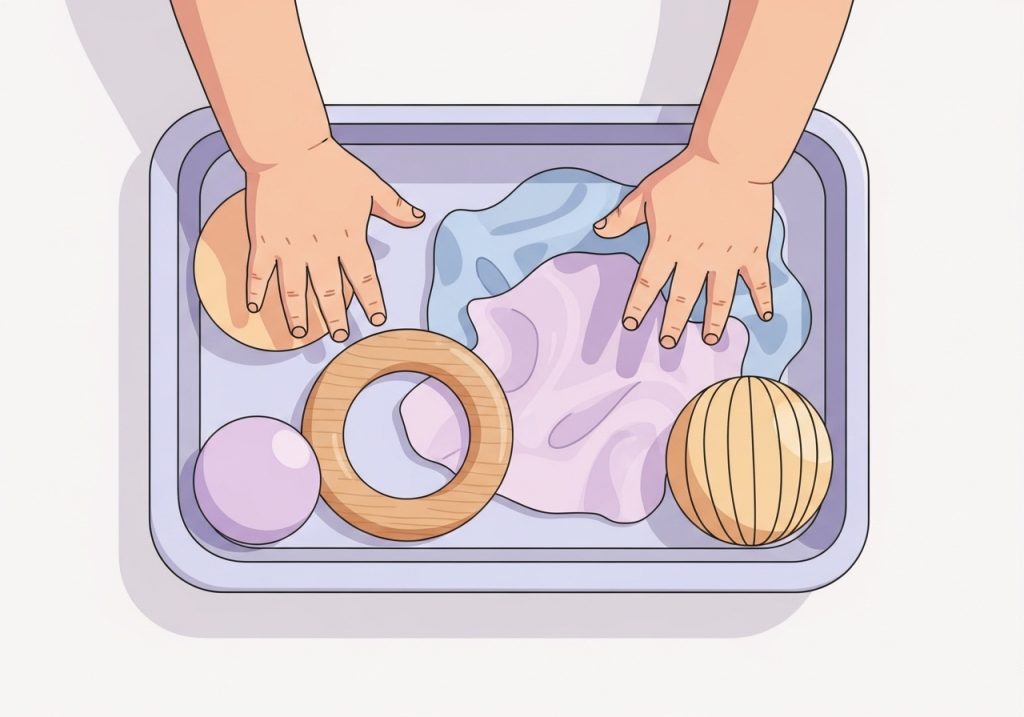
Set up a space with a few safe items for the infant to touch and feel. You do not need a formal sensory bin. A collection of interesting objects on a blanket works perfectly. Ideas include:
- Different Fabrics: Offer squares of silk, corduroy, velvet, and burlap for the infant to touch.
- Temperature Play: Allow the infant to touch a cool metal spoon (not from the freezer) and then a slightly warm, damp washcloth.
- Soft Brushes: Gently brush the infant’s arms, legs, and the soles of their feet with a soft-bristled paintbrush or makeup brush.
- Textured Balls: Provide balls with different surfaces, such as bumpy, smooth, or squishy ones.
Engage in Mirror Play for Self-Awareness
Mirror play is a powerful activity for promoting visual development and social-emotional growth. While infants do not recognize their own reflection until much later, interacting with the “baby in the mirror” helps them practice focusing their eyes and tracking movements. This simple interaction is also a wonderful opportunity for bonding and communication.
Use a baby-safe, non-breakable mirror during floor time. Position it so the infant can easily see their face. You can narrate what they see, saying things like, “Look at that baby’s smile!” or pointing to and naming their eyes, nose, and mouth. This helps build vocabulary and body awareness. You can also make funny faces for them to observe or play a game of peek-a-boo using the reflection. These interactions lay the groundwork for developing self-awareness.
Read High-Contrast and Tactile Books
Reading to an infant from the earliest days is one of the best ways to support language development and create a positive association with books. For young infants, visual and tactile books are the most engaging. Newborns’ eyes are still developing, and they see bold, high-contrast patterns most clearly. Simple black-and-white board books are perfect for capturing their attention and encouraging visual focus.
As they get a little older, introducing tactile books with different textures adds a sensory dimension to story time. Books with fuzzy patches, crinkly pages, or smooth, shiny surfaces invite the infant to explore with their hands while you read. This multi-sensory experience helps build connections in the brain and makes reading an interactive, engaging activity. Experts at UNICEF emphasize that such simple learning activities are powerful tools for early childhood development.
Play Container and Object Games
A surprisingly captivating activity for infants is simply putting objects into a container and taking them out again. This repetitive action is incredibly important for developing several key skills. It helps refine hand-eye coordination, practices grasping and releasing objects, and introduces early problem-solving. This game is also a hands-on way for an infant to learn about object permanence, the concept that things still exist even when they cannot be seen.
To play, you only need a safe, open container (like a small basket or an empty, clean plastic food tub) and a few large, infant-safe objects (such as oversized plastic blocks, soft balls, or wooden rings). Demonstrate putting an object in and taking it out, then encourage the infant to try. This simple task builds concentration and fine motor control, setting the stage for more complex manipulation skills later on.
Incorporate Gentle Movement Songs
Singing songs that involve movement is a joyful way to provide an infant with valuable vestibular and proprioceptive input. The vestibular system, located in the inner ear, is responsible for balance and spatial orientation. The proprioceptive system provides information from muscles and joints about body position. Gentle movements like rocking, bouncing, and moving an infant’s limbs help stimulate these systems, which is important for body awareness and regulation.
Simple songs and rhymes are perfect for this. You can:
- Gently bicycle the infant’s legs while singing a playful song.
- Recite “Head, Shoulders, Knees, and Toes” while gently touching each body part.
- Hold the infant securely and sway back and forth to a calming tune.
- Play “Pat-a-Cake,” helping them clap their hands together.
These activities are not just fun. They help the infant map their own body and feel more secure in their movements.
Use These Simple Activities for Infants to Build Skills
Among the simplest yet most effective activities for infants is playing with bubbles. This activity is a powerhouse for visual skill development. As bubbles float slowly and unpredictably through the air, they encourage an infant to practice visual tracking, which is the ability to follow a moving object with their eyes. This skill is essential for later activities like reading and sports.
When playing with bubbles, use a non-toxic bubble solution and blow them away from the infant’s face. Watch as their eyes follow the shimmering orbs. This helps strengthen the small muscles that control eye movement. As they get older, they will begin to reach for the bubbles, adding a hand-eye coordination challenge. You can encourage them to pop the bubbles with their hands or feet, adding a cause-and-effect element and a fun sensory experience. It is a simple activity that packs a significant developmental punch.
Ready to bring more evidence-informed, engaging activities into your therapy sessions, classroom, or home? The Inspiring OT offers a wide range of practical, low-prep printable resources designed by an experienced occupational therapist. From fine motor activities to sensory toolkits, you can find the perfect tools to support skill development in learners of all needs. Explore the full collection of OT-created resources at The Inspiring OT shop today.
Leave a Reply