
Before a child can learn to read, they need to understand that spoken words are made up of individual sounds. This foundational skill is called phonological awareness, and it’s one of the most important predictors of future reading success. Developing this awareness doesn’t require complex tools or intensive drills. Instead, you can build these crucial pre-literacy skills through simple, playful interactions. This guide offers seven practical phonological awareness activities for preschoolers that you can use in therapy sessions, classrooms, or at home. These simple, playful ideas can be easily worked into your daily routine or used to build practical lesson plans for skill development.
Practice with Rhyming Pairs
Rhyming helps children tune their ears to the sounds within words, teaching them to identify similar sound patterns. It’s often one of the first phonological skills to develop and can be practiced through fun, simple games. By focusing on how words sound alike, you help children recognize that words can be broken down into smaller parts.
Start with very obvious rhymes using familiar words. You can gather a few objects or picture cards, such as a picture of a cat, a hat, and a cup. Ask the child, “Which two words sound the same at the end? Cat, hat, cup?” This direct comparison makes the concept clear. Another simple game is “Rhyme Time,” where you say a word like “bee” and encourage the child to name other words that rhyme, such as “tree” or “knee.” Singing rhyming songs and reading rhyming books are also excellent ways to expose children to these sound patterns in a natural, engaging context.
Clap the Syllables in Words
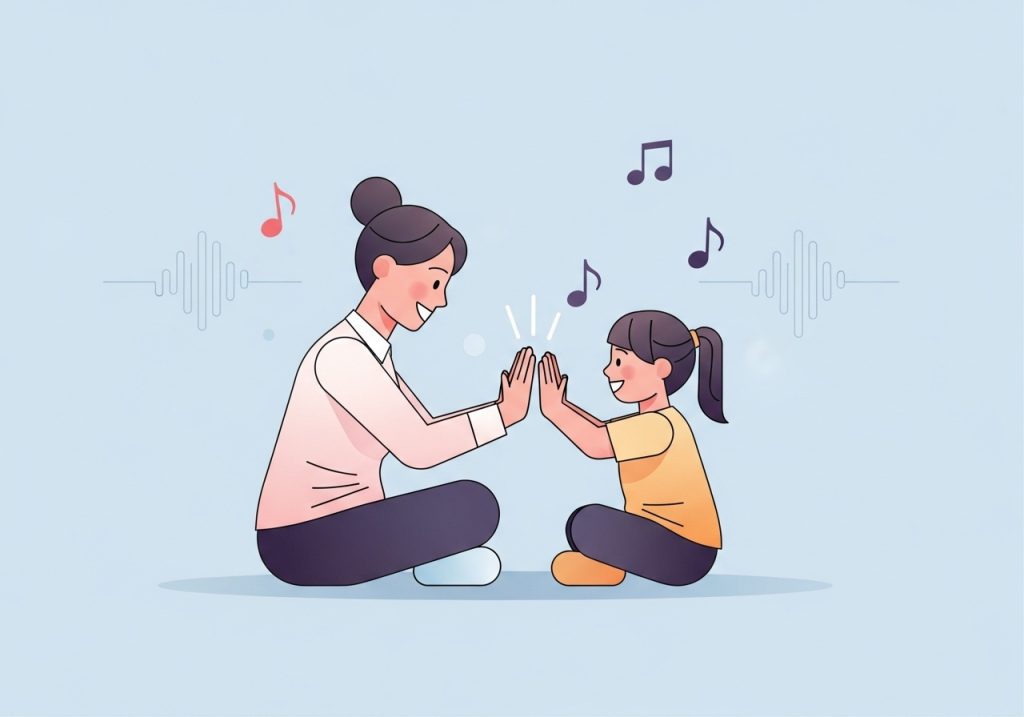
Breaking words into syllables, or “word parts,” is a key step in understanding word structure. Syllable awareness helps children hear the rhythm of language and is a precursor to decoding multisyllabic words when they begin to read. Making this activity physical by clapping or tapping turns an abstract concept into a concrete experience.
Begin with words that are meaningful to the child, like their own name. For example, for the name “Amanda,” you would clap three times: “A-man-da.” You can then move on to other familiar words. Ask the child to clap the syllables in words for toys (“dol-ly”), foods (“ba-na-na”), or animals (“el-e-phant”). For extra movement, you can have children stomp their feet, tap a drum, or jump for each syllable. The goal is to help them feel the distinct beats within each word.
Isolate Initial Sounds with ‘I Spy’
Identifying the first sound in a word is a critical component of phonemic awareness, which is the ability to hear and manipulate individual sounds (phonemes). A simple game of ‘I Spy’ can be easily adapted to target this skill. This activity trains a child’s ear to listen for and isolate specific sounds, which is necessary for sounding out words later.
When playing, be sure to use the sound the letter makes, not its name. For example, instead of saying, “I spy something that starts with the letter B,” you would say, “I spy something that starts with the /b/ sound.” This distinction is very important. You can start with objects in the room. For example, “I spy with my little eye something that starts with the /ch/ sound.” The child would then look around and guess “chair.” This game is portable, requires no materials, and can be played anywhere.
Set Up Sound Sorting: A Hands-On Phonological Awareness Activity for Preschoolers
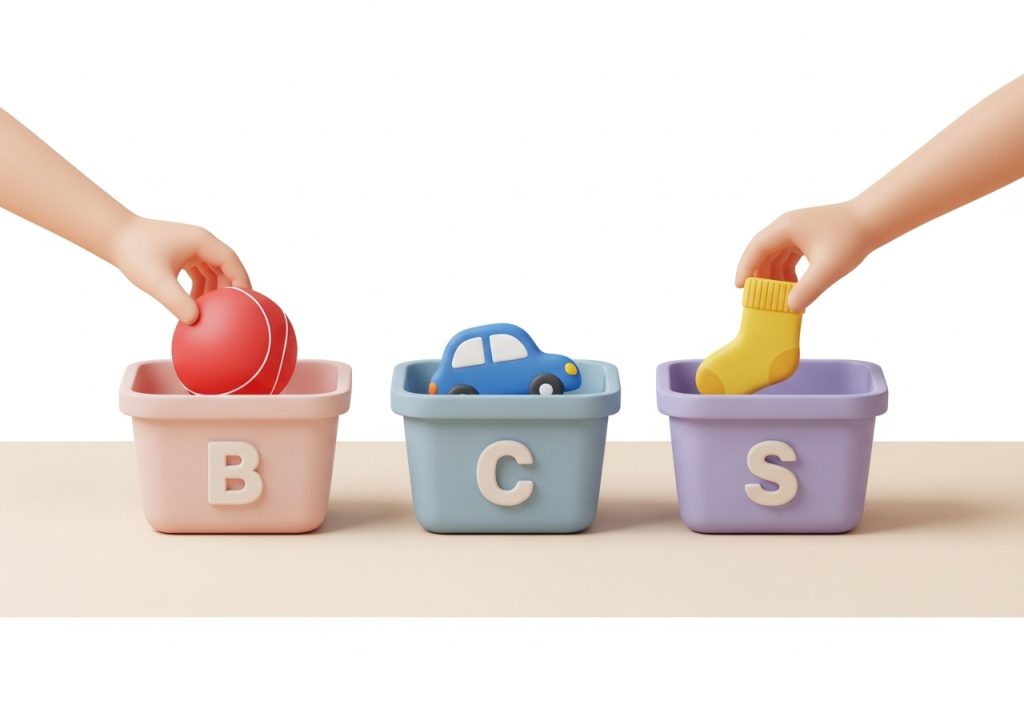
Sound sorting provides a multi-sensory way for children to connect a sound with a physical object. This hands-on activity reinforces the concept of beginning sounds by asking children to categorize items based on how their names begin. It makes the abstract idea of a phoneme something they can see, touch, and move.
To set this up, you can use baskets, boxes, or even just labeled pieces of paper. Choose two or three distinct beginning sounds to focus on, such as /m/, /s/, and /t/. Gather a collection of small toys or household objects whose names start with these sounds (e.g., magnet, moon, soap, sock, tiger, truck). Ask the child to say the name of each object and place it in the correct basket based on its initial sound. This activity encourages listening, speaking, and categorization skills all at once.
Read Alliterative Picture Books
Alliteration, the repetition of the same beginning sound in a series of words, is a powerful tool for developing phonological awareness. Reading books rich with alliteration exposes children to sound patterns in a fun and memorable way. As you read, the repeated sounds become more noticeable, helping children’s brains to zero in on specific phonemes.
When you read an alliterative book, emphasize the repeating sounds with your voice. For example, in a phrase like “seven silly snakes,” you can slightly elongate the /s/ sound in each word. You can also pause after reading a sentence and ask the child, “What sound did you hear a lot in that sentence?” Many children’s books use this literary device, making it easy to find great options at your local library. This shared reading experience is enjoyable and strengthens important pre-literacy skills.
Use Blocks for Segmenting and Blending
Segmenting (breaking a word into its individual sounds) and blending (pushing sounds together to make a word) are more advanced phonemic awareness skills that directly relate to reading and spelling. Using manipulatives like blocks or tokens can make these abstract processes concrete and understandable for a preschooler.
To practice segmenting, say a simple three-sound word like “cup.” As you say it, push forward one block for each sound: /c/, /u/, /p/. Have the child practice tapping each block as they say the corresponding sound. For blending, set out the three blocks and say the sounds separately, pointing to each block. Then, ask the child to push the blocks together quickly as they say the whole word, “cup.” This visual and tactile feedback is incredibly helpful for children who are just beginning to understand how sounds form words. This skill is often a key target when writing meaningful IEP goals for early literacy development.
Play Sound Substitution Games
Once a child is comfortable with identifying and blending sounds, you can introduce sound substitution, or phoneme manipulation. This skill involves changing one sound in a word to create a new word. It demonstrates a deep understanding of word structure and is a strong indicator of a child’s readiness to decode words.
Keep this activity light and playful, like a word puzzle. Start with initial sounds, as they are the easiest to manipulate. You could ask, “What word do we get if we change the /c/ in ‘cat’ to a /h/?” The child would then say “hat.” You can use picture cards or objects to support this activity. As the child becomes more proficient, you can try substituting final sounds (e.g., “cup” to “cut”) or even medial vowel sounds, although that is a much more advanced skill. These quick word games are great for car rides or waiting in line.
Building phonological awareness is a gradual process that happens through consistent, positive, and playful exposure to the sounds of language. These seven activities are designed to be low-prep and high-impact, fitting easily into the natural flow of a child’s day. By focusing on rhyming, syllables, and individual sounds through games and conversation, you are giving preschoolers the essential tools they need to become confident and successful readers. The key is to keep it fun and pressure-free, celebrating their progress as they learn to listen to and play with words.
Looking for more ways to support skill development with engaging, low-prep materials? The Inspiring OT offers a wide range of practical, evidence-informed printable activities designed by a licensed occupational therapist. From fine motor and handwriting practice to sensory processing and emotional regulation toolkits, these resources are created to make skill-building accessible and successful for learners of all needs. Simplify your planning and enhance growth in your therapy sessions, classroom, or at home.
Explore ready-to-use resources at The Inspiring OT shop today.
Leave a Reply