
For parents, teachers, and therapists, supporting a child who struggles with sensory processing can feel like a complex puzzle. You might see a child who has difficulty sitting still, is easily overwhelmed by noise, or constantly seeks out intense physical movement. A sensory diet is a structured approach that can help. By providing targeted sensory input throughout the day, you can help a child’s nervous system feel more organized, leading to improved focus, behavior, and engagement. This guide offers practical sensory diet examples that you can adapt for use in the classroom or at home.
What Is a Sensory Diet?
First, it is important to clarify that a sensory diet has nothing to do with food. The term, coined by occupational therapist Patricia Wilbarger, uses the “diet” metaphor to describe a personalized plan of sensory activities. Just as a balanced food diet provides the nutrition our bodies need, a sensory diet provides the sensory input our nervous systems require to function optimally. The goal is to proactively provide input throughout the day to keep the nervous system in a “just right” state of arousal, rather than waiting for a child to become overstimulated or understimulated.
An occupational therapist (OT) typically assesses a child’s unique sensory profile to develop a tailored plan. This plan identifies which types of sensory input are calming, which are alerting, and how often the child needs them. The activities are then woven into the child’s daily routines to support regulation naturally.
Incorporate Heavy Work Activities for Proprioceptive Input
Proprioceptive input is the sensation we get from our muscles and joints. Activities that involve pushing, pulling, lifting, or carrying heavy objects provide this powerful input, which has a significant calming and organizing effect on the nervous system. Heavy work is a foundational component of most sensory diets because it helps increase body awareness and can reduce hyperactivity and sensory-seeking behaviors. Understanding how sensory needs influence a child’s actions is a key part of creating an effective behavior intervention plan.
Examples for the Classroom
- Classroom Jobs: Assign tasks like stacking chairs at the end of the day, carrying a bin of books to the library, wiping down tables, or pushing a supply cart.
- Movement Breaks: Encourage “animal walks” like bear crawls or crab walks to get from one area to another. Wall pushes, where a child stands and pushes against a wall with their hands, are another great option.
- Seating Options: Allow a child to work while lying on their stomach and propped up on their elbows, which engages shoulder and core muscles.
Examples for Home
- Household Chores: Involve the child in chores like carrying the laundry basket, pushing the vacuum cleaner, helping bring in groceries, or pulling weeds in the garden.
- Play Activities: Building with large blocks, wrestling with a parent or sibling, digging in a sandbox, or pushing a wheelbarrow can provide significant input.
- Simple Tasks: Even small activities like kneading dough, carrying a backpack with a few books in it, or helping to move furniture can be effective.

Use Movement Breaks for Vestibular Input
The vestibular system, located in the inner ear, governs our sense of balance, movement, and spatial orientation. Vestibular activities can be either alerting or calming, depending on the type and speed of the movement. Slow, rhythmic, and linear (back-and-forth) movements are typically calming, while fast, irregular, or rotary (spinning) movements are more alerting. It is crucial to observe a child’s reaction to this type of input, as some children can become easily overstimulated by it.
Calming Vestibular Activities
- Swinging gently in a standard swing or a hammock.
- Rocking slowly in a rocking chair or on a therapy ball.
- Lying on their back on a platform swing that moves in a smooth, linear path.
Alerting Vestibular Activities
- Spinning on an office chair or a tire swing (use caution and limit rotations). -Jumping on a mini-trampoline or doing jumping jacks.
- Rolling down a grassy hill or doing somersaults on a mat.
- Using a scooter board on their stomach to navigate an obstacle course.
Offer a Variety of Tactile Experiences
Our tactile system processes information from touch. Some children are hyposensitive, meaning they crave and seek out touch sensations. Others are hypersensitive (or tactile defensive) and may find certain textures, light touch, or messy activities overwhelming. A sensory diet aims to provide controlled, positive tactile experiences to help a child’s nervous system better process this information.
For Children Who Seek Tactile Input
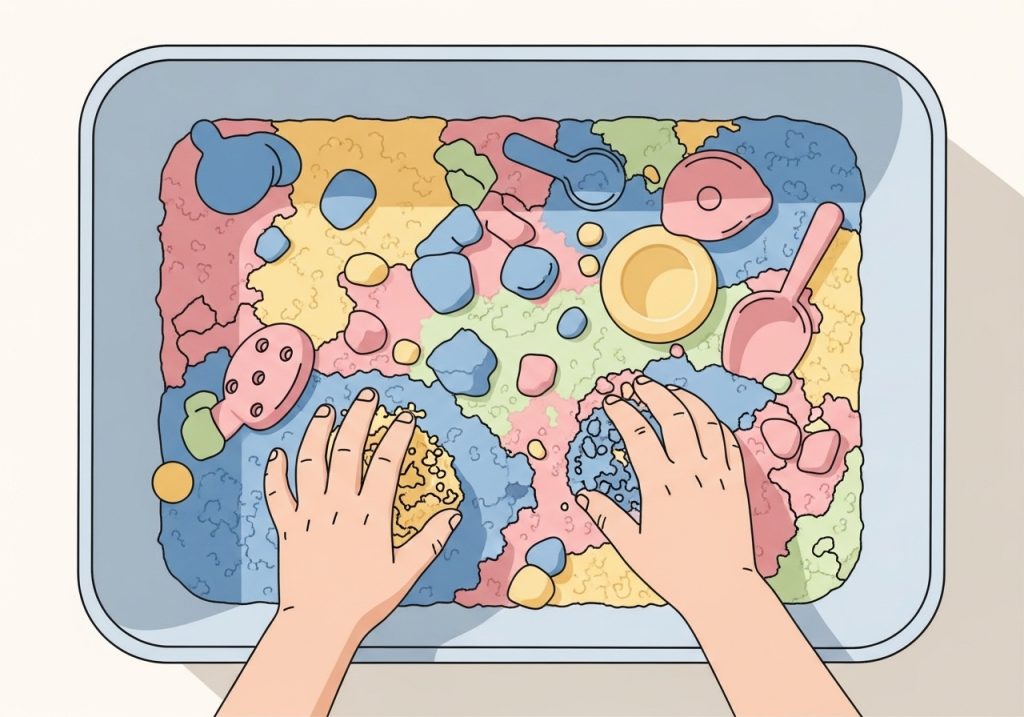
- Sensory Bins: Fill a container with materials like dry rice, beans, sand, or water beads for the child to scoop, pour, and explore with their hands.
- Messy Play: Encourage play with materials like play-doh, kinetic sand, shaving cream, or finger paint.
- Fidget Tools: Provide a variety of small, handheld tools with different textures that can be used discreetly during seated activities.
For Children Sensitive to Touch
- Deep Pressure: Firm pressure is often more tolerable and calming than light touch. Offer firm hugs, rolling a therapy ball over the child’s back and legs, or wrapping them snugly in a blanket.
- Tools for Messy Play: Allow the child to engage with tactile materials using tools like paintbrushes, spoons, or tongs to reduce direct contact.
- Texture Exploration: Create a “touch board” with different fabric swatches (e.g., fleece, corduroy, satin) to explore in a non-demanding way.
A Sample Schedule with Sensory Diet Examples
The most effective sensory diets are integrated seamlessly into a child’s existing routine. The key is consistency. Here is a sample schedule showing how different activities can be incorporated throughout the day. These ideas can be modified and used when creating structured learning experiences or developing specific lesson plans to support a child’s needs.
Morning Routine (Getting Ready for the Day)
- Wake-Up: Start the day with deep pressure by giving firm hugs or gently rolling the child up in their blanket like a “burrito.”
- Breakfast: Offer crunchy (apples, cereal) or chewy (bagels, dried fruit) foods for oral motor input.
- Before Leaving: Have the child jump on a mini-trampoline for 5 minutes or help carry their own backpack to the car.
During the School Day
- Transition Times: Before moving to a new activity, have the child do wall pushes or carry a stack of books for the teacher.
- Seated Work: Use a wiggle cushion or a resistance band tied around the front legs of their chair for them to push against with their feet. Provide a discreet fidget tool.
- Recess: Encourage activities like swinging, climbing on the playground equipment, or hanging from monkey bars.
After School and Evening
- After-School Snack: A thick smoothie through a straw or a crunchy snack like pretzels or carrots can be regulating.
- Playtime: Engage in rough-and-tumble play, ride a bike, or play in a sandbox.
- Bedtime Routine: A warm bath can be calming. Follow it with lotion application using firm strokes and reading a book while wrapped in a weighted blanket.
Provide Oral Motor Activities for Focus and Calming
The mouth is rich with sensory receptors, and oral motor activities can provide intense, organizing proprioceptive input. For children who chew on non-food items like shirt collars or pencils, offering safe alternatives can be highly effective. These activities can help improve focus during demanding tasks and provide a calming outlet.
Practical Oral Motor Ideas
- Chewable Tools: Offer safe, wearable “chewelry” (necklaces or bracelets) or pencil toppers designed for chewing.
- Food and Drink: Incorporate chewy foods (jerky, fruit leather) and crunchy foods (raw vegetables, popcorn) into snacks and meals. Drinking thick liquids like applesauce or yogurt through a straw requires oral motor work.
- Blowing Activities: Blowing bubbles, a pinwheel, or a harmonica are fun ways to provide oral input and can also help with breath control, which supports emotional regulation.
Creating and implementing a sensory diet requires observation, patience, and consistency. The goal is to find the right combination of activities that helps a child feel centered and ready to engage with their world. By thoughtfully integrating these sensory diet examples into daily life, you provide a powerful tool for supporting a child’s development. Always consult with an occupational therapist to create a plan that is safe and perfectly matched to the child’s specific needs.
Ready to bring these sensory strategies to life? The Inspiring OT offers a wide range of practical, evidence-informed resources designed by an experienced occupational therapist. Explore our shop for engaging, low-prep printable activities, sensory toolkits, and guides that simplify your planning and support successful skill growth in every learner. Find the perfect tools to build your sensory diet today.
Leave a Reply