
Eye to hand coordination is the brain’s ability to process visual information and use it to guide the hands in completing a task. This complex cognitive skill allows us to interact with our environment precisely, from writing a name to catching a ball. For occupational therapists, teachers, and parents, understanding how to support this skill is essential for helping learners succeed in academics, play, and daily life activities. It forms the foundation for countless actions we perform automatically every day.
Defining Visual-Motor Integration
The term often used alongside eye to hand coordination is visual-motor integration. They are closely related concepts that describe the communication between the visual system and the motor system. In simple terms, the process works like this: the eyes see a target, the brain interprets this information (like its location, size, and speed), and then the brain directs the hands and body to move accurately in response. Research confirms that these visuomotor skills are critical for coordinated action.
Think of it as a feedback loop. When you reach for a cup of water, your eyes guide your hand. If your hand is slightly off course, your eyes provide instant feedback to your brain, which makes micro-adjustments to your movement until you successfully grasp the cup. This rapid exchange of information is what enables smooth, controlled actions. This process relies on other foundational visual skills, and understanding what visual accommodation is can provide a more complete picture of how the eyes function during near-point tasks like reading and writing.
Why Strong Coordination Matters for Daily and Academic Skills
Effective eye to hand coordination is not just for athletes. It is a fundamental ability that impacts nearly every part of a child’s day. When these skills are well-developed, learners can participate more independently and confidently in a variety of settings.
Academic Performance
In the classroom, strong visual-motor skills are directly linked to success. Many academic tasks require a child to translate what they see into a physical action. For example, a student must see a letter, process its shape, and then use their hand to write it on paper. Challenges in this area can make many school activities frustrating. When a child struggles, it is often helpful to focus on strategies to improve on handwriting that build these foundational motor skills.
- Handwriting: Forming letters, spacing words, and staying on the lines.
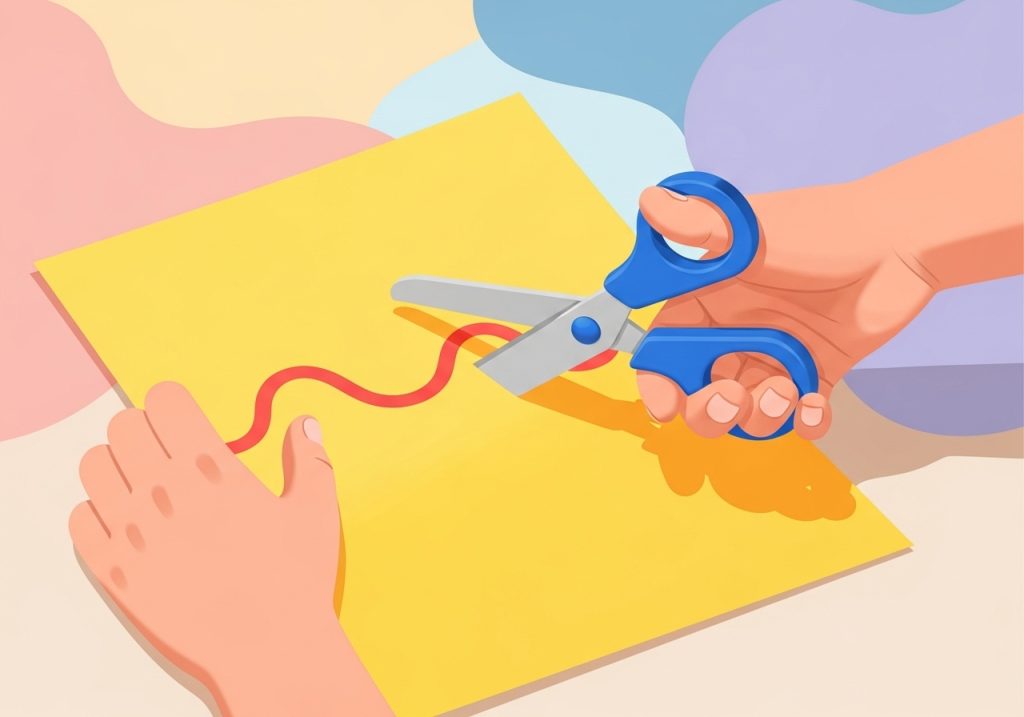
- Cutting: Manipulating scissors to follow a specific path.
- Drawing and Coloring: Staying within boundaries and creating recognizable shapes.
- Using Technology: Operating a mouse or using a stylus on a tablet.
Daily Living Skills
Outside of school, visual-motor skills are just as important for self-care and independence. Simple morning routines are filled with tasks that demand precise coordination.
- Dressing: Managing buttons, zippers, and snaps.
- Eating: Using a fork and spoon without spilling.
- Grooming: Brushing teeth, combing hair, and washing hands.
- Tying Shoes: A complex task that requires both hands to work together while guided by the eyes.
Play and Recreation
Play is a child’s primary occupation, and it is where many of these skills are naturally developed and refined. From building with blocks to playing on the playground, eye-hand coordination is always at work.
- Building: Stacking blocks or connecting construction toys.
- Puzzles: Turning and fitting pieces into their correct spots.
- Ball Skills: Throwing, catching, and hitting a ball.
Recognizing Signs of Difficulty in Learners
When a child struggles with visual-motor integration, the signs can appear in different ways. They may not be immediately obvious, sometimes presenting as messiness, frustration, or avoidance of certain activities. Being aware of these indicators can help you provide support sooner.

Common signs of difficulty include:
- Poor handwriting quality: Letters may be poorly formed, sized incorrectly, or spaced erratically.
- Trouble with scissors: Difficulty staying on a line or manipulating the paper and scissors simultaneously.
- Clumsiness: Frequently spills drinks, knocks things over, or has trouble with tasks like pouring.
- Difficulty with fasteners: Struggles with buttons, zippers, and tying shoes long after peers have mastered these skills.
- Avoidance of fine motor tasks: Shows little interest in drawing, coloring, puzzles, or building with small toys.
- Challenges with ball skills: Has a hard time catching, throwing, or kicking a ball accurately.
Practical Activities to Build Eye to Hand Coordination
The good news is that eye to hand coordination can be improved with consistent practice. The most effective activities are often simple, engaging, and integrated into play. The goal is to provide fun opportunities for the eyes and hands to work together. Many of these activities are also great examples of practical skill development for growing learners.
Here are some effective, low-prep activities you can use in therapy, the classroom, or at home:
- Threading and Lacing: Use large beads and a shoelace for beginners, then progress to smaller beads and string. You can also use punched lacing cards or even dry pasta like penne.
- Playing Catch: Start with a large, lightweight ball or even a balloon. This slows down the action and gives the brain more time to process. Gradually move to smaller or heavier balls as skills improve.
- Building with Blocks: Stacking blocks requires precise placement. Building with interlocking blocks like LEGOs adds the challenge of aligning and connecting pieces.
- Puzzles: Simple knob puzzles are great for young children. As they progress, move to interlocking jigsaw puzzles with more pieces.
- Drawing, Tracing, and Mazes: Activities that require a child to follow a path with a crayon or pencil are excellent for practice. Dot-to-dot worksheets and mazes are particularly effective.
- Pouring and Scooping: Set up a sensory bin with sand, water, or dry beans. Provide various cups, spoons, and scoops for pouring and transferring materials from one container to another.
Choosing Effective Tools and Resources
When selecting materials to support visual-motor development, it is important to choose tools that are both effective and motivating. The best resources meet the learner at their current skill level and provide opportunities for success while gently challenging them to improve. According to general developmental guidelines, skills progress in a predictable sequence, so tools should align with these stages.
Look for the following qualities in worksheets, games, and activities:
- Clear Visual Cues: The task should be easy to understand. For tracing or cutting, paths should be bold and clear. For matching games, images should be distinct.
- Graded Difficulty: The resource should offer variations. For example, a set of mazes might start with simple, wide paths and progress to more complex ones.
- Engaging Theme: A motivating theme, like animals or vehicles, can make repetitive practice more enjoyable.
- Focus on One Skill: A good activity often isolates the target skill. A worksheet focused on tracing straight lines helps a child master that motor plan before moving on to curves.
By focusing on these principles, you can provide activities that build confidence along with coordination. Integrating simple, targeted practice into daily routines and play helps a child develop the eye to hand coordination needed for success across all environments. By incorporating these activities, you provide meaningful support for a learner’s visual-motor development and overall independence.
Looking for ready-to-use, OT-designed resources to support skill building? The Inspiring OT shop offers a wide range of printable activities, worksheets, and guides that make practice engaging and effective. Save time on planning and find the perfect low-prep tools to help your learners thrive. Explore the shop today to discover materials for fine motor, visual motor, and handwriting development.
Leave a Reply