
The first days of school or a new therapy block are critical for building rapport. While standard icebreakers can be helpful, activities designed with skill development in mind offer a dual benefit. They allow you to connect with learners while also gaining valuable insights into their strengths and areas needing support. These getting to know you activities are designed to be fun, engaging, and purposeful for a variety of settings, from the classroom to the clinic. They go beyond simple questions and answers, integrating motor, sensory, and social skills into the process of building a new community. By starting with these dynamic introductions, you set a positive tone and begin gathering important observational data from day one.
Create an ‘All About Me’ Sensory Collage
This activity moves beyond simple drawing or writing by engaging the tactile system. Provide students with a piece of cardstock and a wide variety of textured materials. The goal is for them to create a collage that represents their favorite things, their family, their personality, or anything else about them. They can cut, tear, and glue materials to build their unique creation, which serves as a powerful, non-verbal form of self-expression.
Gather materials such as corrugated paper, sandpaper of different grits, cotton balls, soft yarn, shiny foil, and scraps of fabric like felt, corduroy, or silk. As students handle these items, they are actively engaging with different sensory inputs. This can be calming for some children and informative for all. Once completed, these collages make a wonderful display that celebrates the individuality of each learner in the group.
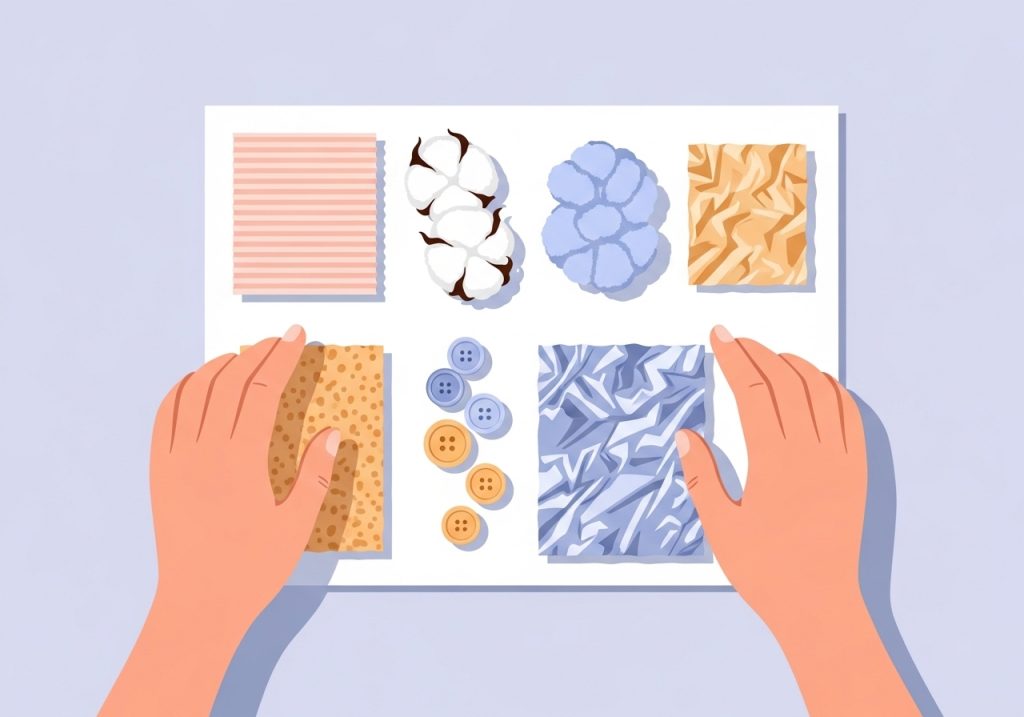
- Skills Targeted: This activity is excellent for fine motor development through tearing, cutting, and gluing. It also supports tactile sensory exploration and processing. On a cognitive level, it requires executive functions like planning which materials to use and organizing them on the page.
- Adaptation Tip: For younger learners or those with significant fine motor challenges, pre-cut some of the more difficult materials like thick cardboard. For older students, encourage them to write a short description of why they chose each texture or image, adding a literacy component to the project. This is a great example of using scaffolding to adjust the task for different ability levels.
Try a ‘Two Truths and a Wish’ Drawing
This is a positive and future-oriented version of the classic ‘two truths and a lie’ game. Instruct each student to fold a paper into three sections. In the first two sections, they draw something true about themselves. Examples could include ‘I have a dog,’ ‘My favorite color is green,’ or ‘I like to swim.’ In the third section, they draw a wish or a goal they have, such as ‘I wish I could fly to the moon’ or ‘I want to learn to ride a bike.’ This activity helps students identify their talents and aspirations. Students can then share their drawings with a partner or the group, who then guess which of the three drawings represents the wish.
The drawing component makes this activity more accessible to students who may struggle with writing or verbal expression. It allows them to communicate ideas visually, offering a different way to share about themselves. The ‘wish’ part provides a wonderful window into a child’s imagination, hopes, and motivations, which can be valuable information for educators and therapists.
- Skills Targeted: This activity directly supports the development of a range of visual motor activities by requiring students to translate an idea into a drawing. It also encourages abstract thinking, social communication skills, and personal self-expression.
- Adaptation Tip: Offer sentence starters for students who need more verbal or written structure, such as writing ‘One truth about me is…’ or ‘My wish is…’ at the top of each section. Students can also label their drawings to incorporate handwriting practice and reinforce the connection between words and images.
Conduct a Skill-Building Interview Swap
Pair students up and give them a simple, structured worksheet with interview questions. This turns a casual chat into a purposeful task. Questions can be fun and lighthearted, such as ‘If you could have any superpower, what would it be?’ or ‘What is your favorite game to play at recess?’. Include questions that provide useful information, like ‘What is one thing you are good at?’ or ‘What is something you want to learn this year?’. One student acts as the interviewer and writes down their partner’s answers. Then, they switch roles. This activity fosters direct interaction and structured conversation in a low-pressure format.
- Skills Targeted: This is a great activity for practicing social pragmatics, including conversational turn-taking, asking questions, and active listening. It also provides meaningful handwriting practice and strengthens listening comprehension as the interviewer must understand and record their partner’s response.
- Adaptation Tip: Create different question sheets based on skill level. For non-writers or early writers, provide a sheet with picture-based choices where they can circle their partner’s answers. For more advanced students, leave blank spaces for them to generate their own follow-up questions, promoting more dynamic conversation. Keeping these completed sheets can be a great addition when creating student portfolio examples to show progress in social and writing skills over time.
Assemble a ‘My Favorites’ Fine Motor Chain
This hands-on activity combines self-expression with crucial fine motor practice. Give each student several strips of colored paper, about 1 inch wide and 8 inches long. On each strip, have them write or draw one of their favorite things—a favorite food, color, animal, book, or activity. Once they have several strips completed, show them how to form a loop with one strip and secure the ends with glue or a stapler. Then, they thread the next strip through the first loop before securing its ends, continuing this process to build a chain.
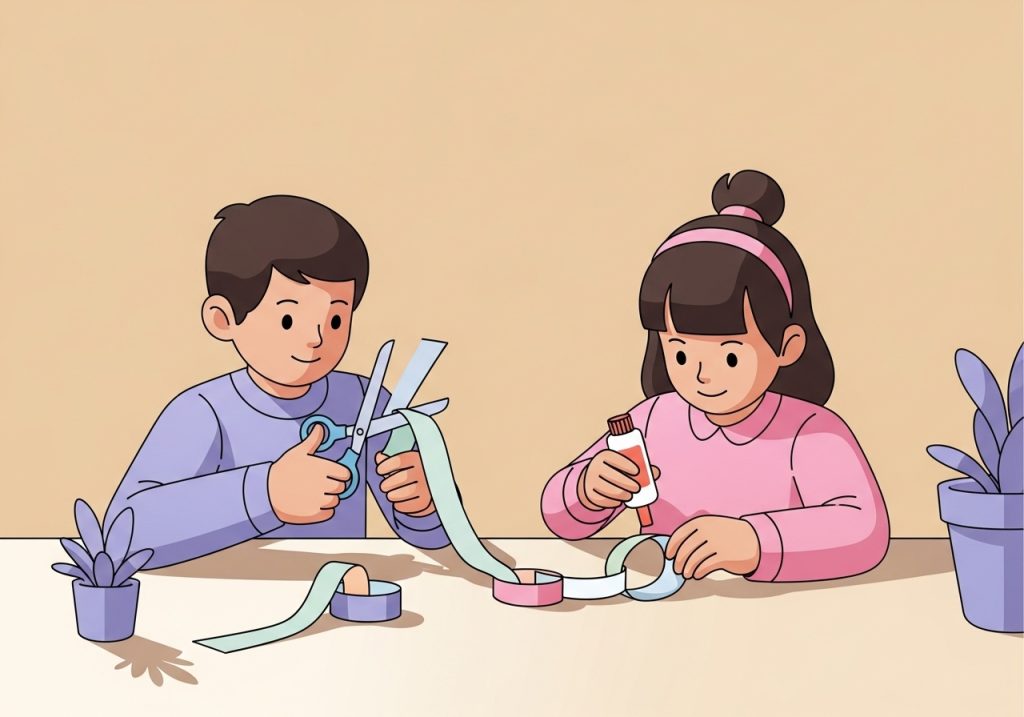
- Skills Targeted: This activity provides repetitive and engaging practice with fine motor skills (writing, cutting, manipulating small objects), hand strengthening (squeezing a glue bottle or stapler), and bilateral coordination (using both hands together to assemble the chain).
- Adaptation Tip: Use wider strips of paper for students who need more space for writing or have difficulty handling smaller items. You can also provide a word bank of ‘favorite’ ideas on the board to help students who have trouble generating ideas independently. For a simpler version, have the child dictate their favorites while the adult writes, so the child can focus solely on the motor task of assembly.
Play Human Bingo with Movement Breaks
Create bingo cards with squares that require students to interact with their peers. Instead of numbers, each square has a description like, ‘Find someone who has a pet,’ ‘Find someone who is wearing blue,’ or ‘Find someone who loves pizza.’ The twist is to add a movement component. As many educators find, adding movement to icebreakers increases engagement. For instance, once a student finds someone who fits a description, they must perform a quick movement task together, like 5 jumping jacks, balancing on one foot for 10 seconds, or doing a silly handshake. The goal is to get a bingo by finding a different person for each square and getting their signature or initials.
- Skills Targeted: This activity encourages social interaction, following directions, and visual scanning of both the card and the environment. The integrated movement breaks are excellent for self-regulation, providing proprioceptive and vestibular sensory input, and improving body awareness.
- Adaptation Tip: Use pictures instead of words on the bingo cards for non-readers or early readers to promote independence. Adjust the movement tasks to match the physical abilities and sensory needs of the group. For students who may be overwhelmed by approaching many different peers, allow them to work with a partner to find people together.
Using Getting to Know You Activities for Informal Assessment
These activities are more than just rapport-builders. They are valuable opportunities for informal observation and assessment. As students work, you can note their fine motor grasp on a pencil or scissors, their ability to follow multi-step directions, their frustration tolerance when a task is challenging, and their social interaction patterns with peers. Does a child initiate conversation easily? Do they struggle to generate ideas? How is their motor planning when cutting or assembling? This information can help guide your planning for therapy sessions or classroom instruction right from the start. By choosing purposeful icebreakers, you can start building meaningful connections and supporting skill development from the very first day.
Looking for more ready-to-use resources to support skill development? The Inspiring OT shop offers a wide range of practical, evidence-informed printables designed by an experienced occupational therapist. Simplify your planning with engaging activities for fine motor, visual motor, handwriting, and sensory processing skills. Explore the collection to find tools that make skill-building effective and accessible for every learner.
Leave a Reply