
Developing strong organizational and categorization skills is fundamental for a student’s success, both in the classroom and in daily life. For occupational therapists, teachers, and parents, finding effective OCS ideas (organization and categorization skills) that are both engaging and practical is a common goal. These skills help learners make sense of information, manage their belongings, and approach tasks in a structured way. Moving beyond simple worksheets, hands-on, functional activities can transform an abstract concept like “organization” into a tangible skill. This guide offers five practical strategies to help build these essential abilities in the learners you support.
Implement Themed Sorting Bins for Hands-On Practice
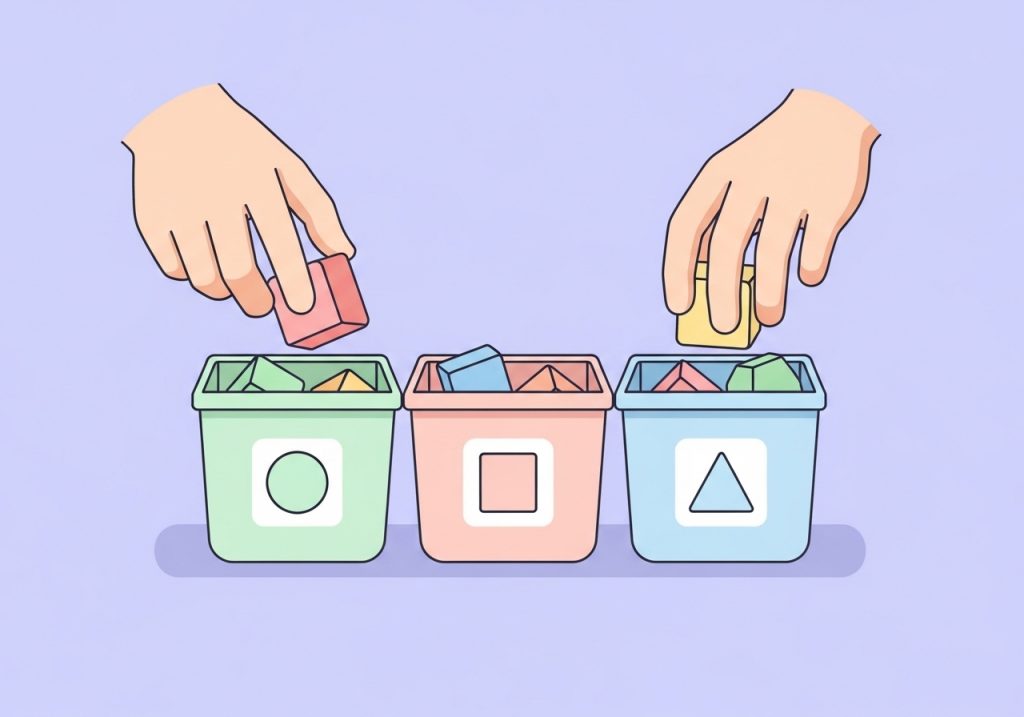
One of the most effective ways to teach categorization is through direct, physical interaction with objects. Themed sorting bins provide a tactile experience that helps learners understand the concept of grouping items based on shared properties. This activity transforms an abstract idea into a concrete task, making it more accessible for many learning styles. It moves beyond memorization to genuine comprehension by allowing students to see, touch, and move objects into their respective categories.
This hands-on approach is not just about getting the right answer. It strengthens visual discrimination, problem-solving, and fine motor control. As students pick up, examine, and place each item, they are actively engaging their minds and bodies. The process encourages them to think critically about attributes like color, shape, size, and function. For therapists and educators, these activities are also easy to adapt for different skill levels and goals. This kind of practical, evidence-based intervention is a staple in successful school-based therapy outcomes.
To get started with sorting bins, you can use a variety of themes and materials. The key is to start simple and gradually increase the complexity as the learner’s skills grow.
- Start with Simple Categories: Begin with two or three very distinct categories. For example, you could use red blocks and blue blocks, or sort plastic animals into “farm animals” and “ocean animals.”
- Provide Clear Containers: Use bins, bowls, or even sections of a divided tray. Labeling the containers with a picture or a word representing the category can provide an extra visual cue.
- Model the Process: Show the learner how to pick up an item, identify its category, and place it in the correct bin. Think aloud as you do it: “This is a cow. A cow lives on a farm, so I’ll put it in the farm bin.”
- Encourage Verbalization: Ask the student to explain why they are placing an item in a particular bin. This reinforces their reasoning and helps you assess their understanding.
As skills improve, you can introduce more complex sorting challenges. Here are a few ideas:
- Sorting by Multiple Attributes: Ask a student to find all the “small, red circles.”
- Sorting by Function: Group items based on what they are used for, such as “things we write with” versus “things we cut with.”
- Sorting by Material: Categorize objects made of wood, plastic, or metal.
This activity also offers a wonderful opportunity to reinforce fine motor skills as children grasp and release various objects.
Develop Visual Schedules to Structure Routines
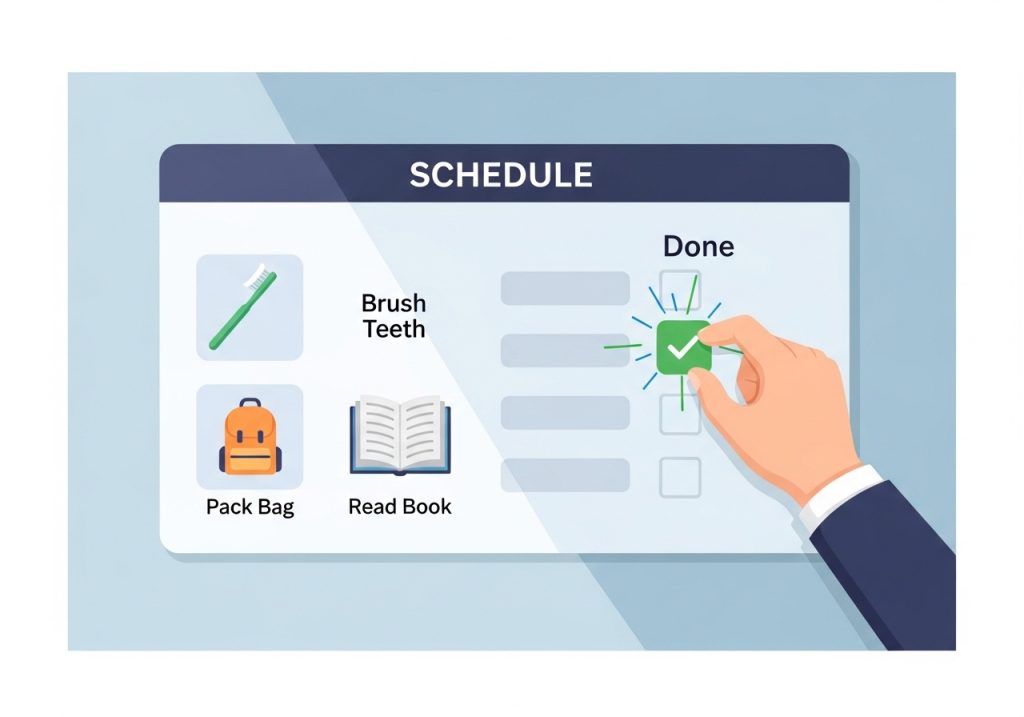
Organization is not just about physical objects; it is also about organizing time and actions. Visual schedules are powerful tools that provide a clear, predictable sequence of events. For many learners, especially those who struggle with transitions, executive functioning, or anxiety, seeing what is coming next can make a significant difference. A visual schedule breaks down a routine, a day, or a complex task into manageable, sequential steps.
By using images, icons, or words to represent each activity, you make the concept of time visible and concrete. This externalizes the organizational process, reducing the cognitive load required to remember what to do next. It promotes independence, as the learner can refer to the schedule themselves instead of relying on verbal prompts. Over time, this consistent use of structured routines helps internalize sequencing skills. Occupational therapy practice often emphasizes using evidence-based tools like visual aids to support participation in daily activities.
Creating and implementing a visual schedule can be straightforward. The format can range from a simple “First/Then” board to a full-day schedule strip.
- Choose the Right Format: Consider the learner’s needs. A younger child might benefit from a schedule with large, clear photos of the actual activities. An older student might prefer a checklist with words or simple icons.
- Involve the Learner: Whenever possible, have the student help create the schedule. This gives them a sense of ownership and helps them understand how it works.
- Introduce it Consistently: Place the schedule in a visible, accessible location. Refer to it consistently at the beginning of a routine and during transitions. For example, say, “Let’s check your schedule. We just finished reading, so what’s next?”
- Include a “Finished” Component: Provide a way for the learner to mark a task as complete. This could be moving the picture to a “finished” envelope, turning the card over, or checking it off a list. This provides a clear sense of accomplishment.
You can use visual schedules for many different purposes, such as daily routines (morning, bedtime), classroom work periods (circle time, math, art), or breaking down a single task like getting dressed or brushing teeth. For individuals with specific needs, using a visual schedule for autism can be an especially effective strategy for promoting predictability and reducing stress.
Play ‘What Belongs?’ Games to Boost Critical Thinking
Turning skill-building into a game is a proven way to increase engagement and motivation. “What Belongs?” is a simple concept that directly targets categorization and logical reasoning. The game can be played in many formats, from printable worksheets to interactive digital activities or using a collection of physical objects. The basic premise involves presenting a group of items where all but one share a common characteristic. The learner’s task is to identify the item that does not belong and explain why.
This activity encourages students to look beyond surface-level appearances and analyze the underlying attributes that link objects together. It challenges them to identify the “rule” or category that defines the group. This process sharpens deductive reasoning and builds flexible thinking, as some objects could belong to multiple categories. It also strengthens vocabulary as students learn to name categories and describe the properties of objects.
Here are a few ways to structure a “What Belongs?” game:
- Use Picture Cards: Create or find sets of picture cards. In each set of four or five cards, include one that doesn’t fit the category. For example, a set could include a dog, a cat, a fish, and a car. The student would identify the car as the one that doesn’t belong because the others are all animals.
- Worksheets: Design simple worksheets where a row of pictures or words contains one outlier. The student can circle or cross out the item that does not belong.
- Object-Based Play: Lay out a collection of real items on a table or floor. For instance, place a spoon, a fork, a crayon, and a knife. Ask the learner to find the one used for coloring, not for eating.
To deepen the learning, always follow up with questions. Ask “Why doesn’t that one belong?” or “What is the name of the group for the other items?” This encourages them to articulate their thought process and solidifies their understanding of the category.
Incorporate Digital Filing into Your OCS Ideas
As students get older, organizational skills must extend into the digital world. Teaching digital organization is just as important as teaching how to organize a backpack or a binder. Introducing simple digital filing tasks can help bridge this gap, preparing students for the demands of modern academic and professional environments. These activities are particularly useful for learners who are motivated by technology.
Digital organization involves the same core principles as physical organization: creating logical categories, grouping similar items, and using clear labels. Practicing these skills on a computer or tablet can help make these concepts feel relevant and modern. It also provides an opportunity to work on computer literacy skills, such as using a mouse or trackpad, clicking and dragging, and navigating folder structures.
Here are some OCS ideas for the digital space:
- Photo Sorting: Create a folder with a mix of digital photos. Ask the student to create subfolders (e.g., “Animals,” “People,” “Places”) and sort the images accordingly.
- Document Filing: Use simple, clearly named documents (e.g., “My Favorite Foods,” “Book Report,” “Math Homework”). Have the student create folders for different subjects (“Reading,” “Math”) and move the documents into the correct place.
- Icon Sorting Games: Many educational apps and websites offer simple drag-and-drop games where users sort icons or images into digital “buckets” or categories. These can be a great, low-pressure way to practice.
The goal is to show that the principles of organization are universal. Whether sorting blocks into bins or files into folders, the underlying skill of identifying, categorizing, and structuring information remains the same.
Try a ‘Junk Drawer’ Organization Challenge
One of the best ways to teach a skill is to demonstrate its real-world application. A “junk drawer” challenge does exactly that. It takes the abstract concept of categorization and applies it to a messy, functional, and relatable problem. This activity involves giving a learner a mixed collection of common household or classroom items and asking them to sort them into a divided tray or a set of small containers.
This challenge is powerful because it requires the student to create their own categories from scratch. Unlike pre-defined sorting tasks, this activity demands higher-level thinking. The learner must analyze the items, identify potential grouping criteria (function, size, material), and decide on a system that makes sense. It’s a practical exercise in problem-solving and executive function. By tackling a tangible mess and creating order, students gain a clear sense of accomplishment and see the immediate benefits of being organized.
Setting up the challenge is simple:
- Gather the Materials: Find a box or tray and fill it with a random assortment of small items. Good candidates include paper clips, rubber bands, crayons, erasers, binder clips, small toys, buttons, and coins.
- Provide the Tools: Offer an empty, divided organizer, an ice cube tray, or a few small bowls to serve as the sorting containers.
- Present the Challenge: Explain the task: “Our goal is to organize this messy drawer so we can find things easily. How should we group these items?”
- Guide, Don’t Dictate: Let the student take the lead. If they get stuck, ask open-ended questions like, “What do you notice about these two items?” or “Can you find any other things that are used for writing?” This helps them develop their own organizational logic.
This activity beautifully illustrates how organization skills are part of the ability to manage everyday tasks. It is a perfect example of how to build foundational pre-occupational skills that are necessary for independence in all areas of life.
Helping learners develop strong organization and categorization skills is a process that benefits from creative, hands-on, and functional ideas. By moving beyond worksheets and incorporating activities like themed sorting, visual schedules, and real-world challenges, you can make learning meaningful and effective. These strategies not only build specific skills but also foster independence, confidence, and critical thinking that will support students across all settings.
Ready to put these ideas into practice? For ready-to-use, therapist-designed printable activities, assessments, and guides that make skill-building engaging, explore the resources at The Inspiring OT. Our low-prep materials are crafted to support therapists, teachers, and parents in helping learners succeed. Visit The Inspiring OT shop to find tools that simplify your planning and enhance skill growth.
Leave a Reply