
Pre occupational skills are the foundational abilities children develop that enable them to perform meaningful daily activities, from getting dressed to writing their name. Before a child can participate in their “occupations” like play, learning, and self-care, they must first build a base of essential motor, sensory, and cognitive skills. Understanding and nurturing these abilities is a key part of supporting a child’s overall development.
Defining Pre Occupational Skills in Child Development
Think of pre occupational skills as the groundwork for a house. Without a solid foundation, it is difficult to build the structure that comes next. These skills are not the final tasks themselves, but the underlying components required to complete them successfully. While the term “pre-occupational therapy” often refers to a pre-professional university program, in a developmental context, it describes the skills that precede functional occupations. For example, holding a crayon and making scribbles is a pre occupational skill that eventually leads to the occupation of handwriting. Similarly, learning to use a spoon to scoop is a foundational step toward the occupation of self-feeding. These abilities develop through play and everyday experiences, forming the basis for independence and participation in more complex life activities.
Why These Foundational Skills Matter for Learning and Life
Developing a strong set of foundational skills has a direct impact on a child’s ability to succeed in various environments. In a classroom, skills like sitting still, holding a pencil, and cutting with scissors are necessary for academic tasks. At home, abilities like buttoning a shirt, pouring juice, and brushing teeth contribute to a child’s sense of autonomy and confidence. Strong pre occupational skills help children interact with their environment effectively, manage their emotions, and engage in social play with peers. When these underlying abilities are solid, children are better equipped to learn new things, follow multi-step directions, and navigate the physical and social demands of their world.
Key Areas of Pre Occupational Skill Development
Pre occupational skills can be organized into several key categories. While they often overlap and work together, focusing on each area helps identify specific strengths and areas for growth.
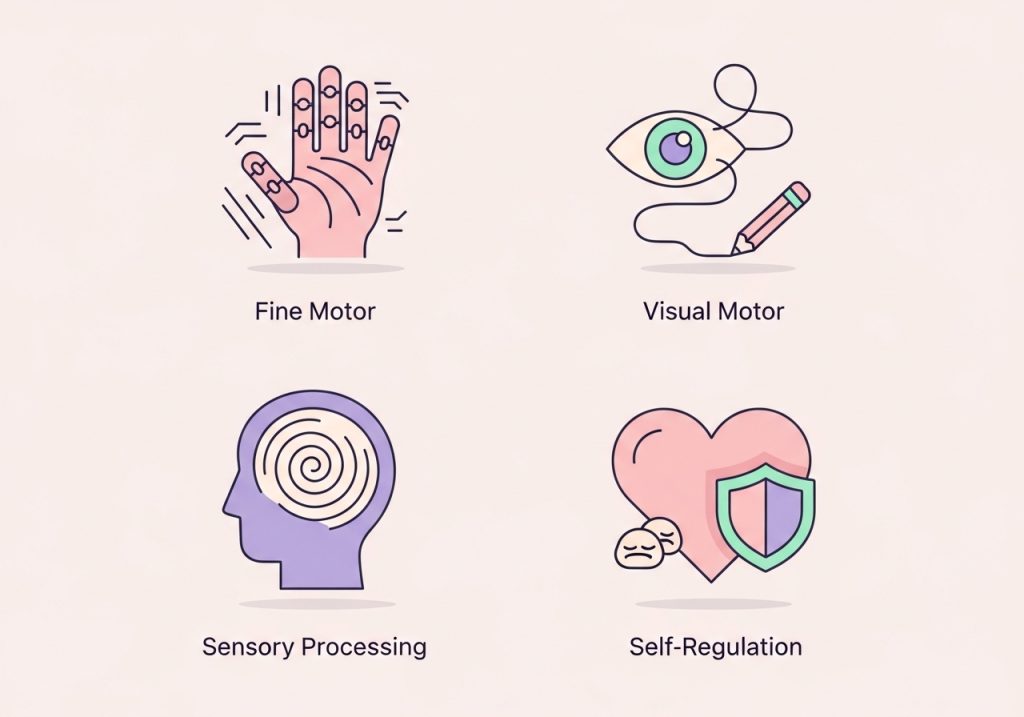
Fine Motor Skills
These involve the small muscles in the hands and fingers. They are essential for grasping, manipulating objects, and tasks requiring precision. There are many simple, play-based strategies to improve fine motor skills in preschoolers that can be integrated into daily routines.
- Examples: Picking up small objects, stacking blocks, using zippers, holding utensils.
Visual Motor Integration
Often called hand-eye coordination, this is the ability to interpret visual information and respond with a coordinated motor action. It is critical for handwriting, drawing, and catching a ball.
- Examples: Copying shapes, completing simple puzzles, stringing beads.
Sensory Processing
This refers to the brain’s ability to receive, interpret, and respond to information from the senses (touch, sight, sound, movement). Effective sensory processing helps a child stay calm, focused, and engaged.
- Examples: Tolerating different textures of food or clothing, managing background noise, enjoying playground movement.
Self-Regulation
This is the ability to manage emotions, behavior, and body movements in different situations. It includes controlling impulses, paying attention, and transitioning between activities calmly.
- Examples: Waiting for a turn, following directions, calming down after becoming upset.
Simple Activities to Support Skill Growth
Integrating skill-building into a child’s day does not require complicated setups. Many effective activities use common household items and can be incorporated directly into playtime and daily routines. The goal is to provide fun, engaging opportunities for practice.
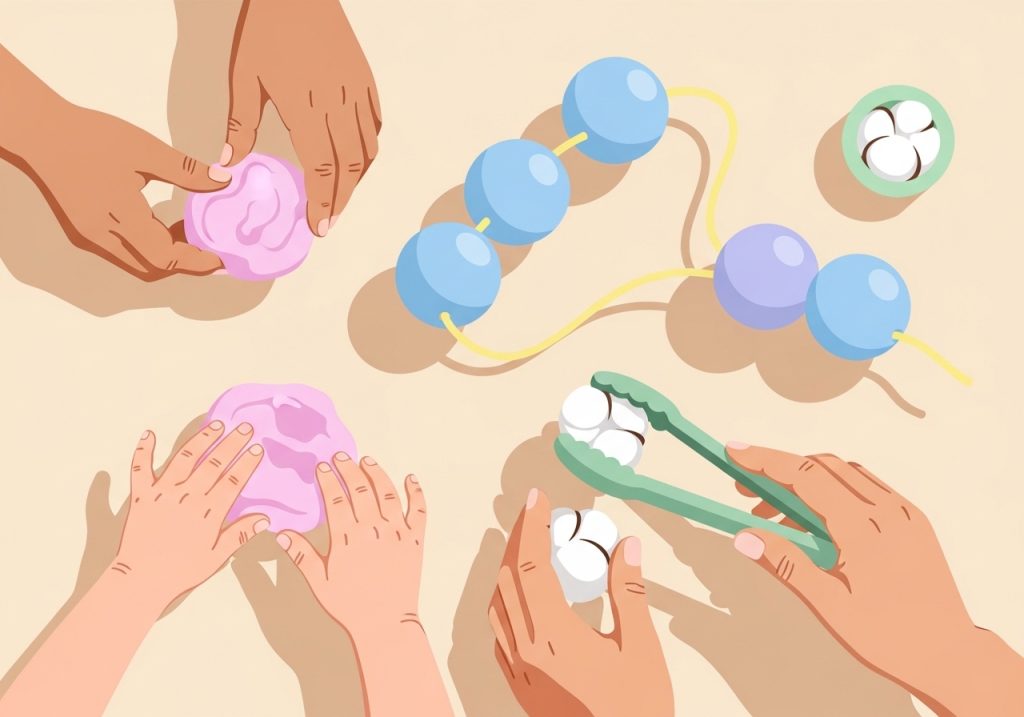
- Play-Doh and Clay: Squeezing, rolling, and pinching helps build hand strength and develop important fine-motor skills like those used for writing.
- Using Tongs or Clothespins: Have children pick up cotton balls, pom-poms, or small toys to develop pincer grasp.
- Stringing and Lacing: Use large beads, pasta, or lacing cards to improve hand-eye coordination.
- Drawing and Coloring: Offer various tools like chalk, crayons, and finger paints to encourage scribbling and shape formation. This is excellent foundational practice to improve handwriting over time.
- Simple Puzzles: Knob puzzles and chunky puzzles help with visual perception and problem-solving.
- Sensory Bins: Fill a container with materials like rice, sand, or water and hide small objects for the child to find. This supports tactile exploration.
Identifying Skill Gaps and Next Steps
Observing a child during play and daily tasks is the best way to see their skills in action. You might notice a child consistently struggles with certain activities, such as avoiding messy play, having difficulty with fasteners on clothing, or appearing clumsy compared to their peers. While every child develops at their own pace, persistent challenges in these foundational areas may indicate a need for extra support.
If you have concerns about a child’s development of pre occupational skills, consulting with an occupational therapist is a helpful next step. An OT is a licensed healthcare professional who can perform an assessment to identify specific skill gaps and create a tailored plan of activities and strategies to promote growth. According to the U.S. Bureau of Labor Statistics, occupational therapists help people participate in the things they want and need to do through the therapeutic use of everyday activities. Early support can make a significant difference in building a child’s confidence and ability to participate fully in their daily life.
Ready to support skill development with engaging, easy-to-use resources? The Inspiring OT offers a collection of printable activities, worksheets, and guides created by a licensed occupational therapist. Designed for therapists, educators, and parents, these tools make it simple to reinforce fine motor, visual motor, and self-regulation skills in a fun and effective way. Explore the shop to find practical, low-prep materials that help learners thrive.
Leave a Reply