
Social skills training for autism is a structured therapeutic approach designed to help individuals learn and practice the skills needed to understand and navigate social interactions. This training focuses on providing tools and strategies that can build confidence, foster connections, and improve participation in social environments like school, work, and the community. By breaking down complex social behaviors into understandable parts, this approach helps make the social world more predictable and accessible.
What Is Social Skills Training for Autism?
Social skills training provides explicit instruction on the unwritten rules of social communication that many people learn implicitly. For autistic individuals, these nuances can be confusing. The goal is not to change a person’s personality but to equip them with skills to achieve their social goals, whether that means making a friend, participating in a group conversation, or collaborating on a project.
This training can take place in various settings. It might be part of a one-on-one therapy session with an occupational therapist or a speech pathologist. It can also happen in small groups where participants can practice skills with peers in a supportive context. The content is tailored to the individual’s age, abilities, and specific challenges, making it a highly personalized intervention.
Core Social Skills Addressed in Training
Social skills are multifaceted. Training programs typically focus on a range of competencies that are essential for successful interactions. These are often broken down into smaller, manageable components.
- Conversational Skills: This includes learning how to initiate, maintain, and end a conversation appropriately. It also covers skills like asking questions, staying on topic, and practicing conversational turn-taking.
- Understanding Nonverbal Cues: A significant portion of communication is nonverbal. Training helps individuals recognize and interpret body language, facial expressions, and tone of voice.
- Perspective-Taking: This involves developing the ability to understand a situation from another person’s point of view. It is a key skill for developing empathy and responding appropriately in social situations.
- Problem-Solving and Conflict Resolution: Training can provide strategies for handling disagreements, compromising, and navigating social conflicts constructively.
- Emotional Regulation: This area focuses on identifying one’s own emotions and learning strategies to manage them during social interactions, which can reduce anxiety and improve engagement.
Evidence-Based Methods for Teaching Social Skills
Therapists and educators use a variety of proven techniques to teach social skills. A comprehensive approach often combines several methods to match the learner’s style and needs. Social skills training is a focused intervention that has been identified as an evidence-based practice for autistic individuals, supported by dozens of research studies.
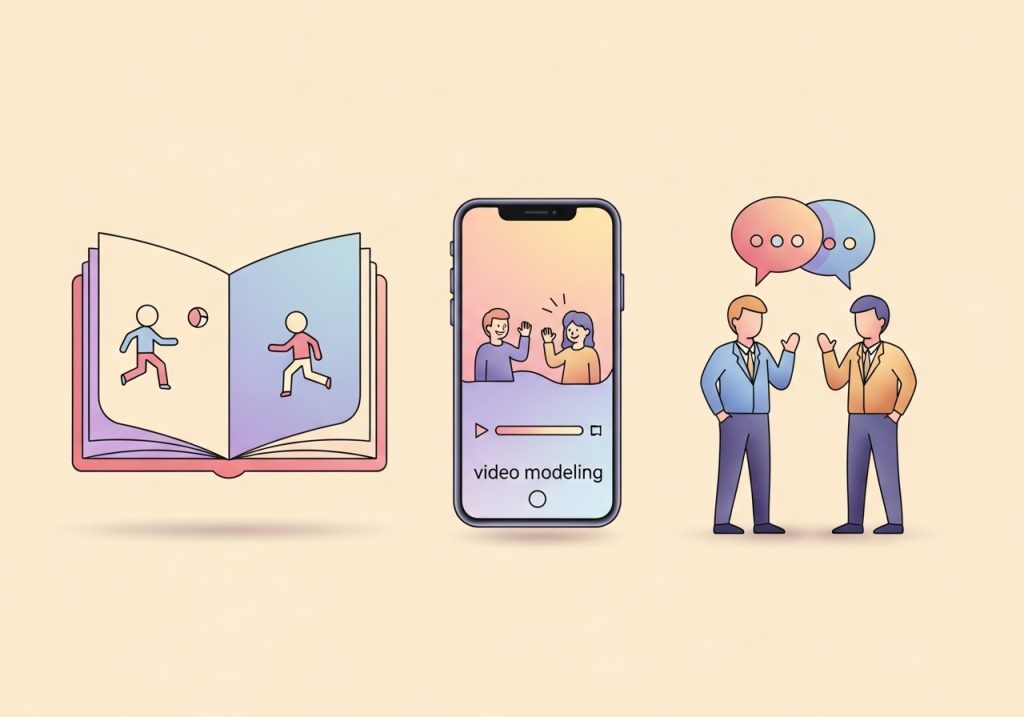
Social Stories
Social stories are short, descriptive narratives that explain a specific social situation, including what to expect and what a typical response might be. Created from the individual’s perspective, they can reduce anxiety by making new or confusing situations more predictable. For example, a story could describe the steps of joining a game at recess, outlining how to approach a group, what to say, and how to handle different responses.
Video Modeling
This technique involves watching videos of people successfully demonstrating a target social skill. The learner can watch the video multiple times to see the behavior in action. Seeing peers or adults model behaviors like asking for help or giving a compliment can be a powerful learning tool. The visual format is often engaging and helps make abstract social concepts more concrete.
Role-Playing
Role-playing offers a safe and structured environment to practice social interactions. A therapist, teacher, or parent can act out a scenario with the individual, providing immediate feedback and coaching. This allows for repeated practice without the pressure of a real-life situation. For instance, a learner could practice ordering food at a restaurant or asking a classmate to work on a project together.
How to Support Social Skill Development in Daily Routines
Consistency is vital for skill development. Integrating practice into everyday life helps generalize skills from the therapy room to the real world. Parents, caregivers, and educators all have an important role.
- In the Classroom: Teachers can use cooperative learning groups where students must work together toward a common goal. They can also provide structured opportunities for social interaction during less formal times, such as lunch or recess, with clear expectations.
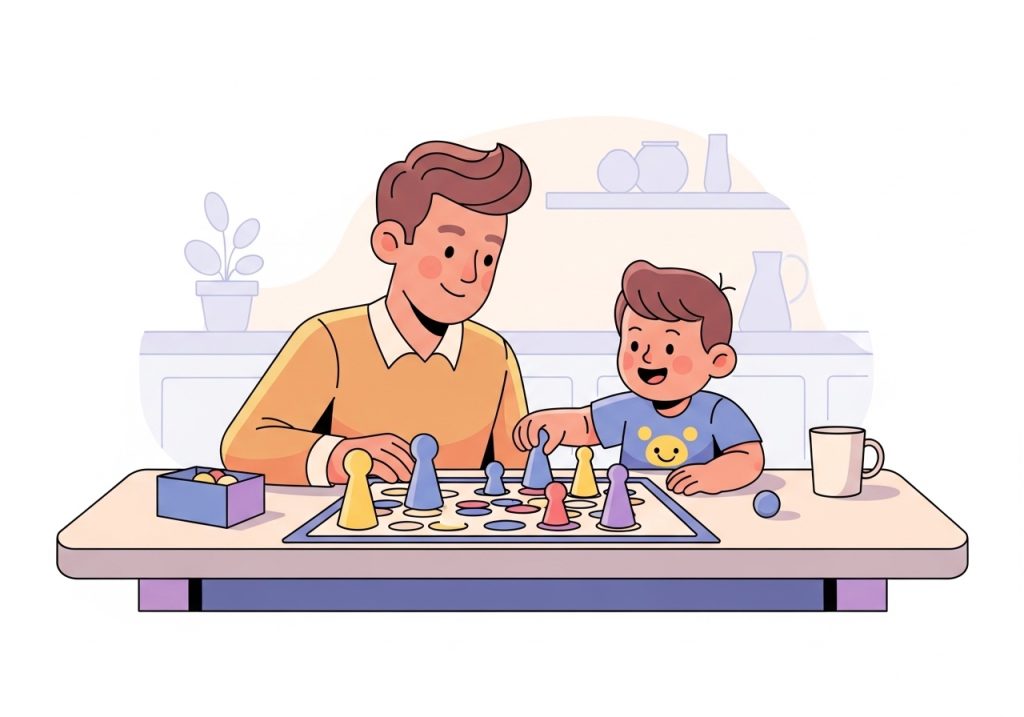
- At Home: Family mealtimes are a natural setting for practicing conversation. Playing board games can teach turn-taking, winning and losing gracefully, and following rules. Parents can also narrate their own social thinking out loud, for example, saying, “Our neighbor looks busy, so I will wait to ask my question.”
- In Therapy: An occupational therapist can help identify underlying sensory or emotional regulation challenges that impact social participation. They can design activities that build foundational skills, such as self-awareness and frustration tolerance, which are necessary for positive social interactions.
Choosing the Right Social Skills Program or Resources
When selecting a social skills program, group, or resource, it is important to consider the individual’s specific needs. Look for programs that are evidence-based and run by qualified professionals such as OTs, speech-language pathologists, or psychologists. The environment should feel safe and supportive. The best approaches respect neurodiversity and focus on building skills that the individual wants to learn to achieve their personal goals. The goals should align with the wide range of social skills that can be targeted for development.
Printable worksheets, activity guides, and checklists can be valuable tools for reinforcing concepts taught in therapy or at school. These resources can break down skills into visual, easy-to-follow steps and provide structured practice opportunities. Effective social skills support is individualized, consistent, and integrated into daily life. By using a combination of structured methods and everyday practice, you can provide meaningful support that helps autistic individuals build confidence and form connections.
Ready to support skill development with practical, engaging materials? The Inspiring OT offers a wide variety of downloadable activities and guides designed by an experienced occupational therapist. Explore our low-prep, evidence-informed resources to make learning effective and accessible for your students, clients, or children. Visit The Inspiring OT shop today to find the perfect tools for your needs.
Leave a Reply