
The primary Zones of Regulation book is a comprehensive curriculum for educators and therapists called The Zones of Regulation, not a single storybook for children. This curriculum provides the foundational framework and lesson plans for teaching self-regulation, which can then be supplemented with various picture books that explore similar emotional themes. Understanding this distinction is key to effectively implementing the program and finding the right resources for your learners.
What is the Zones of Regulation Framework?
The Zones of Regulation is a cognitive-behavioral approach created by occupational therapist Leah Kuypers to help individuals learn to manage their emotions and sensory needs. The framework uses a simple, color-coded system to help people identify their feelings and level of alertness, creating a shared vocabulary that is easy for children and adults to understand. The goal is to provide strategies to help people move between zones and find the appropriate state for a given situation.
The system is organized into four distinct zones:
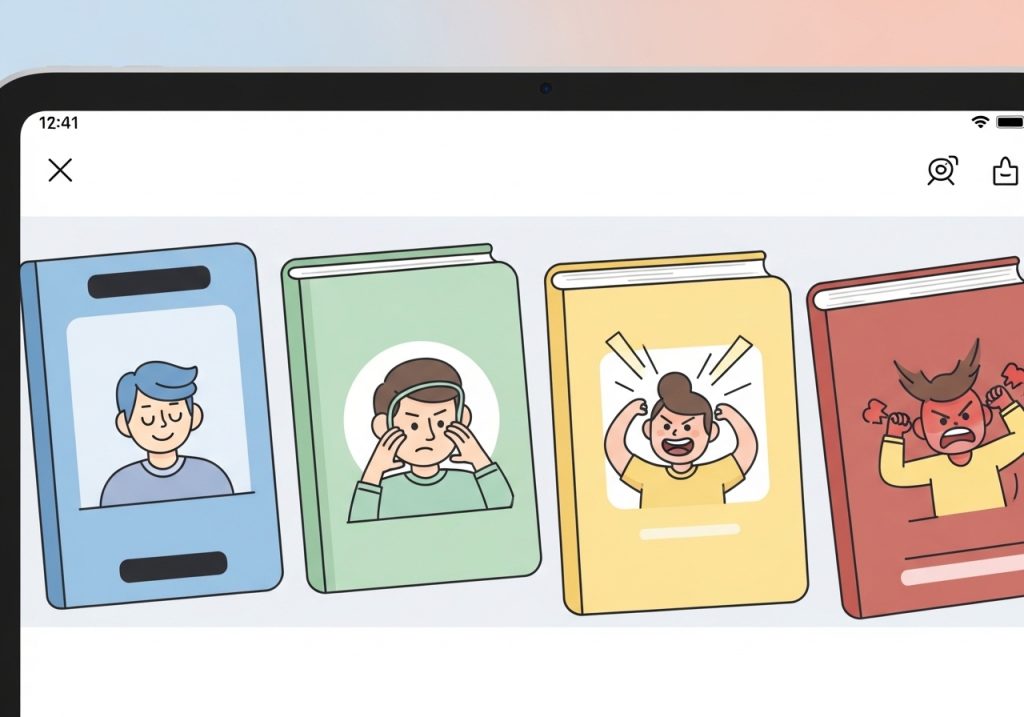
- The Blue Zone: Represents low states of alertness and down feelings, such as when one feels tired, sad, sick, or bored.
- The Green Zone: Describes a regulated state of alertness. A person in the Green Zone may feel happy, calm, focused, or content. This is the optimal zone for learning and social interaction.
- The Yellow Zone: Characterizes a heightened state of alertness and elevated emotions. A person may be experiencing stress, frustration, anxiety, excitement, or nervousness.
- The Red Zone: Describes extremely heightened states of alertness and intense emotions. Here, a person might be feeling anger, rage, terror, or elation and is likely experiencing a loss of control.
By categorizing feelings in this way, the framework helps make the abstract concept of emotional states more concrete. It provides a non-judgmental system for understanding that all zones are acceptable, but it also equips individuals with the tools needed to manage their zone to meet environmental demands. This structured approach is foundational for developing self-awareness and emotional control, which is often a key area where an OT helps children manage sensory input and emotional responses.
The Core Zones of Regulation Book and Curriculum
When professionals refer to the official Zones of Regulation book, they are talking about the curriculum guide written by Leah Kuypers. This book is not a narrative story for a child to read. Instead, it is a detailed manual for adults—therapists, teachers, and caregivers—who are teaching the concepts. Published by Social Thinking, this guide is filled with lesson plans, reproducible activities, and educational materials designed to be delivered through direct instruction.
The curriculum itself is a systematic program that builds skills progressively. It begins with teaching the core vocabulary of the four zones and then moves into more complex topics like identifying triggers, understanding different perspectives, and selecting appropriate regulation tools. According to the official publisher, Social Thinking, the curriculum provides a road map with thoughtfully designed lessons to empower students to develop self-regulatory abilities. It is a comprehensive resource that provides the structure and content needed to teach the entire framework from start to finish.
It’s important to approach this book as a professional resource. It gives you the “why” and “how” behind the framework, so you can teach it effectively rather than just showing a child a color chart. The curriculum ensures the concepts are taught with consistency and depth, building a solid foundation for emotional intelligence.
Complementary Storybooks for Teaching the Zones
While the curriculum is the instructional core, storybooks are an excellent way to reinforce the concepts in a more engaging and relatable format. Picture books bring the zones to life through characters and narratives that children can connect with. A story can illustrate what it looks like when a character is in the Yellow Zone because they are frustrated with a puzzle, or how they used a calming strategy to return to the Green Zone.
There is no single “official” storybook series created by the author of the framework. However, there are many excellent books that align with its principles. These stories can help children:
- Visualize Emotions: Illustrations provide visual cues for different feelings and body language.
- Build Empathy: Seeing characters navigate different zones helps children understand the feelings of others.
- Normalize Feelings: Stories show that it is okay to feel sad, angry, or overly excited at times.
- Learn Coping Strategies: Characters can model problem-solving and the use of regulation tools in a non-threatening context.
When a child sees a beloved character experience a big feeling and successfully manage it, the lesson becomes more powerful and memorable. Using stories turns a clinical concept into a shared experience, opening the door for meaningful conversations about feelings.
How to Select a Helpful Book for Your Learner
Choosing the right book to supplement your Zones of Regulation instruction can make a significant difference. Not every book about feelings will be a good fit. Look for stories that actively support the framework’s goals. Here are a few criteria to consider when selecting a book:
- Clear Emotional Arcs: Does the story show a character moving through different emotional states? A book that shows a character becoming frustrated (Yellow Zone) and then finding a way to calm down (Green Zone) is highly effective.
- Explicitly Named Feelings: Books that use a rich vocabulary for emotions (e.g., “annoyed,” “worried,” “delighted”) help expand a child’s emotional literacy beyond just “mad” or “happy.”
- Relatable Scenarios: The problems faced by the characters should be familiar to children, such as difficulty sharing, feeling left out, or being anxious about a new experience.
- Focus on Strategies: The best books don’t just show the emotion; they show the character doing something about it. Does the character take deep breaths, find a quiet space, or ask for help? This modeling of coping skills is invaluable.
- Age-Appropriate Content: Ensure the language, illustrations, and complexity of the plot are suitable for the developmental level of your learner. A book for a preschooler will look very different from one for a third-grader.
By carefully selecting books with these qualities, you can create a library of resources that seamlessly extends your lessons and helps learners generalize their skills.
Integrating Books with Practical Regulation Strategies
The true value of using a storybook comes from connecting it to real-world skills. A book should not be a passive experience but a catalyst for discussion and practice. It provides the context to introduce and experiment with different coping tools and self-regulation strategies.
Here’s how you can actively integrate a book with practical application:
- Pause and Discuss: As you read, stop and ask questions like, “What zone do you think the character is in right now? How can you tell?” or “What do you think they could do to feel better?” This encourages active thinking and perspective-taking.
- Connect to Personal Experiences: Help the learner make connections to their own life. You might ask, “Have you ever felt worried like the squirrel in the story? What did it feel like in your body?”
- Introduce a “Toolbox”: After reading about a character who used a strategy (like counting to ten), you can introduce that tool to the child’s own “toolbox.” This makes the strategy tangible. You can practice it together in a calm moment. Developing self-regulation is foundational for effective social skills training.
- Role-Play Scenarios: Use the story as a script for role-playing. Act out the problem and practice using different tools to solve it. This helps build muscle memory for using a strategy when a real-life challenge arises.
By pairing a narrative with hands-on activities, you bridge the gap between understanding a concept and applying it. The story provides the “what,” and your guided practice provides the “how.” For many children, this includes choosing from a variety of sensory tools and strategies that help them regulate their bodies and emotions.
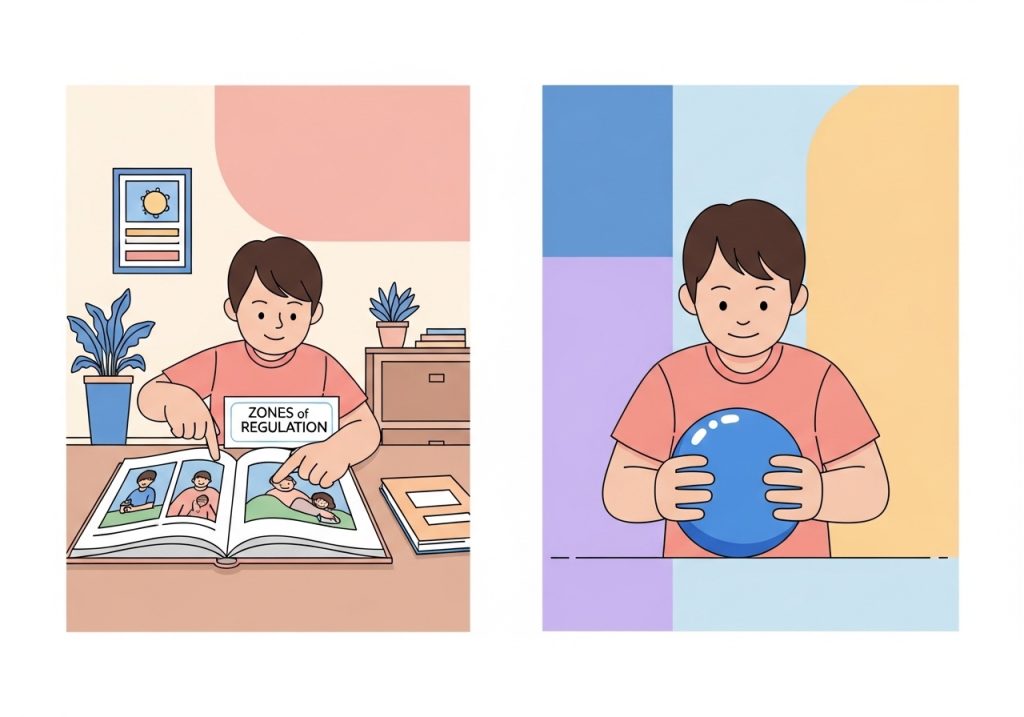
Ultimately, the goal is not just to identify zones but to build a toolkit of effective strategies. The combination of the core curriculum and well-chosen storybooks creates a rich, multi-layered learning experience that empowers children with the skills they need to navigate their emotional world successfully.
The Zones of Regulation curriculum is the essential starting point for any professional or parent looking to teach the framework. By pairing its structured lessons with engaging, thoughtfully selected storybooks, you can make these critical self-regulation concepts more accessible, memorable, and applicable to a child’s everyday life. This combined approach transforms a theoretical framework into a practical, lifelong skill.
Ready to bring these concepts to life? The Inspiring OT offers a wide range of practical, low-prep printable activities and resources designed by an occupational therapist to support skill development. Explore our collection of tools to help learners build their emotional regulation, sensory processing, and fine motor skills. Visit The Inspiring OT shop on Teachers Pay Teachers to find engaging materials that complement your teaching today.
Leave a Reply