
Children who seem to be in constant motion, touching everything in sight, or making loud noises are often communicating a fundamental need. These actions, frequently labeled as disruptive, are often sensory seeking behaviors. They represent a child’s nervous system actively trying to get the input it needs to feel organized, focused, and calm. Understanding the “why” behind these behaviors is the first step toward providing effective support. This guide offers a practical, step-by-step approach for occupational therapists, teachers, and parents to help children who exhibit these common sensory needs.
Step 1: Understand What Sensory Seeking Behaviors Are
At its core, sensory seeking is a response to how the brain processes information from the senses. Every person has a unique sensory profile. Some individuals are highly sensitive to input, while others require much more intense sensory experiences to register information and feel regulated. A child who is a sensory seeker has a high neurological threshold, which means their nervous system needs strong, frequent, or long-lasting sensory input to stay alert and organized.
This isn’t a choice or a sign of misbehavior. It is a brain-based difference. When a child isn’t getting enough of the right kind of input, they will actively seek it out in their environment. The child who can’t stop fidgeting may need more tactile input. The one who loves to crash and jump is likely seeking intense proprioceptive input (the sense of body position and movement). By recognizing these actions as a form of communication, you can shift from managing behavior to meeting a fundamental need.
Step 2: Identify Common Examples of Sensory Seeking
Sensory seeking can look different for every child and can change based on the environment or time of day. However, there are common patterns associated with each sensory system. Learning to spot these signs helps you connect a specific action to an underlying sensory need. This allows you to offer a more targeted and effective replacement activity.
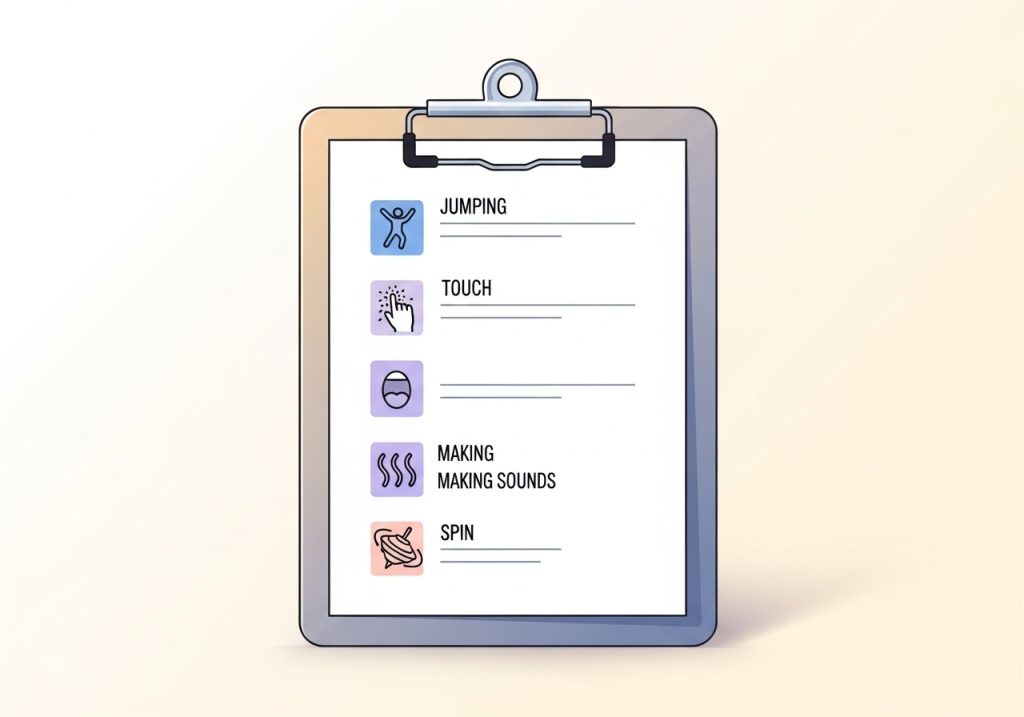
Here are some frequent examples you might observe:
- Proprioceptive (Body Awareness): This system gets input from muscles and joints. A child seeking this input might frequently jump, stomp their feet, crash into furniture or people, push heavy objects, or prefer very tight hugs. They enjoy activities that involve deep pressure and resistance.
- Vestibular (Movement and Balance): This sense is centered in the inner ear. A seeker might love to spin in circles, rock back and forth, swing for long periods, or hang upside down. They often have a high tolerance for movement that might make others feel dizzy.
- Tactile (Touch): A child seeking tactile input might touch everything and everyone around them. They may engage in messy play, fidget with their clothing, or show a preference for specific textures.
- Oral (Mouth): This is a very common area for seeking behavior. Examples include chewing on non-food items like shirt collars, pencils, or fingernails. They may also prefer foods with strong flavors or textures, like crunchy or chewy snacks.
- Auditory (Sound): Seeking auditory input can involve making loud noises with their voice or objects, talking constantly, or enjoying environments with a lot of background noise. They might also listen to music or television at a high volume.
- Visual (Sight): A child might be drawn to bright, flashing lights, spinning objects like fans or wheels, or lining up toys to stare at them.
Step 3: Develop a Proactive Sensory Diet
One of the most effective ways to support sensory seekers is to be proactive. A “sensory diet,” a term coined by OT Patricia Wilbarger, is a personalized plan of activities that provides a child with the sensory input they need throughout the day. Just like a balanced food diet nourishes the body, a sensory diet nourishes the nervous system. The goal is to provide regular, scheduled sensory input so the child feels regulated and is less likely to engage in disruptive or unsafe seeking behaviors.

A sensory diet should be tailored to the individual child’s needs, but it often includes a mix of calming and alerting activities. It’s best designed in collaboration with an occupational therapist who can assess the child’s specific sensory profile.
Components of a Sensory Diet:
- Heavy Work Activities: These activities push or pull against the body, engaging the proprioceptive system. Examples include carrying a stack of books, pushing a cart, wiping down tables, doing animal walks (like bear crawls or crab walks), or kneading dough.
- Movement Breaks: Scheduled breaks for movement can be very helpful. This could involve using a classroom swing, jumping on a mini-trampoline, doing wall push-ups, or simply running around outside for a few minutes.
- Oral Motor Tools: For children who seek oral input, providing safe alternatives is key. This can include chewy jewelry, designated chewable pencil toppers, or incorporating crunchy and chewy snacks like carrots, apples, or granola bars into their routine.
- Tactile Experiences: Incorporate tactile play into their day. A sensory bin filled with sand, rice, or water beads can be a great tool. Using fidget tools or playing with modeling clay are other effective options.
Step 4: Use In-the-Moment Support Techniques
Even with a well-planned sensory diet, there will be times when a child needs immediate sensory input. Having a toolkit of in-the-moment strategies allows you to redirect their seeking behavior toward a safer and more appropriate activity. The key is to respond, not react. Instead of seeing the behavior as something to stop, view it as a signal for a need that you can help meet.
Quick and effective strategies include:
- Offer a replacement: If a child is chewing their shirt, offer them their designated chewy tool. If they are tapping loudly on the desk, provide a piece of therapy putty to squeeze.
- Assign a heavy work task: Ask the child to help you move a stack of books, deliver a box to another classroom, or stack chairs. These tasks provide immediate proprioceptive input.
- Provide deep pressure: A firm hug (if the child is receptive to it), a weighted lap pad, or firmly rolling a therapy ball over their legs and back can be very calming and organizing.
- Allow a movement break: If a child is starting to get restless, direct them to a designated space for a few minutes of movement, like jumping jacks or wall pushes. Meeting these sensory needs proactively is a powerful form of co-regulation and an important precursor to helping a child learn more advanced de-escalation skills on their own.
Step 5: Collaborate and Document for Long-Term Success
Supporting a child with significant sensory needs requires a consistent, team-based approach. Communication between parents, teachers, and therapists is essential for success. When everyone is using similar language and strategies, the child receives clear and predictable support across all environments.
Documentation is also a powerful tool. Keeping a simple log of the child’s behavior can reveal patterns. Note the time of day, the specific environment, and what was happening right before the sensory seeking behavior occurred. Also, record which strategies were most effective at helping the child regulate. This data-driven approach helps the team refine the sensory diet and other supports over time. This type of ongoing observation functions as a kind of informal check-in, much like how educators use practical formative assessment examples to guide skill development in academic subjects. It provides immediate feedback to adjust your approach for better outcomes.
Finally, remember to celebrate small successes. When a child begins to recognize their own needs and asks for a movement break instead of climbing on furniture, it is a significant step in their journey toward self-regulation. Creating a supportive environment where these needs are understood and met is fundamental to their overall growth and learning.
By shifting your perspective on sensory seeking behaviors, you can move from a place of frustration to one of empowerment. These five steps provide a framework for understanding the need behind the action and for building a proactive, collaborative plan. With patience and the right strategies, you can help children get the sensory input their bodies crave, allowing them to feel more organized, focused, and ready to participate successfully in their daily activities.
Putting these strategies into practice is easier with the right tools. Explore our collection of OT-designed printable activities, sensory guides, and skill-building resources to help you support your learners effectively. Visit The Inspiring OT shop to find practical, low-prep materials today.
Leave a Reply