
Hand therapy is a specialized area of occupational and physical therapy that focuses on treating conditions affecting the hands, wrists, and upper limbs to improve function and reduce pain. For occupational therapists, educators, and parents supporting children, these principles are applied to help develop the fine motor skills necessary for learning and daily life. As defined by the American Society of Hand Therapists, it is the “rehabilitation of the upper limb.” Everything from holding a pencil correctly to buttoning a coat depends on the strength, dexterity, and coordination of the hands. Understanding the foundations of this therapeutic approach can equip you with effective strategies to foster a child’s independence and confidence.
The Core Principles of Hand Therapy
The primary goal of hand therapy is to help individuals regain maximum function after an injury, or in the case of developmental support for children, to build foundational skills. The approach is grounded in a deep understanding of the anatomy of the hand and upper extremity. Therapy aims to enhance a child’s ability to participate in meaningful activities, or occupations, at school and at home. Research published in the Journal of Hand Therapy validates the focus on functional, client-centered goals. Key objectives often include improving hand strength, increasing range of motion, refining fine motor control, and managing sensory responses related to touch and pressure. By focusing on these areas, therapists and educators can help children successfully perform tasks that require precision and coordination.
Who Can Benefit from a Hand Therapy Approach?
A wide range of children can benefit from activities and strategies drawn from hand therapy. This includes children with specific diagnoses like developmental coordination disorder, dysgraphia, cerebral palsy, or juvenile arthritis. It also supports children who struggle with handwriting, have difficulty with classroom tools like scissors, or show poor endurance during fine motor tasks. Kids with sensory processing disorders who are either over-sensitive or under-sensitive to touch can also find relief and improved regulation through targeted hand activities. An occupational therapist can help with sensory issues by developing strategies that make a child feel more comfortable and organized. The principles are versatile and can be adapted for any child needing extra support to build confidence and competence with hand-based skills.
Key Components of a Hand Therapy Program for Children
A well-rounded program for children incorporates several different components to address various aspects of hand function. These elements are often playful and can be integrated into existing routines. Some common components include:
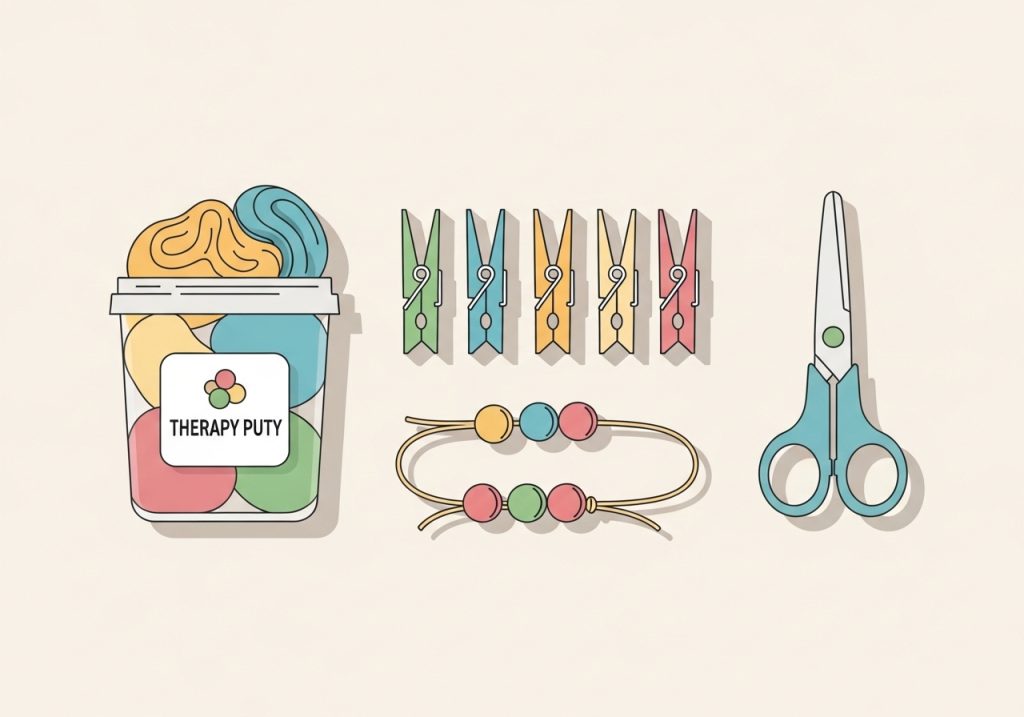
- Strengthening Exercises: Activities that build muscle in the hands and fingers are fundamental. This can involve squeezing therapy putty, pinching clothespins, using a spray bottle, or playing with dough. Building hand strength improves endurance for tasks like writing and cutting.
- Fine Motor Coordination: These tasks require precise movements of small muscles. Examples include stringing beads, lacing cards, picking up small items with tweezers, and building with interlocking blocks. These activities refine the control needed for detailed work.
- In-Hand Manipulation: This is the ability to move small objects within one hand. Activities like flipping pegs over, turning a pencil to use the eraser, or unscrewing a small bottle cap all build this complex skill, which is crucial for efficient tool use.
- Visual-Motor Integration: This involves coordinating hand movements with visual information. Tracing, drawing, cutting along a line, and completing dot-to-dot puzzles are excellent ways to practice this. This skill is a prerequisite for legible handwriting, and choosing the right handwriting curriculum often involves assessing these foundational abilities.
Integrating Hand Therapy Activities into Daily Routines
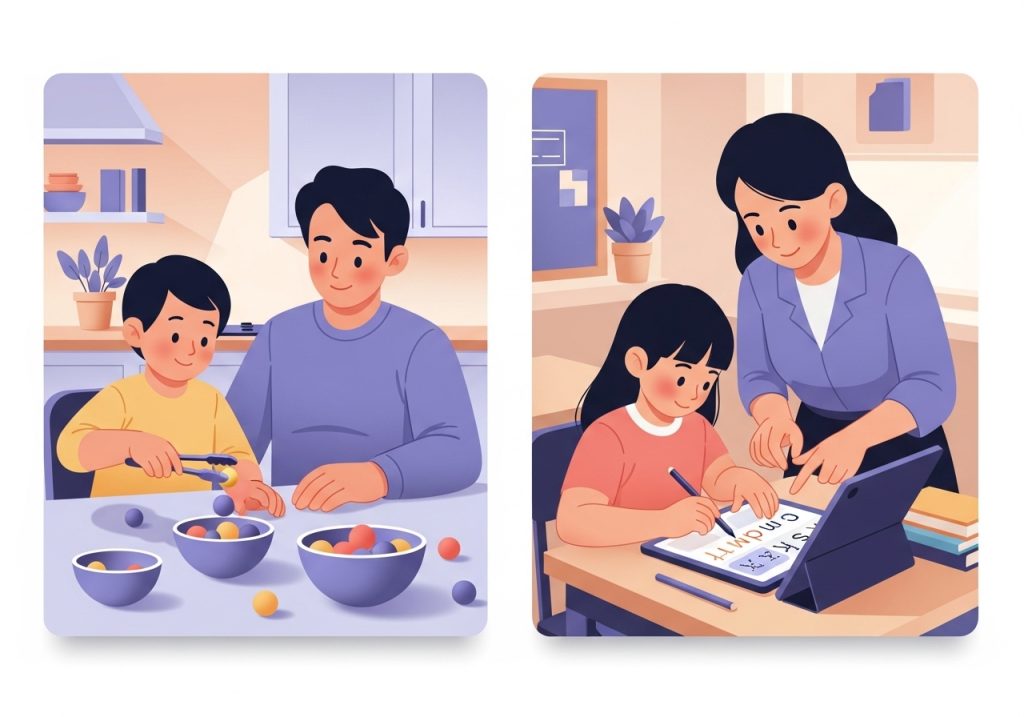
The most effective way to support a child’s hand skill development is to make it a natural part of their day. You do not need specialized sessions to make progress. Instead, look for opportunities to weave therapeutic activities into playtime, chores, and schoolwork. In the kitchen, a child can help stir thick batter, use tongs to serve food, or tear lettuce for a salad. During playtime, LEGOs, puzzles, and art supplies like crayons and scissors are powerful tools. Even getting dressed offers a chance to practice with buttons, zippers, and snaps. For educators, incorporating manipulatives into lessons and offering creative craft projects can provide valuable fine motor practice for the entire class. This approach aligns with the importance of using occupation-based interventions that are meaningful to the individual. Consistency is more important than intensity.
Tools and Resources to Support Hand Skill Development
While many effective activities use common household items, specific tools and structured resources can also be very helpful. Therapy putty, theraputty, stress balls, and hand grippers offer targeted resistance for strengthening. Specially designed pencil grips can promote a more functional grasp for writing. Activity guides and printable worksheets can provide structured practice for skills like tracing, cutting, and pre-writing strokes, which simplifies planning for therapists, teachers, and parents. Having a collection of practical education materials makes it easier to provide targeted and engaging instruction. The right resources make skill-building feel like play, not work. By focusing on consistent, engaging activities, you can effectively support a child’s journey toward greater independence and confidence in their daily tasks.
Ready to put these principles into practice? The Inspiring OT offers a wide range of downloadable activities, worksheets, and guides designed by an experienced occupational therapist to support fine motor, handwriting, and sensory skill development. Explore our low-prep, engaging resources to help your learners build essential skills with confidence. Find the perfect tools to support your therapy sessions, classroom lessons, or at-home learning today.
Leave a Reply