
Handwriting Without Tears is a curriculum that uses a multisensory, developmental approach to teach writing skills simply and effectively. Developed by occupational therapist Jan Olsen, this method is designed to make handwriting a successful and frustration-free experience for all learners. For therapists, teachers, and parents, understanding this program’s core concepts can provide a powerful framework for supporting children as they learn to write. It moves away from rote memorization and repetitive drills, instead focusing on hands-on activities and a logical progression that matches a child’s natural development.
What Is the Handwriting Without Tears Approach?
The Handwriting Without Tears approach is a comprehensive curriculum that teaches printing, cursive, and keyboarding skills. Its philosophy is grounded in years of research and occupational therapy practice, prioritizing a child’s developmental readiness. Unlike many traditional methods that introduce all letters at once or in alphabetical order, this program introduces skills sequentially. It starts with the easiest and most fundamental skills first, allowing children to build a strong foundation before moving on to more complex tasks.
The system begins by teaching capital letters, as they are composed of simple “big line” and “big curve” strokes that are easier for young children to master. Lowercase letters and cursive are introduced later. This developmental sequence helps prevent common problems like letter reversals and poor spacing. The official Learning Without Tears® program emphasizes that the goal is to produce comfortable, legible writers, not to achieve perfect penmanship at the expense of a child’s confidence.
The Core Principles of This Multisensory Method
The effectiveness of Handwriting Without Tears comes from its unique and consistent principles. These elements work together to engage children and make the abstract process of writing concrete and memorable. The curriculum is built on a few key ideas that are applied consistently across all grade levels.
- Developmental Teaching Order: The program follows a logical progression that respects child development. Children learn uppercase letters first, then lowercase letters, and finally cursive. This order is based on the simplicity of the strokes required for each character set.
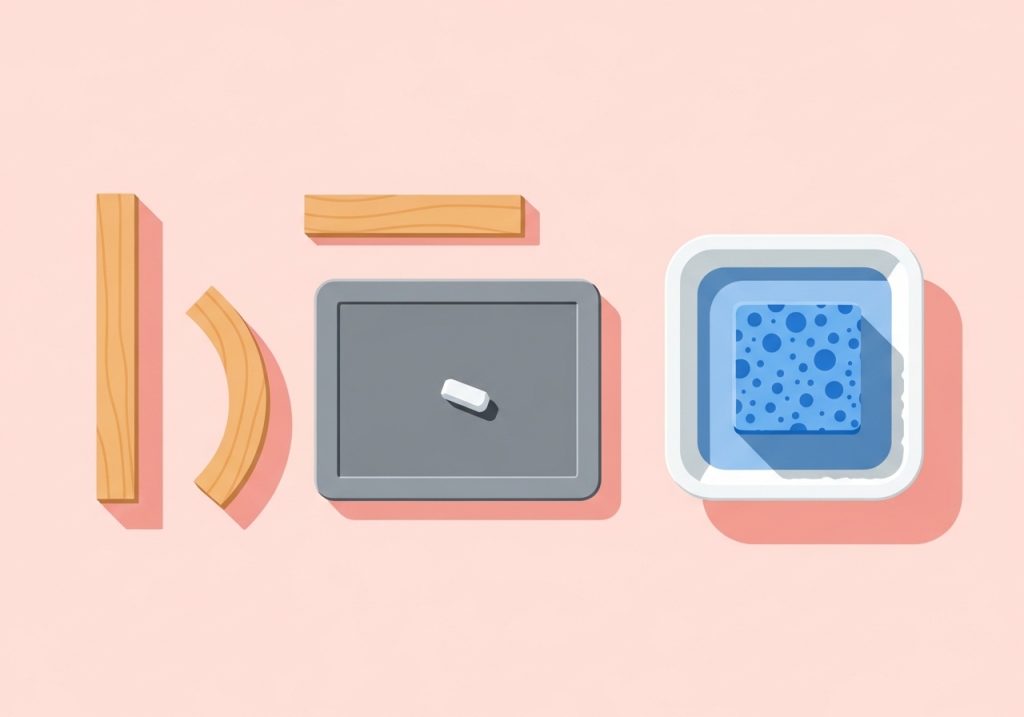
- Multisensory Learning Tools: Abstract letter shapes become tangible through hands-on materials. Children use wooden pieces to build letters, trace them on a small slate chalkboard, and practice formations with the “Wet-Dry-Try” method using a sponge, water, and chalk. These activities engage tactile and kinesthetic senses.
- Simple, Consistent Language: The curriculum uses easy-to-remember verbal cues to guide letter formation. For example, children learn about “Frog Jump Capitals” (letters like F, E, D, P, B, R) that start in the top left corner, move down, and then “frog jump” back up to the top to complete the letter. This consistent terminology reduces confusion.
- Emphasis on Posture and Grip: Before a child even writes, the program addresses foundational skills. It teaches correct posture for sitting at a desk and promotes an efficient pencil grip, which are crucial for endurance and preventing bad habits.
How the Program Supports Foundational Writing Skills
By breaking down handwriting into manageable steps, the Handwriting Without Tears program directly supports the development of essential pre-writing and writing skills. Its methods are not just about forming letters; they are about building the underlying components that make writing possible. Research has confirmed the program’s success, with one study published in the American Journal of Occupational Therapy demonstrating its effectiveness in general education classrooms.
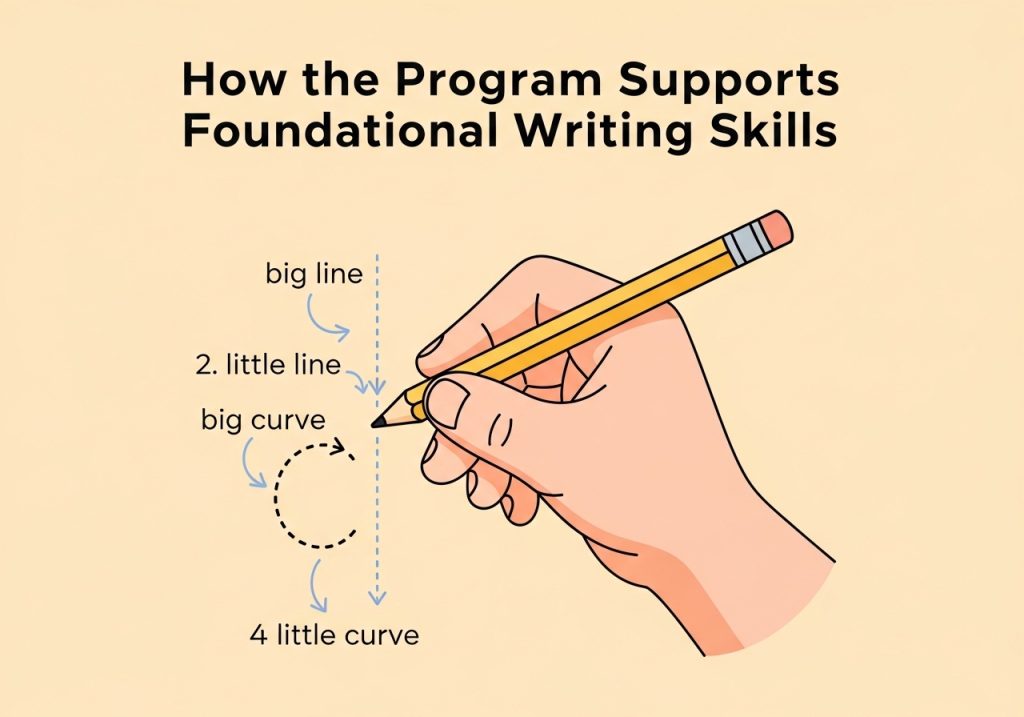
The program helps learners in several key areas:
- Strengthens Motor Skills: The hands-on activities, like building with wood pieces and writing on the slate, help improve fine motor skills. These tasks develop hand strength, dexterity, and the motor planning required to form letters correctly.
- Improves Visual-Motor Integration: The curriculum trains a child’s brain to translate visual information (what a letter looks like) into a precise motor output (the hand movements to write it). The “Wet-Dry-Try” slate activity is excellent for reinforcing this connection.
- Reduces Cognitive Load: By teaching letters in groups based on their formation strokes (e.g., “Magic C” letters like c, o, a, d, g, q), the program simplifies the learning process. Children only need to learn a few simple strokes to form many different letters.
- Builds Confidence and Reduces Avoidance: Because the activities are designed for success, children experience positive reinforcement early and often. This builds their confidence and reduces the anxiety and frustration that can lead to a refusal to participate in writing tasks.
Applying Handwriting Without Tears Strategies in Your Practice
The principles of Handwriting Without Tears are not limited to the formal curriculum. Therapists, teachers, and parents can integrate its strategies into their existing routines to support struggling writers. The focus should always be on making the experience positive, tactile, and developmentally appropriate.
For Occupational Therapists
In a therapy setting, you can use the program’s tools to target specific goals. The wood pieces are excellent for working on visual-spatial skills and motor planning. The slate chalkboard is a great tool for one-on-one instruction on letter formation, pencil pressure, and grip, as the resistance of the chalk provides valuable sensory feedback.
For Teachers
In the classroom, you can establish a handwriting center with multisensory materials. Use the program’s songs and simple verbal cues during whole-group instruction to make learning memorable and fun. The clear, uncluttered workbooks are also excellent for independent practice, reinforcing the concepts you teach. These activities are a great way of supporting fine motor skills in the classroom while also teaching literacy.
For Parents and Caregivers
At home, you can reinforce learning with simple, playful activities. Practice writing letters in a tray of sand, shaving cream, or finger paint. Use play dough to roll out “big lines” and “little curves” to build letters. The key is to keep practice sessions short, positive, and focused on the process, not just the final product.
Determining if This Method Fits Your Learner’s Needs
While Handwriting Without Tears is designed as a universal curriculum for all learners, it is particularly beneficial for certain students. Children who thrive with hands-on, kinesthetic learning often respond very well to its multisensory approach. It is also highly effective for students who struggle with traditional handwriting instruction for various reasons.
Consider this method if a learner:
- Experiences frustration or emotional distress with writing tasks.
- Has difficulty with fine motor control or coordination.
- Struggles to remember letter formations or frequently reverses letters.
- Benefits from a structured, predictable, and step-by-step learning process.
- Is a visual or tactile learner who needs to see and feel how letters are formed.
Its widespread use in both general and special education settings speaks to its adaptability. The program can be modified to meet individual needs, making it a valuable tool for supporting learners with diverse abilities.
Key Takeaways for Developmentally-Appropriate Handwriting Instruction
The Handwriting Without Tears program offers valuable lessons for anyone teaching a child to write. By focusing on developmental readiness and multisensory engagement, we can create a more positive and effective learning experience. Whether you use the full curriculum or simply adopt its principles, the following takeaways can guide your instruction.
- Teach in a Developmental Sequence: Start with simpler skills and build from there. Focus on capital letters before moving to lowercase to align with a child’s developing motor control.
- Incorporate Multisensory Activities: Go beyond paper and pencil. Use touch, movement, and sound to help children internalize letter shapes and formations.
- Use Clear and Consistent Language: Simple, repeatable verbal cues help children remember the motor plan for each letter, reducing confusion and improving accuracy.
- Prioritize Success to Build Confidence: Design activities where children can succeed. Positive early experiences with writing are crucial for developing a lifelong willingness to learn and communicate.
Ready to bring more effective, low-prep activities into your classroom, therapy sessions, or home? Explore our collection of OT-designed printable resources to support skill development in a fun and engaging way. Visit The Inspiring OT shop to find practical tools that simplify your planning and help your learners succeed.
Leave a Reply